






Definition and Meaning
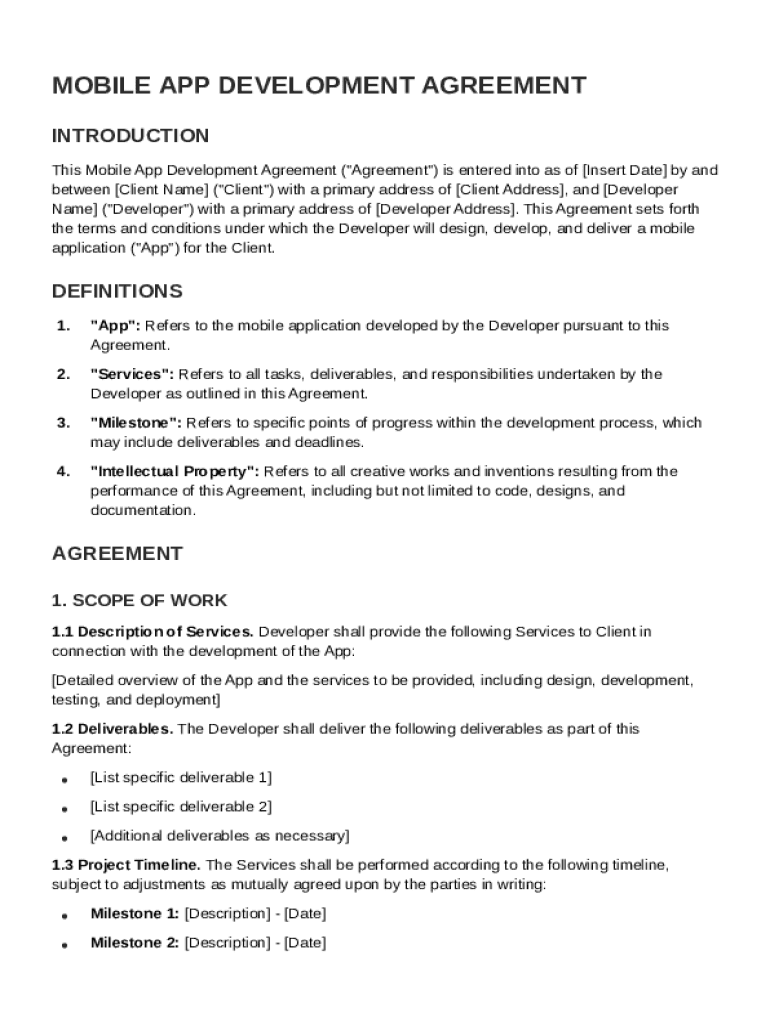
The Mobile App Development Agreement Template serves as a comprehensive contract framework between a client and a developer, clearly defining the roles, responsibilities, and expectations for the creation and delivery of a mobile application. This template is instrumental in laying the groundwork for the development process, ensuring that all critical aspects, such as deliverables, timelines, and confidentiality agreements, are explicitly covered. It sets the foundation for mutual understanding, preventing any ambiguities or misunderstandings that might arise during the development lifecycle.
In practical terms, the Mobile App Development Agreement Template encompasses essential clauses related to scope of work, payment terms, intellectual property, and risk management. For instance, it stipulates the timeline for specific deliverables, thus maintaining project momentum and mitigating disputes over deadlines. By detailing the scope and limitations of the project, it ensures that both parties have aligned expectations from the outset.
How to Use the Mobile App Development Agreement Template
Utilizing the Mobile App Development Agreement Template effectively requires a systematic approach to customization and agreement-specific adjustments. Initially, it is crucial to thoroughly review the template to align its clauses with your specific project requirements. Users should begin by entering the basic information of both the client and the developer, such as names, addresses, and contact information.
- Customize Scope of Work: Tailor the specific sections to reflect the unique requirements of the mobile application being developed. Outline the essential features, functionalities, and any technical requirements that must be met.
- Payment Structures: Clearly delineate the payment schedule, including milestones, payment methods, and any penalties for late payments. This is particularly crucial for managing cash flow and project prioritization.
- Timelines and Deadlines: Specify key deliverable dates and build in buffer periods to manage potential delays.
Before finalizing, it's advisable to draft a comprehensive version for review by a legal professional to ensure compliance with applicable laws and regulations.
Key Elements of the Mobile App Development Agreement Template
The Mobile App Development Agreement Template is constructed of several critical sections designed to safeguard both parties' interests and streamline the development process. Key elements include:
- Project Scope and Deliverables: Clear articulation of the expected outputs and stages of delivery to manage expectations and guide the development process.
- Payment Terms and Conditions: Detailed clauses concerning the financial aspects, including initial deposits, installment payments, and methods of payment.
- Intellectual Property Rights: Definitions of ownership and licensing of the software, including any pre-existing intellectual property, ensuring that proprietary assets are safeguarded.
- Confidentiality Clauses: Obligations of both parties to protect sensitive information, maintaining the competitive edge and compliance with legal standards.
- Termination Conditions: Contingencies and procedures should either party wish to terminate the agreement prematurely to manage risk and minimize losses.
These sections are fundamental to a robust agreement, providing specificity and legal backing to each aspect of the development project.
Legal Use of the Mobile App Development Agreement Template
Under U.S. law, the legal enforceability of a Mobile App Development Agreement hinges on its comprehensive nature and adherence to statutory requirements. The template ensures compliance with legal standards by incorporating crucial elements such as offer, acceptance, and consideration. Moreover, it incorporates electronic signature capabilities governed by the ESIGN Act, thus validating the agreement's legitimacy when executed digitally.
- Ensuring Enforceability: Clearly delineating responsibilities, timelines, and expectations to avoid potential legal disputes.
- Confidentiality and Non-Disclosure: Establishing binding agreements to prevent unauthorized use or dissemination of proprietary information.
- Dispute Resolution Mechanisms: Inserting arbitration or mediation clauses as an alternative to litigation, preserving the relationship and reducing legal costs.
Familiarity with these legal aspects is crucial for all parties involved, ensuring that the agreement not only sets clear operational guidelines but also acts as a legally binding contract.
Steps to Complete the Mobile App Development Agreement Template
Completing the Mobile App Development Agreement Template requires a structured method to ensure all necessary aspects are addressed and agreed upon:
- Preparation and Review: Gather and review all relevant information concerning the project, including parties involved and the development timeline.
- Populate Key Sections: Fill in general information, defining project scope, milestones, payment schedules, and intellectual property provisions.
- Customization: Tailor the general clauses to suit the specific needs and goals of your project, considering legal, technical, and operational requirements.
- Validation and Signatures: Submit the completed document to legal counsel for validation before obtaining the requisite signatures from all parties involved.
These steps facilitate a thorough and precise agreement formulation, preserving the interests of both the client and the developer.
Important Terms Related to the Mobile App Development Agreement Template
Understanding critical terminology within the Mobile App Development Agreement Template is vital to navigating its provisions effectively. Important terms include:
- Deliverables: Specific, tangible outputs that must be produced as part of the project.
- Milestones: Key stages in the project timeline signaling significant progress or completion points.
- Royalty-Free License: Permission granted to the client to use the software without ongoing fees or royalties.
- Liability Limitation: Restrictions on the amount and types of claims that can be brought against a party, protecting against undue liability.
Familiarity with these terms ensures parties are well-informed and aware of their obligations and rights under the agreement.
Examples of Using the Mobile App Development Agreement Template
The Mobile App Development Agreement Template finds application across various scenarios in the development sector:
- Startup Projects: A startup engaging a freelance developer to create a new application can use the template to clearly present the scope, expected deliverables, and associated timelines.
- Enterprise Solutions: Large enterprises aiming to develop custom solutions for internal use will leverage the template to address complex requirements and integration with existing systems.
- Cross-Collaborative Efforts: When multiple parties or teams engage in a collaborative development effort, the template provides clarity around ownership, division of tasks, and responsibilities.
These examples highlight the template's versatility in accommodating diverse development projects while maintaining clear, actionable agreements.
Software Compatibility for the Mobile App Development Agreement Template
The Mobile App Development Agreement Template's adaptability to various software platforms enhances its usability across different environments:
- Document Editors: Compatible with standard document editing software like Microsoft Word and Google Docs for easy customization and editing.
- Cloud Platforms: Integration with cloud services such as Google Drive and Dropbox, offering streamlined access and remote collaboration capabilities.
- Document Workflow Solutions: Compatible with DocHub's suite of tools, facilitating electronic signing, annotation, and real-time collaboration with multiple contributors.
Functionality across these platforms allows for seamless collaboration and modification, promoting efficient document management and execution.