01. Edit your rocket mortgage gift letter online
Type text, add images, blackout confidential details, add comments, highlights and more.

Type text, add images, blackout confidential details, add comments, highlights and more.

Draw your signature, type it, upload its image, or use your mobile device as a signature pad.

Send printable mortgage gift letter template via email, link, or fax. You can also download it, export it or print it out.
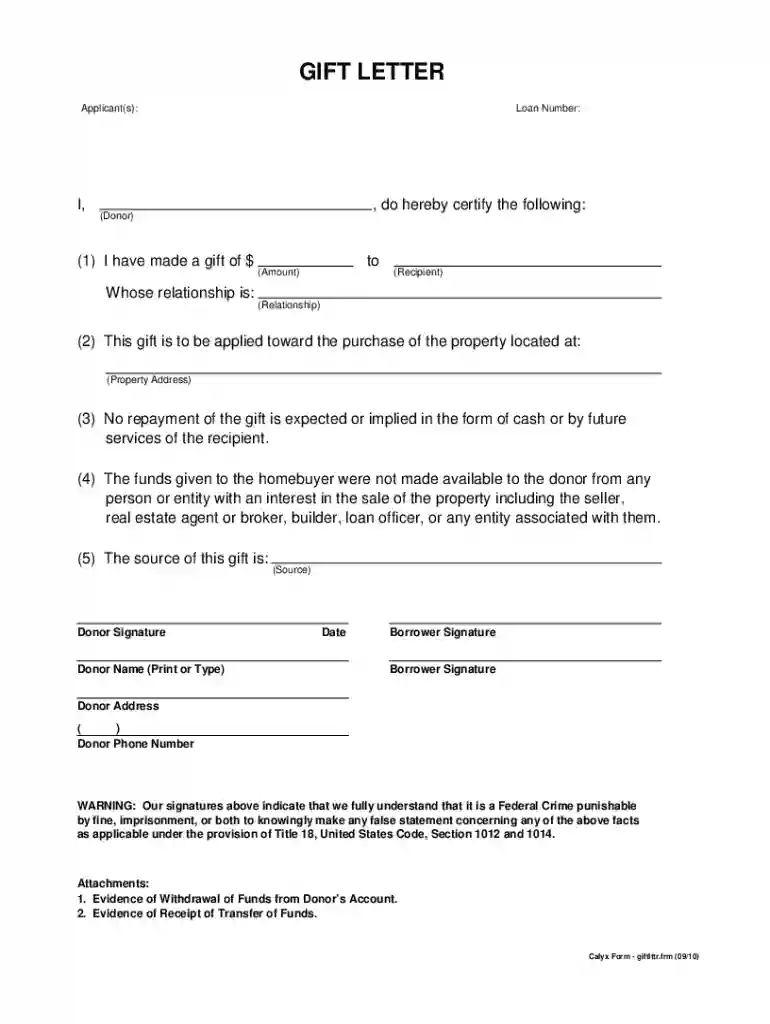
A gift letter for your mortgage is an essential document used in the home buying process when a borrower receives a monetary gift from a donor, typically a family member, to contribute to the down payment. This letter serves several purposes. Primarily, it confirms that the gift is not a loan and does not need to be repaid, which might otherwise affect the borrower’s debt-to-income ratio. It clearly states that the funds are given freely, without any obligation for repayment, ensuring transparency in financial transactions related to the mortgage.
The letter customarily includes specific details, such as the donor's name, the donor's relationship to the borrower, the exact amount of the gift, and a statement that no repayment is expected. This documentation helps clarify the source of funds, satisfying underwriter requirements and strengthening the borrower's application for mortgage approval.
A comprehensive gift letter should contain several key elements to ensure it fulfills its purpose effectively. These components include:
Writing a gift letter for your mortgage involves careful attention to detail. Follow these steps to ensure the letter meets lender requirements:
Gift letters legally affirm that no repayment is expected. This is crucial because undisclosed loans could disqualify a borrower when underwriters assess their capacity to repay the mortgage. Misrepresentation in a gift letter can lead to legal consequences for both the donor and recipient, including potential fraud charges. It is important to ensure that all information provided is accurate, complete, and truthful.
While the basic structure of a gift letter is generally consistent, there may be state-specific or lender-specific requirements to be aware of.
Always verify with your specific lender or legal advisor if any additional conditions need to be met to adhere to local real estate laws and institutional policies.
Gift letters are utilized in various scenarios where external financial assistance is provided for a mortgage. Some common examples include:
These instances highlight the personal and relational nature of gift letters, reinforcing their role in facilitating family-assisted property transactions.
Failing to comply with proper gift letter protocols can lead to severe penalties. These may include:
Understanding the implications of non-compliance stresses the importance of accuracy and transparency in drafting a gift letter.
Gift letters play a pivotal role in helping individuals and families secure their dream homes when personal savings fall short. They provide:
By using a gift letter, you facilitate a smoother home-buying process while maintaining compliance with lending standards.
We've got more versions of the rocket mortgage gift letter form. Select the right rocket mortgage gift letter version from the list and start editing it straight away!
At DocHub, your data security is our priority. We follow HIPAA, SOC2, GDPR, and other standards, so you can work on your documents with confidence.