






Definition and Purpose of Freight Broker Agreement Template
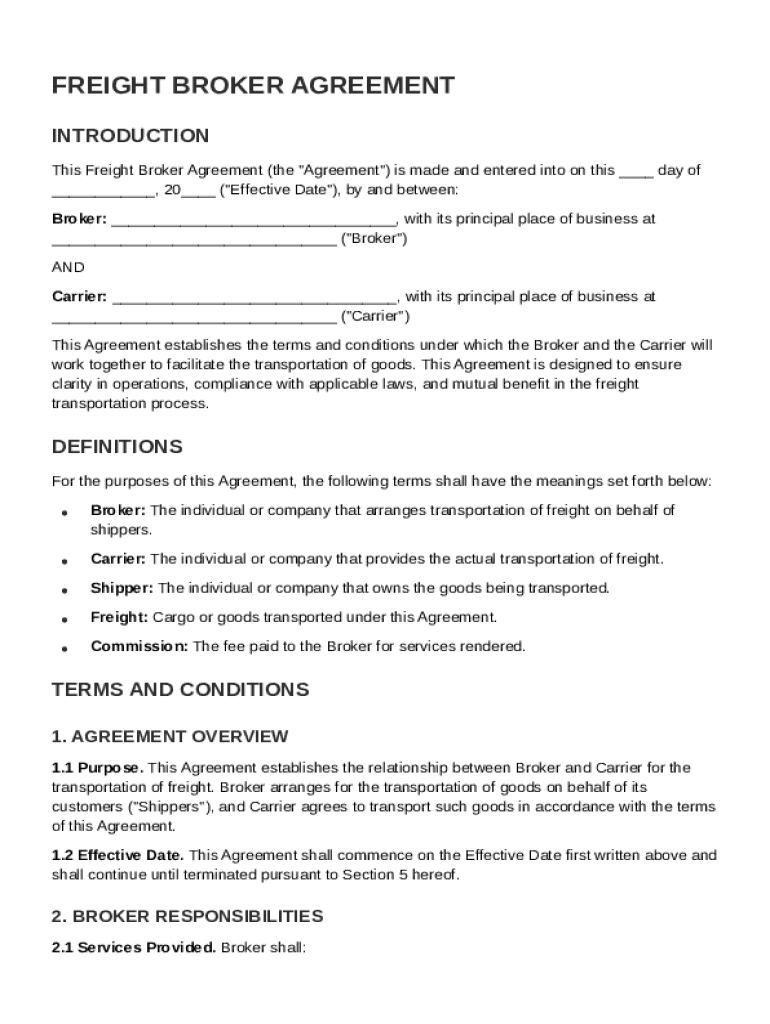
The Freight Broker Agreement Template serves as a legally binding document that details the terms and conditions between a Freight Broker and a Carrier. Its primary function is to establish clear guidelines for the transportation of goods, ensuring that both parties understand their roles and responsibilities. Critical components of the agreement include compliance with laws, communication protocols, insurance requirements, compensation structures, and dispute resolution processes. This clarity helps mitigate disputes and promote efficient and smooth freight transportation operations.
How to Use the Freight Broker Agreement Template
Proper use of the Freight Broker Agreement Template involves several steps to ensure it aptly reflects the specifics of the broker-carrier relationship. First, obtain a clear understanding of each party's obligations and customize the template to include key details such as the scope of services, payment terms, and any specific regulations pertinent to the operation. Effective use also involves ensuring that all sections are accurately filled out and reviewed for legal compliance, often with the assistance of legal counsel to confirm that all local and federal transportation laws are upheld within the document.
Key Elements of the Freight Broker Agreement Template
The key elements of a Freight Broker Agreement Template include:
- Parties Involved: Identification of both the Freight Broker and Carrier, including contact details.
- Services Provided: A detailed description of the freight services to be performed.
- Compensation and Payment Terms: Outline of payment methods, schedules, and rates.
- Insurance Requirements: Declaration of necessary insurance coverage and responsibilities.
- Liability and Indemnity Clauses: Specifications concerning liability and procedures for indemnification.
- Dispute Resolution: Agreed-upon methods for handling disagreements, such as arbitration or mediation.
- Termination Conditions: Conditions under which the agreement can be terminated by either party.
Each of these components must be clearly defined to protect both parties and facilitate a successful partnership.
Steps to Complete the Freight Broker Agreement Template
Completing the Freight Broker Agreement Template involves a structured approach. Begin by gathering necessary details from both parties, including full names, contact information, and any legal identifiers. Next, customize the template to reflect the specific services, payment terms, and operational procedures agreed upon. Fill out each section carefully, ensuring all required information is present. Review the completed document with legal counsel, making any necessary adjustments to comply with relevant regulations. Finally, both parties should review and sign the agreement, retaining copies for their records.
Detailed Process
- Identification: List the legal names and contact details of the Freight Broker and Carrier.
- Scope of Service: Clearly outline the services to be provided.
- Payment Terms: Specify compensation rates, payment schedules, and any bonuses or penalties.
- Insurance Details: Provide documentation and stipulations relating to insurance coverage.
- Review and Sign: Ensure that both parties understand and agree to the terms before signing.
Legal Use of the Freight Broker Agreement Template
The Freight Broker Agreement Template is designed to meet legal standards and can be used to form a contract that is enforceable under U.S. law. It adheres to the requirements outlined by the Federal Motor Carrier Safety Administration (FMCSA) and other regulatory bodies. Legal use entails a precise definition of the terms and obligations that are fair and clear to prevent breaches. Regular consultation with legal experts is essential for adapting the template to comply with changing laws and regulations, ensuring the contract remains valid and enforceable.
Important Terms Related to Freight Broker Agreement Template
Understanding specific terminology used in the Freight Broker Agreement Template is essential for its effective application:
- Broker: The entity arranging the transportation of goods by liaising between the carrier and the shipper.
- Carrier: The party responsible for the transportation of goods.
- DOT: The U.S. Department of Transportation, which regulates transportation.
- MC Number: Registration number assigned by the DOT for brokers operating interstate.
- Indemnity: Legal protection and obligation assumed by one party to cover potential loss or damages incurred by another.
Familiarity with these terms facilitates clearer communication and reduces the risk of misunderstandings.
State-Specific Rules for the Freight Broker Agreement Template
Freight Broker Agreement Templates need to account for state-specific regulations that may influence the components of the agreement. States can have unique requirements concerning insurance minimums, licensing, and operational mandates. For instance, some states may necessitate additional clauses addressing state-specific transportation laws or compliance certificates. Therefore, brokers and carriers should consult state guidelines and possibly legal professionals to include these differences within their agreements to ensure legality and adherence to all jurisdictional obligations.
Examples of Using the Freight Broker Agreement Template
In practice, Freight Broker Agreement Templates have facilitated successful partnerships across various sectors. For example, a logistics company may use the template to onboard new carriers, customizing each agreement to include specifics about the types of goods transported, regional delivery routes, and seasonal operations. Another case could be an emergency response organization ensuring rapid deployment of relief supplies, where the agreement specifies expedited services and higher insurance coverage. These examples illustrate the template's flexibility and adaptability to meet diverse logistics needs.
Who Typically Uses the Freight Broker Agreement Template
The Freight Broker Agreement Template is widely utilized by logistics companies, independent freight brokers, and third-party service providers in the transportation industry. It is essential for any organization involved in arranging the transportation of goods requiring legal documentation to regulate their operations. Small to mid-sized enterprises may also use the template to formalize agreements with carriers, especially where resources for bespoke legal services are limited. Users recognize the template as an efficient tool for establishing clear contractual frameworks and ensuring compliance.