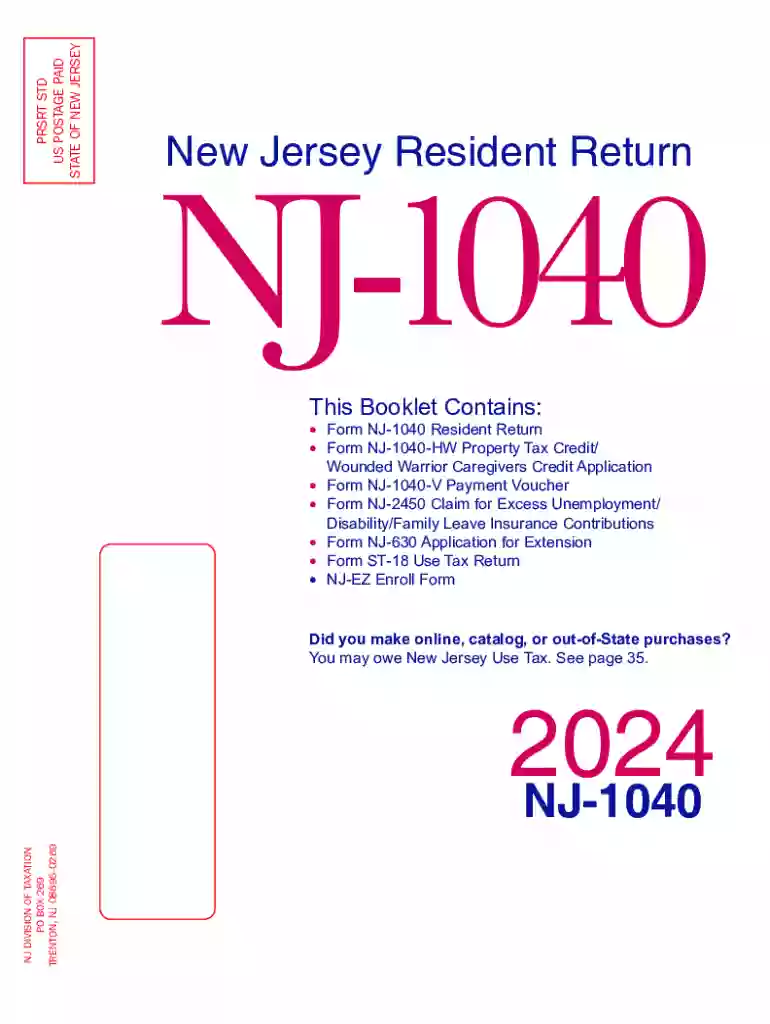
2024 NJ-1040 Instructions-2026

Get Form
2024 NJ-1040 Instructions Preview on Page 1

Here's how it works

01. Edit your form online
Type text, add images, blackout confidential details, add comments, highlights and more.

02. Sign it in a few clicks
Draw your signature, type it, upload its image, or use your mobile device as a signature pad.

03. Share your form with others
Send it via email, link, or fax. You can also download it, export it or print it out.

Understanding 2024 NJ-1040 Instructions

The 2024 NJ-1040 Instructions are essential for New Jersey residents who need to file their state income tax returns. This comprehensive guide assists taxpayers in accurately completing the NJ-1040 form and helps avoid errors. It provides detailed explanations of taxable and nontaxable income, exemptions, deductions, and credits, ensuring that users are well-informed about the specifics of their tax obligations.

How to Use the 2024 NJ-1040 Instructions

To effectively use the 2024 NJ-1040 Instructions, begin by thoroughly reviewing the sections related to your filing status and sources of income. Follow these steps:

  1. Determine Your Filing Status: Assess your eligibility for different filing statuses, such as single, married filing jointly, or head of household.
  2. Identify Taxable Income: Consult the guide to differentiate between taxable and nontaxable income sources specific to your situation.
  3. Calculate Deductions and Credits: Review available deductions and credits, such as property tax credits, and apply them to reduce your taxable income.
  4. Complete the NJ-1040 Form: Use the instructions to fill out each section of the form accurately.

Practical Examples

  • Homeowners: May qualify for property tax credits, detailed in the instructions.
  • Students: Should pay attention to sections on scholarship income and tuition deductions.

Steps to Complete the 2024 NJ-1040 Form

Completing the NJ-1040 form involves several key steps. Begin by gathering all necessary documents, as specified in the instructions. Follow these sequential steps:

  1. Collect Required Documents: W-2 forms, 1099s, and receipts for deductions.
  2. Determine Total Income: Aggregate all income sources, which the instructions define.
  3. Apply Deductions: Use the guide to apply standard or itemized deductions.
  4. Calculate Taxable Income: Deduct allowable amounts from your total income.
  5. Compute Taxes Owed: Refer to the tax brackets in the instructions to determine your liability.
  6. Verify Information: Double-check all entries against the guidelines provided.

Specific Scenarios

  • Self-employed Individuals: Utilize sections on business expense deductions.
  • Retirees: Follow instructions for reporting Social Security benefits.

Important Terms Related to 2024 NJ-1040

Understanding the terminology in the 2024 NJ-1040 Instructions is crucial. This section elucidates key terms to ensure clarity and precision in your tax filing.

  • Adjusted Gross Income (AGI): Total income minus specific deductions.
  • Exemptions: Amounts that reduce taxable income based on dependents.
  • Earned Income Tax Credit (EITC): A refundable credit for low-to-moderate-income working individuals.

Examples

  • AGI Example: Calculate your AGI by subtracting student loan interest from total income.
  • Exemption Example: Claim exemptions for each qualifying dependent listed.

Filing Deadlines and Important Dates

Timely filing is essential to avoid penalties. The 2024 NJ-1040 Instructions specify deadlines and highlight important dates for tax-related actions.

  • Filing Deadline: April 15, 2024.
  • Extension Request Deadline: Submit by the original filing date if additional time is required.

Considerations

  • Late Filing: Results in penalties; consult the guide for more information.
  • Estimated Payments: Required for certain income levels; review due dates.

Legal Use of the 2024 NJ-1040 Instructions

The 2024 NJ-1040 Instructions are legally binding, offering specific guidelines to ensure compliance with New Jersey tax laws. Taxpayers must adhere to these instructions when filing their returns. Ignorance of procedures explained in the guide does not exempt one from penalties.

Compliance Requirements

  • Accurate Reporting: Essential to avoid fines and interest penalties.
  • Fulfillment of Obligations: Includes timely payment of taxes owed.

Digital vs. Paper Version

The 2024 NJ-1040 Instructions provide methods for both digital and paper filing. Each has its benefits suited to different preferences.

Digital Filing

  • Benefits: Faster processing; immediate confirmation of receipt.
  • Compatibility: Compatible with tax software like TurboTax and QuickBooks.

Paper Filing

  • Usage: Preferred by those without digital access.
  • Challenges: Slower processing and potential for human error.

State-Specific Rules for the 2024 NJ-1040

The NJ-1040 is designed specifically for New Jersey residents, with distinct guidelines from the federal tax system. It addresses state-specific deductions and exemptions unique to New Jersey's tax regulations.

State Guidelines

  • Property Tax Deduction: Detailed in the instructions unique to New Jersey.
  • Income Exclusions: Certain types of income may not be taxable under state law.

Following these guidelines ensures compliance with both state and federal requirements, minimizing the risk of errors and penalties.

be ready to get more

Complete this form in 5 minutes or less

Get form

Got questions?

We have answers to the most popular questions from our customers. If you can't find an answer to your question, please contact us.
Contact us
Social Security and Railroad Retirement benefits are not taxable under the New Jersey Income Tax and should not be reported as income on your State return. Payments from a public or private pension plan because of total and permanent disability also are not taxable.
2024 New Jersey Estimated Tax Form NJ-1040-ES. The 2024 Form NJ-1040-ES is used for making estimated tax payments for New Jersey income tax. This form is essential for residents and nonresidents who expect to owe more than $400 in taxes. It helps taxpayers manage their tax liabilities throughout the year.
New Jersey is moderately tax-friendly toward retirees. Social Security income is not taxed. Withdrawals from retirement accounts are partially taxed. Wages are taxed at normal rates, and your marginal state tax rate is 1.75%.
Only expenses that exceed 2% of your income can be deducted. Some examples of allowable medical expenses are: payments for doctors visits, dental care, hospital care, eye examinations, eyeglasses, medicine, and x-rays or other diagnostic services directed by your physician or dentist.

Security and compliance

At DocHub, your data security is our priority. We follow HIPAA, SOC2, GDPR, and other standards, so you can work on your documents with confidence.
Learn more
ccpa2
pci-dss
gdpr-compliance
hipaa
soc-compliance