






Definition and Purpose of a House Tenancy Agreement
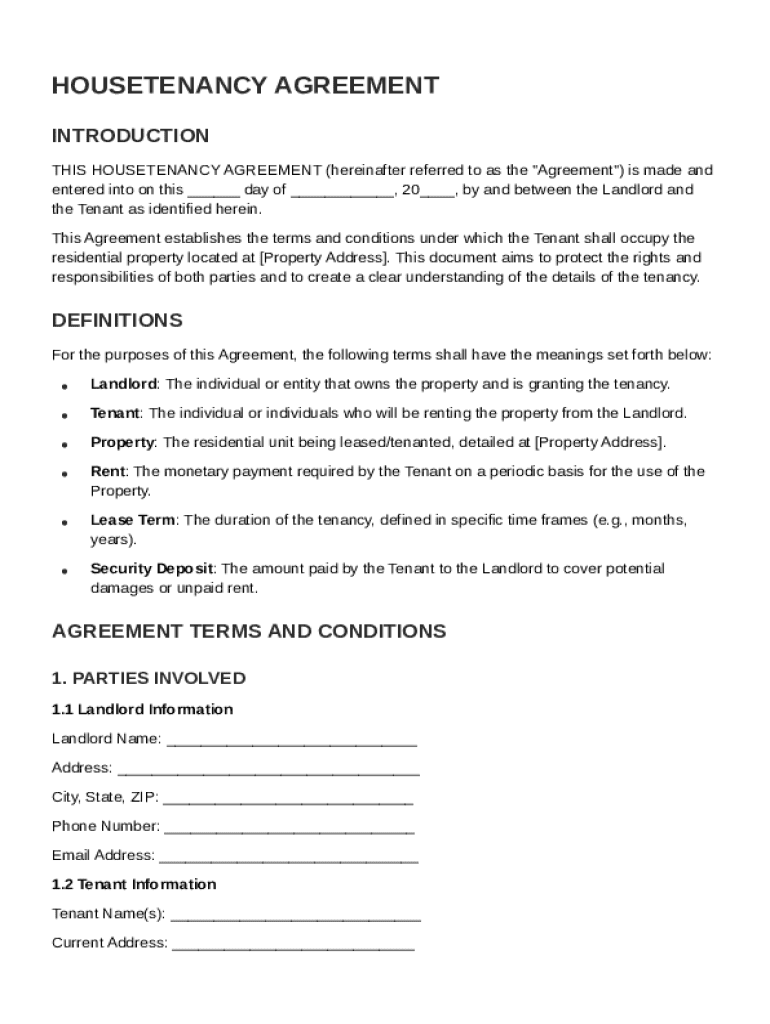
A house tenancy agreement is a legally binding contract between a landlord and tenant that outlines the terms and conditions of renting a residential property. This document stipulates the rights and responsibilities of both parties, including rent payment terms, the handling of security deposits, property maintenance duties, and procedures for dispute resolution. By clearly defining these aspects, the agreement aims to protect both the landlord and the tenant, ensuring a smooth rental process and clear expectations throughout the tenancy period.
How to Use the House Tenancy Agreement Template
To effectively utilize the house tenancy agreement template, begin by downloading it from a reliable source such as DocHub. Import the template into the document editor to make necessary adjustments according to your specific situation. Customize sections to reflect correct details about the property, rent amount, and any additional clauses agreed upon by both parties. Once all necessary adjustments are made, ensure that both landlord and tenant review the document before signing electronically to render it legally binding.
Steps to Complete the House Tenancy Agreement Template
- Gather Information: Collect all necessary details about the property, tenant, and landlord.
- Customize the Template: Open the template in a compatible document editor. Fill in the fields with the specific details gathered.
- Review Clauses: Ensure that all standard clauses meet your needs. You may add custom terms if both parties agree.
- Signatures: Use an electronic signature tool to sign. Invite the other party to review and sign electronically.
- Finalize and Save: Once signed by all parties, save and distribute copies securely.
Key Elements of the House Tenancy Agreement Template
- Property Details: Address and description of the rental property.
- Tenant and Landlord Information: Names, addresses, and contact information of both parties.
- Rental Terms: Duration of the lease, rent amount, and payment schedule.
- Security Deposit Details: Amount, conditions for return, and handling procedures.
- Maintenance Responsibilities: Allocation of maintenance duties between tenant and landlord.
Important Terms Related to the House Tenancy Agreement Template
- Lease Term: The fixed period during which the tenant has right of occupancy.
- Rent Due Date: The specific date by which each month's rent must be paid.
- Security Deposit: A refundable fee held by the landlord to cover any potential damages.
- Default Clause: Terms under which either party may terminate the agreement before the end of the lease term.
Legal Use and Compliance in the United States
In the U.S., house tenancy agreements must comply with both federal and state laws. This includes fair housing regulations that prohibit discrimination, as well as state-specific statutes that dictate handling of security deposits and eviction proceedings. Tenancy agreements must be clear, legally binding, and should not contain any clauses that violate these laws.
State-Specific Rules for House Tenancy Agreements
Rental laws vary by state, affecting late fees, security deposit limits, and notice period requirements for terminating a lease. For instance, California has specific rules about how much can be charged for a security deposit, while New York has regulations about how quickly landlords must return these deposits upon lease termination. Landlords and tenants must familiarize themselves with the specific laws applicable in their state.
Digital vs. Paper Version of the House Tenancy Agreement
Both digital and paper versions of a house tenancy agreement have their benefits. The digital version offers convenience and speed, allowing for electronic signing and secure storage. Conversely, a paper version can be useful for individuals who prefer physical documentation. Modern platforms like DocHub allow both digital processing and the option to print hard copies, catering to diverse preferences.