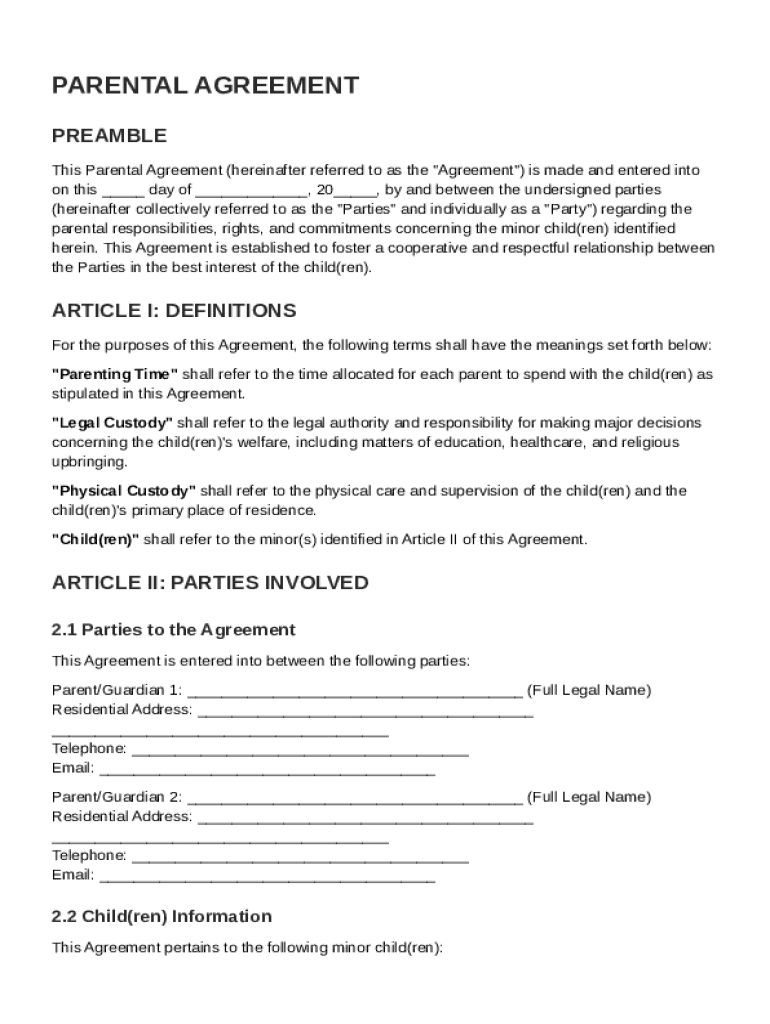







Definition and Purpose of the Parental Agreement Template
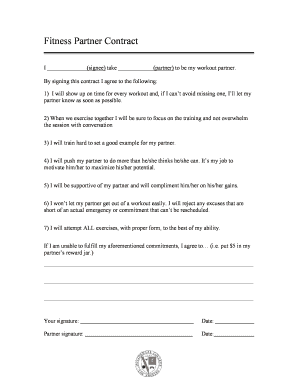
A Parental Agreement Template is a comprehensive document designed to outline the responsibilities, rights, and commitments of parents toward their minor child or children. This agreement legally formalizes arrangements concerning custody, parenting time, decision-making for essential matters, and other co-parenting details. The primary purpose of this template is to establish a structured plan promoting the child's best interests while minimizing conflicts between parents. It provides clarity on each parent's roles and expectations, which helps reduce ambiguity and potential misunderstandings.
Key Components
- Custody Arrangements: Specifies whether custody is joint or sole, encompassing both legal and physical aspects.
- Parenting Time Schedule: Details about when the child will be with each parent, including regular visits, holidays, and vacations.
- Decision-Making Responsibilities: Outlines who gets to decide on major aspects of the child's life, such as education, healthcare, and religious activities.
- Communication Guidelines: Sets rules for how parents and the child will communicate to ensure the child's well-being.
Using the Parental Agreement Template
Steps to Complete the Template
- Download the Template: Obtain a copy from a reputable source, ensuring it's designed for your specific jurisdiction.
- Read Thoroughly: Understand each section's purpose to ensure that all relevant aspects of childcare and co-parenting are addressed.
- Fill Out Identifying Information: Enter the full names and contact details of both parents and the child.
- Detail Custody and Visits: Clearly define custody terms and the parenting time schedule.
- Set Decision-Making Protocols: Allocate decision-making rights over educational, medical, and other relevant concerns.
- Include Special Provisions: Add any specific clauses that reflect unique family needs or court requirements.
- Review with Legal Counsel: Seek a lawyer's input to align the document with state laws.
- Sign and Notarize: Both parents should sign, and notarization may be needed to add legal validity.
Practical Scenarios
- Shared Custody Agreement: Parents share both physical and legal custody, requiring a detailed plan on alternating weeks for child visits.
- Sole Custody with Visitation Rights: One parent retains full custody while the other has scheduled visits to ensure continued parent-child bonding.
Legal Aspects and Compliance
Importance of Legal Compliance
A Parental Agreement Template must comply with state laws and court mandates. Compliance ensures that the agreement is enforceable and prevents legal disputes. Using standardized forms for your state can help ensure alignment with legal requirements, but seeking legal advice is advisable for custom needs.
State-Specific Rules
State laws may differ regarding what is permissible in a parental agreement. Some states might require specific language or stipulations to be included. Always verify compatibility with your state's family law provisions and consider having the agreement approved by the court.
Key Elements and Important Terms
Custody Arrangements
Custody can be joint or sole, affecting various legal rights and obligations. Joint custody involves shared decision-making, while sole custody grants authority to one parent. Defining these terms precisely is essential for clarity.
Decision-Making Responsibilities
This section assigns parent roles in crucial areas like healthcare and education. It might maintain joint decision-making or allocate specific rights to one parent for certain issues based on the child's needs.
Modification and Termination Conditions
Includes provisions under which the agreement might be altered or dissolved, such as changes in living situations or parental capabilities. Clear guidelines protect both the child's welfare and parents' rights.
Completing the Template
Digital vs. Paper Versions
The template can be completed digitally using software like DocHub, enabling convenient edits, secure sharing, and easy storage in cloud services. Alternatively, paper completion may involve manual handling and additional steps for notarization and submission.
Software Compatibility
DocHub offers compatibility with various file formats, including PDF and DOC, facilitating a streamlined workflow for template completion, editing, and signing. This flexibility supports seamless sharing and storage in different digital setups.
Real-World Use Cases and Examples
Example of a Co-Parenting Scenario
Consider parents living in different states needing to coordinate a long-distance parenting schedule. The template facilitates organizing visits during school breaks and holidays, incorporating electronic communication guidelines to keep the child connected with the non-custodial parent.
Adaptive Scenarios
Suppose there are multicultural elements, such as decisions about the child's religious upbringing across different belief systems. This situation shows the importance of the decision-making section to reconcile diverse perspectives effectively and collaboratively.
These comprehensive blocks and their supporting content provide an in-depth understanding of the Parental Agreement Template, covering various aspects of its creation, utilization, and legal implications. Leveraging this information ensures parents can effectively manage agreements in their children's best interests.