






Definition & Meaning
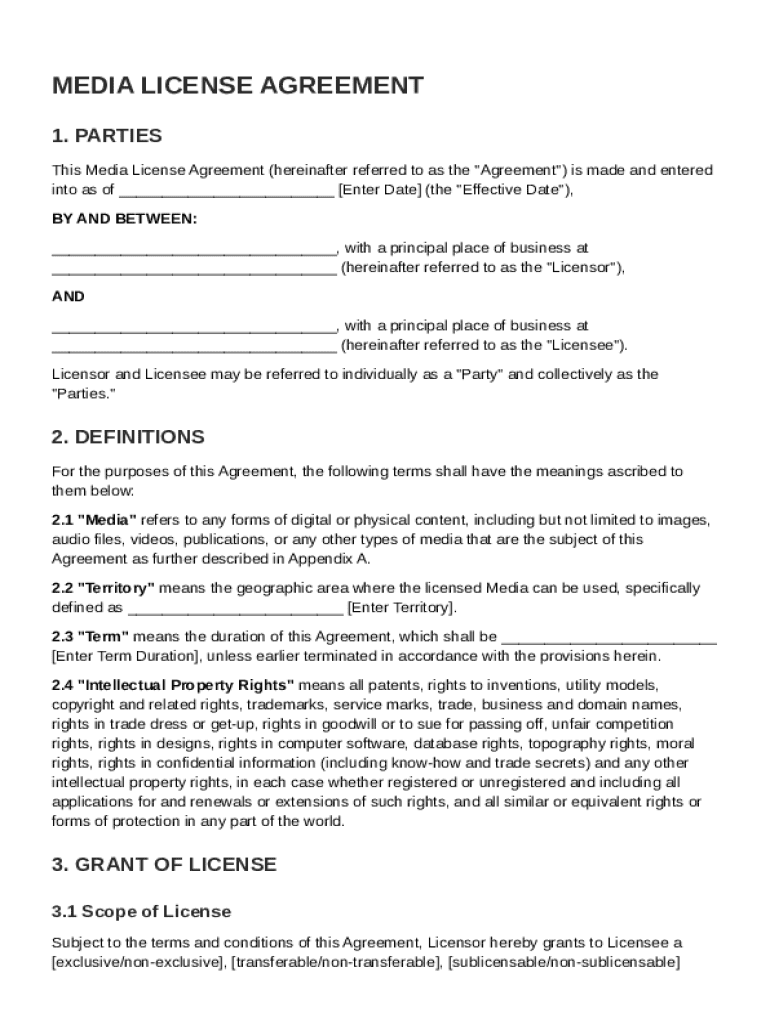
The Media License Agreement Template is a legal document used to define the terms under which one party (the Licensor) grants another party (the Licensee) rights to use specific media content. This agreement is crucial for regulating how media is shared, distributed, or reproduced, ensuring that intellectual property rights are respected and legal obligations are met. The document outlines critical terms such as the scope of usage, limitations, compensation, ownership rights, and the duration of the license. By clearly defining these elements, both parties understand their roles and responsibilities, minimizing potential disputes arising from misunderstanding the scope or terms of the license.
Key Components
- Licensor and Licensee Information: Identification of the parties involved, including contact details and legal representation.
- Content Description: Detailed description of the media content being licensed, including formats and any specific use cases or applications.
- Scope of Use: Defines how and where the media can be used, typically specifying territories, platforms, and whether sub-licensing is permitted.
- Duration of Agreement: The length of time the license is valid, which may range from a finite term to a perpetual agreement.
Key Elements of the Media License Agreement Template
Understanding the core elements of a Media License Agreement is vital for both parties to agree. These elements form the backbone of the agreement, dictating what is allowable under the terms of the license. Each component is designed to address a specific aspect of media usage and ownership.
- Compensation and Fees: Specifies how and when the Licensee will pay the Licensor, which might include upfront fees, royalties, or installment payments.
- Ownership Rights: Clarifies who maintains ownership over the media, ensuring that copyrights and other intellectual property protections remain clear and respected.
- Indemnification: A clause that protects both parties against legal action from third parties in the event of unauthorized use or infringement claims.
Termination Conditions
- Breach of Contract: Defines scenarios where the agreement can be terminated due to one party failing to meet their obligations.
- Mutual Agreement: Allows for termination if both parties agree to dissolve the contract before the expiration date.
Steps to Complete the Media License Agreement Template
Completing a Media License Agreement Template involves several precise steps. Proper completion ensures all legal bases are covered and provides clear guidance on usage rights.
- Gather Necessary Information: Collect all relevant details, including party names, contact information, and detailed descriptions of the media content involved.
- Define Terms Clearly: Specify the duration, territorial scope, and permissible uses of the media.
- Outline Compensation: Clearly state the payment terms, including amount, method, and schedule.
- Review Ownership and Indemnification Clauses: Ensure both parties understand and agree to these critical elements to avoid future disputes.
- Solicit Legal Review: Consider having the agreement reviewed by legal counsel to confirm compliance with applicable laws and regulations.
Legal Use of the Media License Agreement Template
Legal considerations are paramount when drafting a Media License Agreement. This document must comply with applicable laws and industry standards to be enforceable.
- Compliance with Intellectual Property Laws: Both parties must ensure the agreement adheres to intellectual property laws to protect the media's rights.
- Regulatory Requirements: The agreement should also meet any industry-specific regulations that apply to media distribution and usage.
- Dispute Resolution: The methods for resolving disputes, whether through arbitration, mediation, or courts, should be clearly defined and agreed upon.
Who Typically Uses the Media License Agreement Template
A variety of entities and individuals use Media License Agreement Templates to legally secure the usage of media assets.
- Media Companies and Broadcasters: Frequently license content for distribution, requiring agreements to protect and clarify rights.
- Content Creators and Artists: Protect their rights while allowing others to use or distribute their work.
- Commercial Enterprises: Utilize this template to procure media for advertising or internal communication purposes.


Examples of Using the Media License Agreement Template
Real-world scenarios can be insightful in understanding how a Media License Agreement Template is applied.
- Film Production Agency: A company licenses film clips from an independent filmmaker to include in a documentary.
- Music Licensing for Advertising: An advertiser licenses a popular song to use in a commercial campaign.
- Image Licensing for Publishing: A magazine licenses photos from a photographer to feature in an upcoming issue.
Versions or Alternatives to the Media License Agreement Template
Several versions and alternatives can adapt to different use cases or business needs.
- Standard vs. Custom Agreements: Standard templates offer predefined terms, while custom agreements can be tailored to specific negotiations.
- Digital vs. Physical Media Licenses: Depending on the media format, organizations might use different templates, such as video, audio, or digital content licenses.
Important Terms Related to Media License Agreement Template
Understanding vocabulary within a Media License Agreement can prevent misinterpretation and misuse.
- Licensor and Licensee: Clearly distinguishes the party granting the license and the party receiving it.
- Sub-Licensing Rights: Whether the Licensee can grant further licenses to third parties.
- Exclusivity: Determines if the license is exclusive to one Licensee or can be shared with multiple parties.