







Definition & Meaning
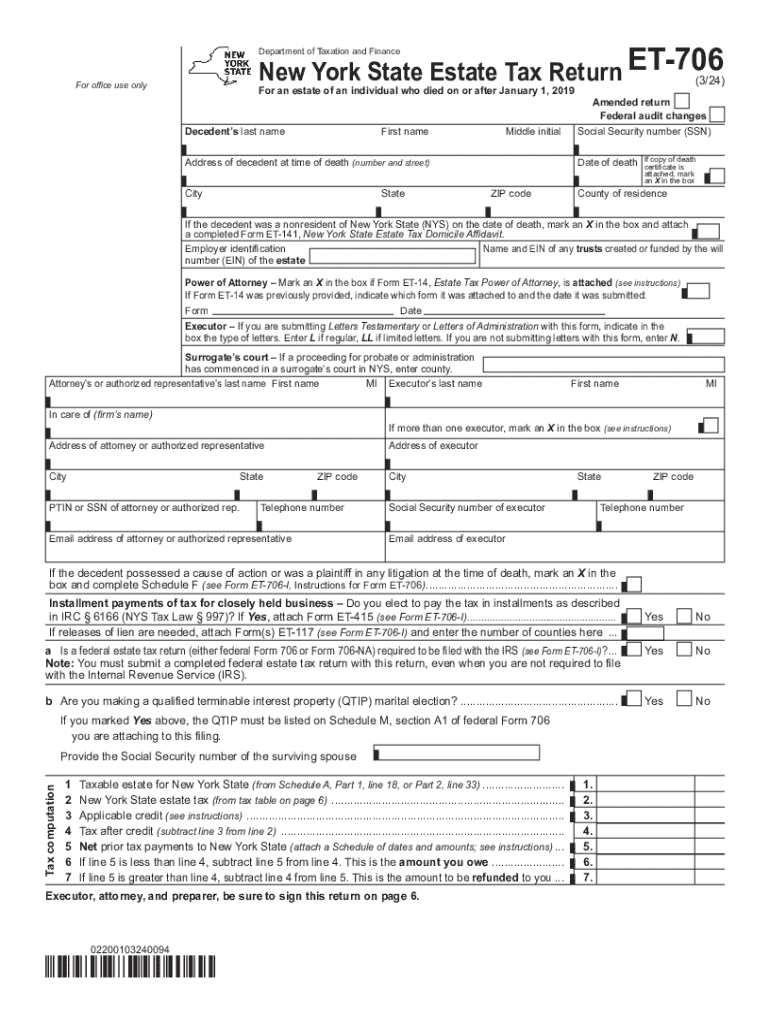
The "NYS Tax Department: Changes to certain estate tax forms" typically relates to modifications made to the New York State Estate Tax Return, known as Form ET-706. These changes may encompass updates to form instructions, amendments to reporting requirements, or alterations in tax calculations. The form is crucial for estate executors, as it provides a framework for reporting and paying estate taxes on behalf of the decedent.
Importance of Form ET-706
- Documentation: Essential for documenting the estate's financial obligations and assets.
- Compliance: Ensures adherence to state tax laws.
- Calculation: Helps in computing the relevant estate taxes owed to the state.
Key Elements of the Form
Estate Tax Computation
This section involves calculating the total estate tax due. Executors should pay attention to:
- Valuation of Estate Assets: Accurate valuation of properties, investments, and other estate components.
- Taxable Gifts: Reporting prior taxable gifts that may influence the estate's tax obligations.
- Applicable Deductions: Deductions that can lower the estate's taxable value, such as charitable contributions and marital deductions.
Personal Information
- Decedent's Details: Full name, date of death, and Social Security number.
- Executor Information: Contact details and relationships to the decedent.
Filing Deadlines / Important Dates
Estate taxes in New York must be filed within nine months of the decedent's date of death. Both federal and state returns may be required, depending on the estate's size. Late filing can result in significant penalties; hence, timely submission is essential.
Steps to Complete the Form
- Gather Necessary Documents: Collect financial statements, deeds of assets, and previous tax filings.
- Complete Personal Sections: Fill in the decedent and executor information accurately.
- Calculate Tax Liability: Use estate valuation figures to compute the tax using the NYS estate tax rates.
- Attach Required Documentation: Submit any supporting documents, such as appraisals or receipts for deductions.
- Review and Submit: Double-check the form for accuracy before submission.
Who Typically Uses the Form


Executors and Administrators
Executors or administrators of an estate, who are responsible for settling the decedent's financial affairs, use this form as part of the estate settlement process.
Legal and Tax Professionals
Attorneys and accountants specializing in estate planning and tax law frequently assist with the form to ensure accuracy and compliance.
Legal Use of the Form
Form ET-706 is legally required for estates that meet New York's taxable estate thresholds. The form, adhering to state regulations, ensures that estate taxes are calculated and paid correctly, preventing potential legal disputes and penalties for underpayment.
Compliance Requirements
- Accurate Reporting: All assets and liabilities should be reported with precision.
- Timely Filing: Submission within the stipulated timeframe to avoid fines.
Examples of Using the Form
Consider an executor responsible for a large estate with complex assets, such as multiple properties, investments, and intangible assets. The executor would:
- Valuate Assets: Ensure the value of all properties and assets is accurately assessed.
- Report Deductions: Document any allowable deductions, such as debts owed by the estate or funeral expenses.
- Submit the Form: File the completed form alongside any necessary attachments with the NYS Tax Department.
Required Documents
When completing the NYS estate tax forms, several documents are essential for verification.
Document Checklist
- Death Certificate: Verifies the decedent's passing.
- Financial Statements: Statements showing bank balances and investment portfolios.
- Property Title Deeds: Documentation of real estate owned by the estate.
- Appraisals: Independent valuations of significant estate assets.
Penalties for Non-Compliance
Estates failing to submit Form ET-706 within the allotted nine-month window risk financial penalties.
Potential Consequences
- Monetary Fines: Accrued interest and penalties on overdue taxes.
- Legal Action: Potential legal proceedings for tax evasion or underreporting.
- Interest Accumulation: Interest on unpaid taxes can compound, increasing the estate's financial liability.
Versions or Alternatives to the Form
Estate tax forms may vary slightly depending on legislative changes or updates to tax laws. Executors should ensure they use the most recent version of Form ET-706, available from the New York State Department of Taxation and Finance's official website, to guarantee compliance with current legal standards.
This comprehensive content provides vital insights into understanding and completing the NYS Estate Tax Return ET-706, ensuring executors can manage their duties effectively while adhering to state tax requirements.




