




01. Edit your form online
Type text, add images, blackout confidential details, add comments, highlights and more.

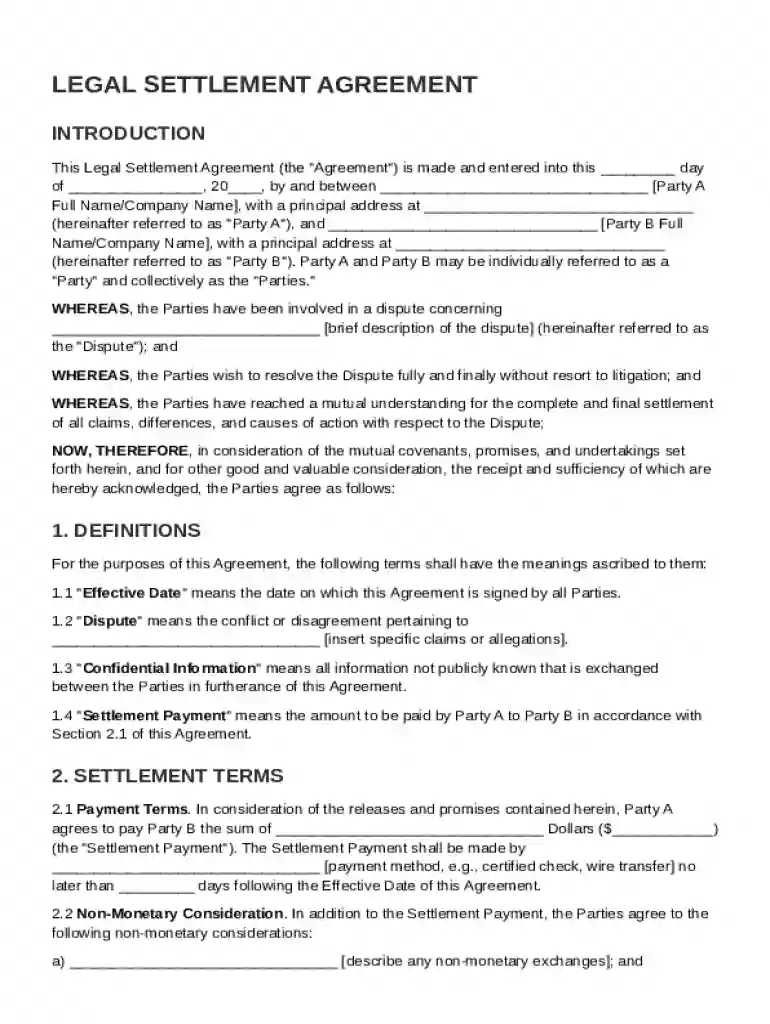
Type text, add images, blackout confidential details, add comments, highlights and more.

Draw your signature, type it, upload its image, or use your mobile device as a signature pad.

Send it via email, link, or fax. You can also download it, export it or print it out.
A Legal Settlement Agreement Template is a structured document utilized to resolve disputes between two parties without resorting to litigation. Its primary purpose is to outline the terms and conditions agreed upon by the involved parties, ensuring a mutual resolution to conflicts. This template typically includes specific sections detailing the payment terms, non-monetary agreements, and the formal release of claims. The use of a legal settlement agreement is essential to reflect that the parties have reached an understanding without admitting any liability, thus maintaining their legal standing.
The template is composed of several crucial elements that need to be thoroughly considered and understood by the parties involved:
Settlement Payment Terms: This section specifies any financial compensation agreed upon, including the payment schedule, amount, and any conditions tied to the payment.
Non-Monetary Considerations: These might include obligations or concessions that do not involve a financial component, such as the return of property or agreement to certain actions.
Release of Claims: This critical aspect ensures that both parties waive any future legal claims related to the dispute, providing finality to the agreement.
Confidentiality Obligations: Parties may agree to keep the details of the settlement private, with specific provisions outlining what information must remain confidential.
Governing Law: Specifies the jurisdiction under which the agreement is governed, typically the state where the agreement was executed or where the parties reside.
Identify the Parties: Clearly list the names and contact details of both parties involved in the agreement.
Settle on Key Terms: Agree upon the financial and non-monetary terms as well as any releases or obligations.
Draft the Agreement: Use the template to draft an initial version, ensuring all agreed terms are accurately reflected.
Review for Compliance: Ensure the draft complies with relevant legal standards and addresses all necessary legal elements.
Consult with Legal Counsel: Have an attorney review the agreement to ensure it's legally sound and fair to both sides.
Finalize and Sign: Once both parties are satisfied, sign the agreement in the required manner (electronically or in physical form).
This template serves various legal purposes and can be used in different scenarios:
Contractual Disputes: When two parties have a disagreement about the terms or enforcement of a contract.
Business Conflicts: Useful for resolving disputes between business partners or clients.
Employment Issues: Can settle disagreements between employers and employees, often involving severance or work-related terms.
Personal Injury Claims: Used to settle disputes related to personal injury cases without going to trial.
Understanding specific terminologies is crucial for utilizing the template effectively:
"Indemnity Clause": A provision where one party agrees to compensate the other for certain damages or losses.
"Mutual Release": Both parties agree to waive any potential legal actions against each other.
"Arbitration Clause": An agreement that disputes will be resolved through arbitration instead of court trials.
"Consideration": The benefit or compensation exchanged between the parties, making the agreement binding.
Each U.S. state may have distinct laws and regulations that can impact the use of a settlement agreement:
California: Requires specific language regarding the waiver of unknown claims to be valid.
New York: Enforces stringent confidentiality requirements and specific enforceability standards.
Texas: Places importance on the consideration and fairness of the agreement's terms.
Understanding these nuances is essential in crafting a legally acceptable document.
Examples where settlement agreements can be practically applied include:
Employment Termination: Where severance pay and post-employment obligations are settled amicably.
Property Disputes: Resolving property ownership conflicts with agreed monetary compensation or property exchange.
Business Partner Buyout: One partner exits the business, cashing out their equity in a mutually agreed fashion.
While this template addresses typical settlement needs, other versions or alternatives may include:
Mediation Settlement Agreements: Used following a formal mediation process.
Standardized Industry Agreements: Tailored to specific industries with unique dispute characteristics.
Customized Agreements: Highly specific to the case in question, crafted by legal professionals.
These alternatives may better suit complex or industry-specific disputes.
At DocHub, your data security is our priority. We follow HIPAA, SOC2, GDPR, and other standards, so you can work on your documents with confidence.




This settlement agreement (Agreement) between and among Plaintiff Federal Home Loan Bank of Chicago
Nov 1, 2023 The Settlement model whereby Adyen will Settle Merchants daily Transaction volume on the agreed payout day as set out in the Sales Day PayoutRead more
Aug 1, 2022 This Release and Settlement Agreement (the Agreement) is made as of the th day of , 2022 (notwithstanding the actual date of.Read more


