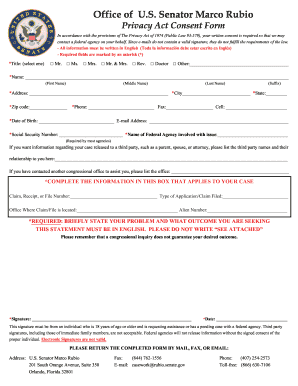
01. Edit your form online
Type text, add images, blackout confidential details, add comments, highlights and more.

Type text, add images, blackout confidential details, add comments, highlights and more.

Draw your signature, type it, upload its image, or use your mobile device as a signature pad.

Send it via email, link, or fax. You can also download it, export it or print it out.
The Government Direct Deposit Form 1199A, commonly referred to as Standard Form 1199A, is a crucial document used to authorize the direct deposit of government payments into a designated bank account. This form streamlines the transfer of funds by allowing electronic deposits, which are faster and more efficient than traditional paper checks. It requires personal and banking information from the payee and verifies this data with the financial institution before submission. The primary goal of this form is to ensure that recipients receive their payments securely and promptly.
To utilize Standard Form 1199A effectively, follow a series of structured steps:
Gather Required Information: Collect your personal details, including your Social Security Number or Taxpayer Identification Number, and your specific banking details, such as your account and routing numbers.
Complete the Form: Provide accurate information in all required fields. Pay careful attention when entering your bank account information to avoid errors that could delay deposits.
Financial Institution Verification: Take the completed form to your bank or credit union. A representative must verify the information and sign the form to confirm its accuracy. This step ensures that the details correspond precisely to your banking records.
Submit to the Appropriate Agency: Once verified, submit the form to the relevant government agency disbursing your payments. Ensure that it is addressed correctly for efficient processing.
The process of completing the Standard Form 1199A follows a detailed sequence to ensure accuracy and compliance:
Personal Information: Fill in your personal information, including your full name, address, and contact number. Double-check for any typos or mistakes.
Payment Information: Provide the details of the type of government payment you are authorizing for direct deposit. Specify if it is for federal salary, pension, or another payment type.
Banking Details: Enter your bank or financial institution's information. This includes the type of account (checking or savings), account number, and routing number. Verify these details with a bank statement or check for precision.
Financial Institution Section: Visit your bank to complete this section. A bank officer must certify the information provided to validate the form's authenticity.
Final Review and Submission: Review the entire document to confirm all fields are correctly filled. Submit the signed and verified form to the relevant government office as instructed. Retain a copy for your records.
Several key terms are relevant when dealing with the Standard Form 1199A:
The Standard Form 1199A serves as a legally binding document that authorizes the U.S. Government to make electronic deposits into a specified bank account. By signing the form, the payee consents to the terms and conditions outlined within. The form requires verification by a financial institution, ensuring compliance and accuracy. Any changes in personal or banking information must be promptly updated through submission of a new form to avert disruptions in payment receipt. Its legal standing underscores the importance of completing the form precisely and maintaining up-to-date information.
Several critical components make up the Standard Form 1199A:
The use of the Standard Form 1199A is generally intended for individuals receiving government payments, such as employees, retirees, or beneficiaries of government programs. Eligibility criteria may vary slightly depending on the specific type of payment or program. Participants must have an active bank account capable of receiving direct deposits and must reside within the United States for seamless processing. Individuals are advised to refer to specific agency guidelines to confirm eligibility status.


There are multiple methods for submitting the Standard Form 1199A:
At DocHub, your data security is our priority. We follow HIPAA, SOC2, GDPR, and other standards, so you can work on your documents with confidence.