
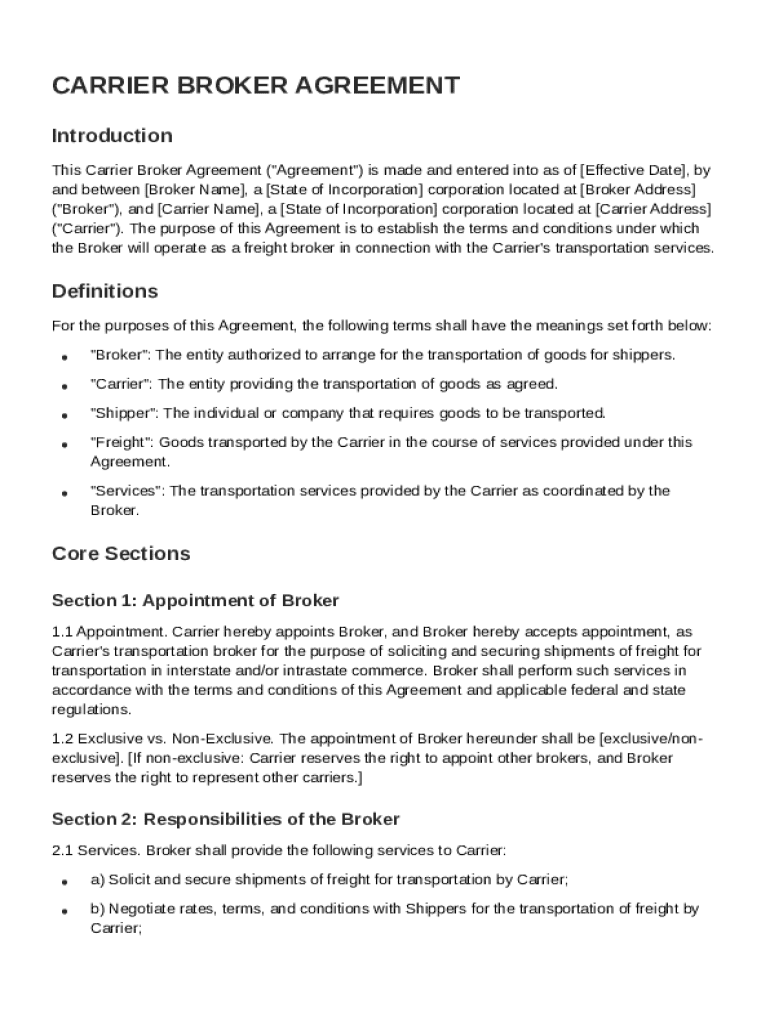







Definition and Meaning of the Carrier Broker Agreement Template
The Carrier Broker Agreement Template serves as a contract between a freight broker and a carrier. It defines the roles and responsibilities related to the transportation of goods. This important document delineates obligations for both parties, focusing on terms like compliance with regulations, compensation terms, liability limitations, and dispute resolution. The objective of the template is to foster collaboration between the broker and carrier, ensuring clear communication in the process of securing and transporting shipments, while also providing legal protection.
How to Use the Carrier Broker Agreement Template
Using the Carrier Broker Agreement Template effectively involves several key steps:
-
Download and Review: Obtain the template from a trusted source and thoroughly review the content to understand all aspects of the agreement.
-
Customize the Agreement: Edit the template to reflect specifics pertinent to your transaction, such as names, addresses, compensation structures, and particular terms of engagement.
-
Consult Legal Experts: Prior to finalizing, seek legal advice to ensure the template meets all applicable laws and reflects the intended purpose effectively.
-
Engage Parties to Review: Share the draft with the concerned parties for their review, ensuring that both the broker and carrier are in agreement with the contents.
-
Sign and Execute: Once reviewed and agreed upon by all parties, execute the agreement with digital or physical signatures.
Steps to Complete the Carrier Broker Agreement Template
To complete the Carrier Broker Agreement Template, follow these detailed steps:
-
Enter Party Information: Fill in the specific information for involved parties, including names, contact details, and business addresses.
-
Define the Scope: Clearly outline the scope of services, including the types and volumes of goods to be transported.
-
Specify Terms and Conditions: Include terms regarding payment, deadlines, and services.
-
Include Compliance Clauses: Add clauses detailing compliance with state and federal regulations, such as FMCSA guidelines.
-
Finalize Dispute Resolution Details: Define how disputes will be managed, whether through mediation, arbitration, or legal proceedings.
-
Add Signature Blocks: Provide space where the broker and carrier can sign, along with the date of signature.
Key Elements of the Carrier Broker Agreement Template
Important elements ensure the completeness and effectiveness of the Carrier Broker Agreement Template, including:
- Identification of Parties: Names and contact information of the broker and carrier.
- Appointment Clauses: Details on how the broker is appointed and authorized.
- Compensation Structure: Specifics on fees, rates, and payment schedules for services rendered.
- Regulatory Compliance: Mention of adherence to all relevant transportation laws and standards.
- Liability and Indemnification: Terms that outline responsibility and who will bear costs for potential issues or damages.
- Confidentiality Obligations: Agreements to protect sensitive information shared between the parties.
Legal Use of the Carrier Broker Agreement Template
When drafting a Carrier Broker Agreement, it’s critical to ensure the template is used appropriately to provide legal coverage and compliance, including:
- Adherence to the ESIGN Act standards for electronic signatures, ensuring the document's legality.
- Compliance with Federal Law and regulations, including the Federal Motor Carrier Safety Administration (FMCSA) standards.
- Confidentiality clauses that bind parties to nondisclosure of sensitive business information.
Important Terms Related to Carrier Broker Agreement Template
Understanding key terms related to the Carrier Broker Agreement Template will ensure all parties interpret the document consistently:
- Freight Broker: The intermediary arranging the transport of goods on behalf of clients.
- Carrier: The party responsible for actual transportation.
- Bill of Lading: A document issued by a carrier acknowledging receipt of cargo.
- Accessorial Charges: Additional fees outside standard handling, such as detention fees.
Examples of Using the Carrier Broker Agreement Template
Consider the following scenarios which benefit from a Carrier Broker Agreement Template:
- Small Businesses: A start-up needing to distribute products efficiently would use the template to formalize agreements with local carriers.
- Manufacturers: Companies that require a repeated freight arrangement for raw materials may enter into such agreements for clarity and assurance.
- Logistics Firms: These companies use agreements regularly to onboard third-party carriers for peak season demands.
State-Specific Rules for the Carrier Broker Agreement Template
State-specific rules may affect the implementation of the Carrier Broker Agreement Template, such as:
- California's Employment Laws: Specific guidelines regarding broker-carrier relationships may require additional clauses to address worker classification.
- Texas Transportation Code: Provisions unique to outdoor advertising or permitting might be included in agreements involving Texas.
Versions or Alternatives to the Carrier Broker Agreement Template
There are variations and potential alternatives to consider, to ensure the best fit for organizational needs:
- Standard Transportation Agreement: Useful when a more generic arrangement not limited to brokers is preferable.
- Customized Contracts: Tailored agreements developed by legal counsel specifically for complex transactions.
- Online Templates: Platforms like DocHub provide standardized templates that can be modified per need.
Business Types that Benefit Most from Carrier Broker Agreement Template
Various business types find Carrier Broker Agreements crucial:
- Logistics Companies: To secure third-party carrier services efficiently.
- Retail Chains: For establishing partnerships to transport goods from distribution centers to outlets.
- Agricultural Producers: Needed for shipping harvests according to season.
- E-commerce Businesses: Relying on efficient shipping agreements to handle large volumes of deliveries.




