
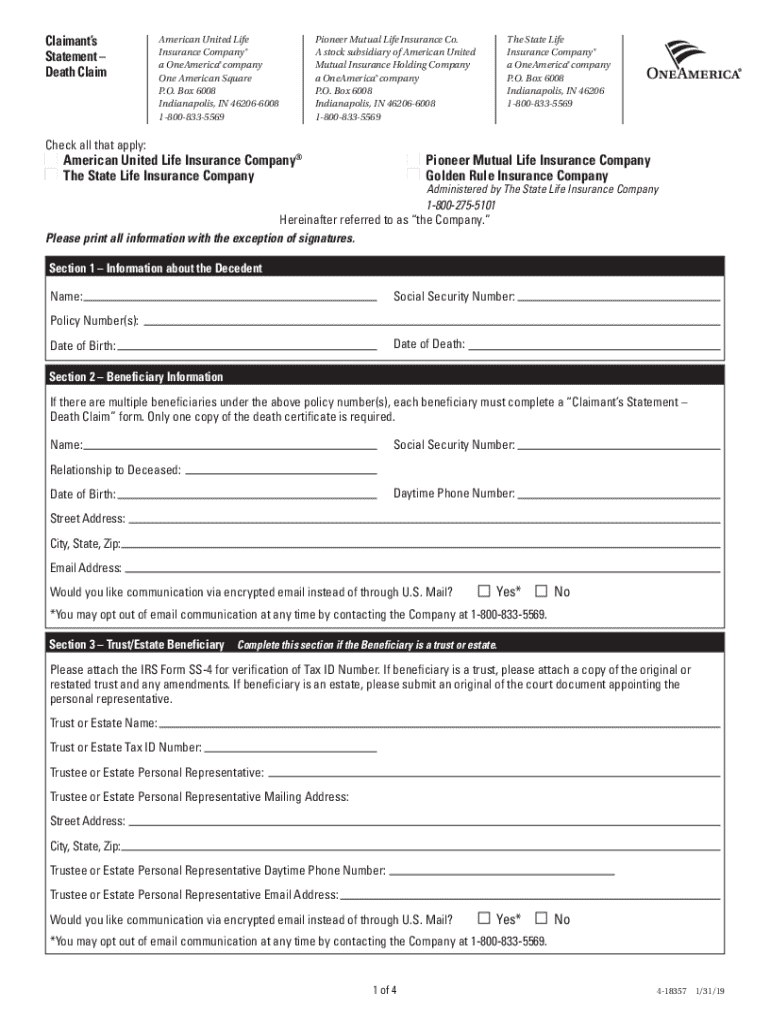







Definition & Meaning of Life Insurance and Annuities Claims
Life insurance and annuities claims are requests submitted to an insurance company to receive benefits from a life insurance policy or annuity contract. These claims are initiated when the insured event, such as the policyholder's death, occurs. For annuities, claims may also arise when the annuitant reaches a predefined age or another contractual milestone. The process involves submitting documentation to the insurance provider to verify eligibility for the payout as stipulated in the contract. Each claim must meet the agreement's specific terms, ensuring that the beneficiary or annuitant receives the proper compensation.
Types of Claims
- Death Benefit Claims: Submitted by beneficiaries upon the policyholder's death to receive the insured amount.
- Annuity Payout Claims: Filed to initiate periodic payments to the annuitant based on the terms set by the annuity contract.
Practical Examples
Beneficiaries of a deceased policyholder file death benefit claims to manage financial responsibilities such as funeral costs. Retirees may submit annuity payout claims to access a steady income stream for retirement.
Steps to Complete the Life Insurance and Annuities Claims
Completing a life insurance or annuities claim involves systematic steps to ensure all required information and documentation are provided.
- Gather Required Documents: Obtain essential documents like the original insurance policy, certified death certificate, and any other documents as specified by the insurer.
- Fill Out Claim Forms: Obtain and meticulously complete the claim forms provided by the insurance company. Ensure accuracy in all personal and policy-related details.
- Submit the Claim: File the claim via the insurer's preferred channel—online, by mail, or in person—ensuring adherence to submission guidelines.
- Follow Up: Keep track of the claim processing status and be ready to furnish additional information if requested by the insurer.
Special Cases
- Multiple Beneficiaries: Ensure each beneficiary provides the necessary documents independently.
- Estates and Trusts: Consult legal advisors to handle claims under trusts or probate.
Required Documents for Life Insurance and Annuities Claims
The documentation required to process life insurance and annuities claims ensures that the payout goes to the rightful beneficiaries or annuitants as per the agreement.
- Certified Death Certificate: Confirms the policyholder's demise, a prerequisite for death benefit claims.
- Completed Claim Form: Provided by the insurer, must be accurately filled and signed.
- Original Policy Document: Verifies the details and legitimacy of the claim.
- Proof of Identity: May include government-issued IDs of beneficiaries or annuitants.
Additional Documents
- Medical Records: If applicable, may be required to validate aspects of the claim related to health conditions.
- Authority Certificates: Such as probate or letters of administration, if the estate is involved.
Key Elements of the Life Insurance and Annuities Claims
Key elements determine the nature and outcome of a life insurance or annuity claim and include, among others:
- Policy Number: Serves as a unique identifier for claims processing.
- Beneficiaries: Identified individuals or entities entitled to receive the policy's benefits.
- Coverage Details: Specific inclusions and exclusions as per the policy terms.
- Payment Options: Settlement choices, such as lump-sum or annuity distributions.
Common Settlement Preferences
- Lump Sum: Provides immediate access to total benefits, often preferred for large expenses.
- Installments: Offers ongoing payments for extended financial planning.
Legal Use of the Life Insurance and Annuities Claims
Legal usage maintains the integrity and compliance of life insurance and annuities claims with state and federal regulations.
Compliance Requirements
- Adherence to ESIGN Act: Ensures electronic transactions and signatures are valid.
- Timely Filing: Respect deadlines to avoid disputes or denials due to outdated claims submissions.
Case Law Examples
In disputes, courts have referenced compliance with policy terms and state regulations to affirm beneficiaries' claims.
State-Specific Rules for Life Insurance and Annuities Claims
Life insurance and annuities claims are subject to variations dictated by state laws.
- Filing Deadlines: Can differ, influencing the time frame for submitting claims.
- Consumer Protection Laws: Dictate notifications and resolutions for disputes.
- State Mandates: May affect tax treatments or benefit calculations.
Examples
- California: Provides a specific period for insurers to respond to claims.
- New York: Imposes strict regulations on insurer communications.
Eligibility Criteria for Life Insurance and Annuities Claims
Eligibility requires satisfying certain conditions outlined in the insurance policy or annuity contract.
- Proper Beneficiary Identification: Ensures the claimant is rightfully entitled.
- Policy Validity: Must be active, with premiums paid and conditions met before the insured event.


Ineligibility Scenarios
- Policy Lapse: Claims could be denied if the policy was not in force due to non-payment.
- Contested Death: Claims might face additional scrutiny under contestable clauses.
Who Typically Uses the Life Insurance and Annuities Claims
Understanding typical claimants helps tailor the claims process to meet diverse needs effectively.
- Beneficiaries of Deceased Policyholders: Seek financial support through death benefits.
- Annuitants: Individuals receiving structured payouts during retirement.
- Trusts and Estates: Often involved in claims to distribute benefits prudently.

Business Uses
Corporations may maintain life insurance on key employees, entitling them to file claims for the benefit of the organization.




