






Definition and Meaning
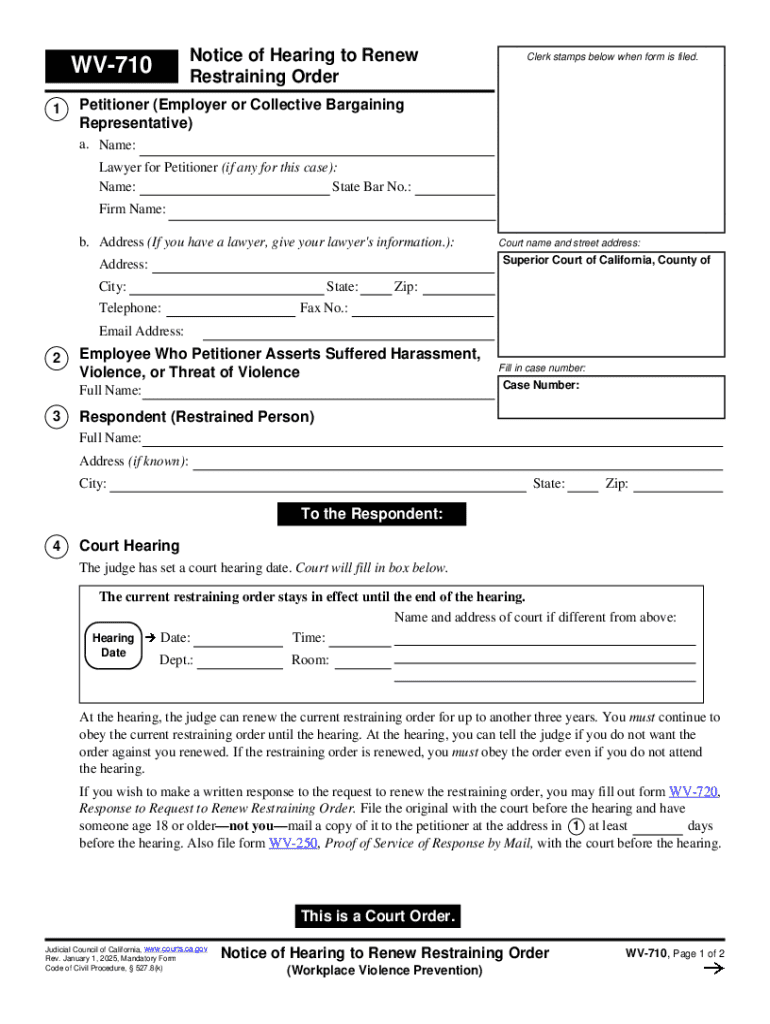
The Wv-710 form is primarily associated with workplace violence prevention in the context of restraining orders. It serves as a formal notice for the renewal of a restraining order, specifically designed to address ongoing concerns of violence or threats within a work environment. This form plays a critical role in providing legal protection to individuals who have been previously granted a restraining order and wish to extend this protection.
Key Aspects of the Wv-710
- Purpose: The form is used to request the continuation of a restraining order related to workplace violence, ensuring the safety of the affected parties.
- Legal Context: Falls under workplace violence prevention laws, which vary by state but generally aim to protect employees from harm or harassment at work.
- Timing: The renewal must be sought before the original restraining order expires, allowing for a seamless transition.
How to Use the Wv-710
Using the Wv-710 form involves several structured steps to ensure compliance and proper filing. This process is essential for maintaining the protective measures initially established by the court.
- Complete the Form: Fill out all required sections with accurate and comprehensive information, specifying the need for renewal.
- Gather Supporting Documents: Collect past evidence of workplace violence or reasons justifying the renewal request.
- Submit to Court: File the completed form with the appropriate court, meeting all local guidelines and requirements.
Step-by-Step Process
- Identify Requirements: Review state-specific requirements for renewing a workplace violence restraining order.
- Filing: Procedures may vary, but commonly include submitting the Wv-710 to the court clerk in person, by mail, or electronically.
- Follow Up: Track the filing status and prepare for any potential hearings that the court may schedule.
Steps to Complete the Wv-710
Filling out the Wv-710 requires attention to detail and understanding of the required information. This ensures the form is processed without delays.
Detailed Instructions
- Personal Information: Enter the applicant's and respondent's full names and contact details.
- Case Details: Include the original restraining order number and any relevant case information.
- Continuation Justification: Clearly articulate the reasons for requesting the renewal, supported by evidence.
Additional Considerations
- Legal Assistance: Consulting with a lawyer can provide guidance and ensure accuracy.
- Reviewing State Laws: Laws related to workplace violence prevention may influence how you approach each section of the form.
Legal Use of the Wv-710
The Wv-710 form serves a specific legal purpose in the context of workplace safety and protection. Understanding its appropriate use is crucial for both applicants and legal practitioners.
Legal Implications
- Protection Continuation: Ensures that individuals continue to receive the protective benefits of an existing workplace restraining order.
- Compliance with Laws: Adherence to state and federal regulations regarding restraining orders and workplace safety.
- Court Hearings: The court may require a hearing to review the request and determine if renewal is justified.
Key Elements of the Wv-710
Understanding the core components of the Wv-710 can aid in completing the form efficiently and effectively.
Core Sections
- Applicant Information: Includes details about the individual seeking the renewal.
- Respondent Information: Pertains to the person from whom protection is sought.
- Reason for Renewal: A detailed account of the workplace violence incidents or threats that warrant continued protection.
State-Specific Rules for the Wv-710
State regulations can significantly impact the application and renewal process for the Wv-710. Each state may have distinct guidelines that can influence filing requirements and eligibility.
State Variations
- Filing Deadlines: Some states have stricter timelines for submission compared to others.
- Documentation Requirements: Variability in what supporting evidence is required.
- Court Procedures: Differences in how hearings and reviews are conducted.
Examples of Using the Wv-710
Providing real-world scenarios can help illustrate the practical application and benefits of the Wv-710 form.
Practical Applications
- Scenario One: An employee previously harassed by a coworker at work files the Wv-710 to ensure continued protection after repeated threats.
- Scenario Two: A business owner files for renewal to safeguard employees from an ex-employee who had been previously restrained but has continued to make threatening advancements.
Required Documents
Supporting documentation is vital when submitting a Wv-710 to increase the likelihood of approval and prompt processing.
Essential Documents
- Previous Restraining Order: A copy of the original order that is set to expire.
- Incident Reports: Documentation such as police reports or HR logs detailing ongoing violence or threats.
- Witness Statements: Testimonies from colleagues or witnesses that corroborate the need for extension.
Filing Deadlines and Important Dates
Meeting deadlines is crucial when dealing with legal forms like the Wv-710 to avoid gaps in protection.
Critical Timing
- Renewal Timeline: Must be filed before the current restraining order expires.
- Court Dates: Anticipate the scheduling of any hearings by the court to assess the renewal request.
Understanding and conforming to these components ensures that applicants use the Wv-710 effectively, maintaining the intended legal protections against workplace violence.