





Definition and Meaning
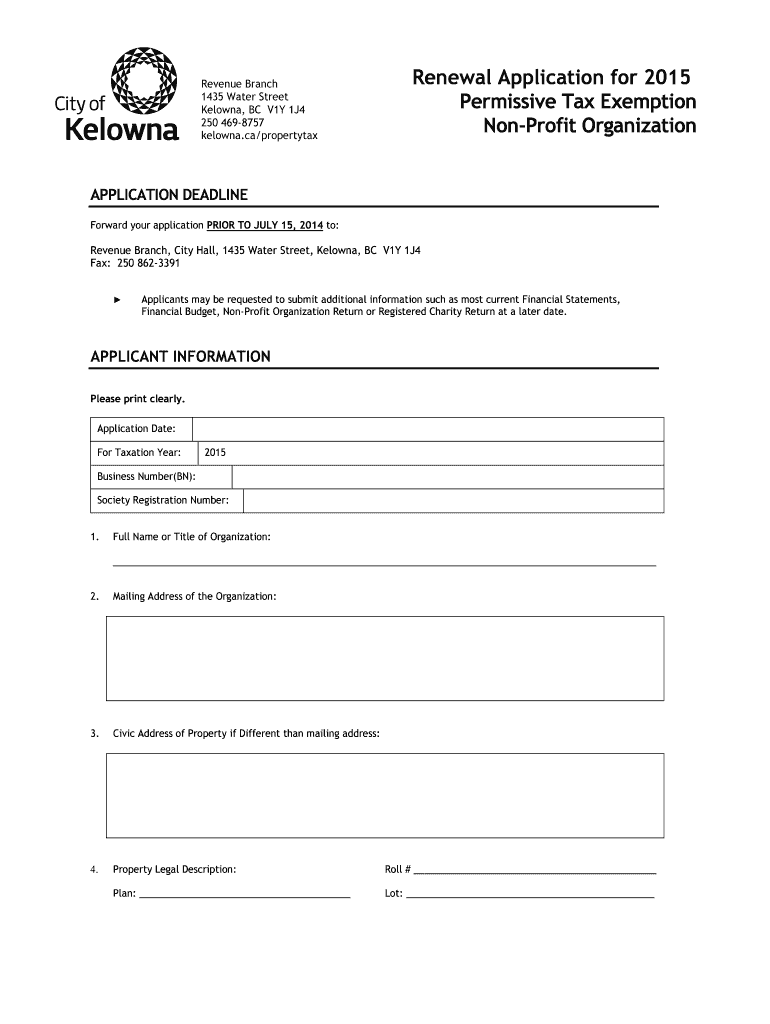
Permissive tax exemptions are discretionary tax reliefs provided by local governments for properties owned by non-profit organizations, charities, and other eligible entities. These exemptions help reduce the cost burden on organizations working towards public benefit, thereby supporting their community-based missions. The renewal application for permissive tax exemptions in the Kelowna area is a structured process ensuring continued compliance and eligibility for these entities.
Steps to Complete the Permissive Tax Exemption Renewal Application
-
Gather Necessary Information:
- Start by collating financial statements, proof of non-profit status, and any changes in organizational structure since the last application.
- Confirm the purpose and use of the property align with exemption requirements.
-
Review Eligibility Criteria:
- Ensure the property remains eligible by checking local statutes regarding permissible uses for tax exemption status.
-
Fill Out the Application Form:
- Complete sections detailing the organization's details, financial information, and property use.
- Provide any supplemental documentation as requested.
-
Submit by Deadline:
- Typically, submissions must be completed by July 15 each year to ensure timely processing.
Required Documents
- Financial Statements: Detailed records illustrating the organization's income, expenditures, and financial health.
- Proof of Non-Profit Status: Certifications or documentation verifying non-profit designation.
- Property Use Documentation: Evidence that supports the current use of the property aligns with exemption purposes.
Eligibility Criteria
To qualify for the Kelowna permissive tax exemptions, organizations must generally meet these criteria:
- Operate within non-profit status with a focus on community benefit.
- Utilize the property for purposes aligned with criteria set by local statutes, such as public worship, education, or charity.
- Provide lawful and non-discriminatory services to the community.


Application Process and Approval Time
After submission, applications undergo a review process where authorities assess compliance with all specified requirements:
- Initial Review: The local tax authority scrutinizes applications to confirm documentation accuracy and eligibility.
- Approval Notification: Qualified applicants are notified about their exemption status, typically within several months post-submission.
- Rectification Opportunity: Organizations with discrepancies are often allowed a period to correct or supplement their applications.
Key Elements of the Permissive Tax Exemption Renewal Application
- Applicant Information: Comprehensive contact details and legal status of the applicant organization.
- Property Details: Exact descriptions of property locations, boundaries, and current uses.
- Financial Reporting: Insights into the organization's financial activities over the past year.
- Operational Changes: Document any significant alterations in operations, governance, or property use since the previous application.
Filing Deadlines and Important Dates
- Annual Deadline: The primary deadline for submission is July 15. Missing this date can jeopardize exemption renewal.
- Notification Period: Applicants are typically advised of the status by late autumn, allowing for preparations in the upcoming tax year.
Examples of Using the Permissive Tax Exemption Renewal
Consider a non-profit community center offering educational workshops. They rely on the exemption to allocate funds typically reserved for property taxes toward expanding programs. Each year, they meticulously prepare their renewal application, ensuring they highlight their community impact to maintain their exemption status.
Penalties for Non-Compliance
Failing to comply with renewal requirements or deadlines can lead to penalties:
- Loss of Exemption: Property tax obligations could revert to full rate, posing significant financial burdens.
- Back-Payment Demands: Authorities might require repayment of the previous year's exempted taxes if ineligible.
- Administrative Fines: Incorrect or misleading information can result in procedural fines or legal scrutiny.
Important Terms Related to the Permissive Tax Exemption Renewal Application
- Eligible Property: Property types or uses qualifying under current exemption guidelines.
- Non-Profit Criteria: Specific status markers required for organizational eligibility.
- Compliance Documentation: Required proofs confirming adherence to exemption conditions.
By understanding the nuances associated with the Permissive Tax Exemption Renewal Application, organizations can ensure compliance, leverage community benefit initiatives, and maintain financial viability through structured tax relief.