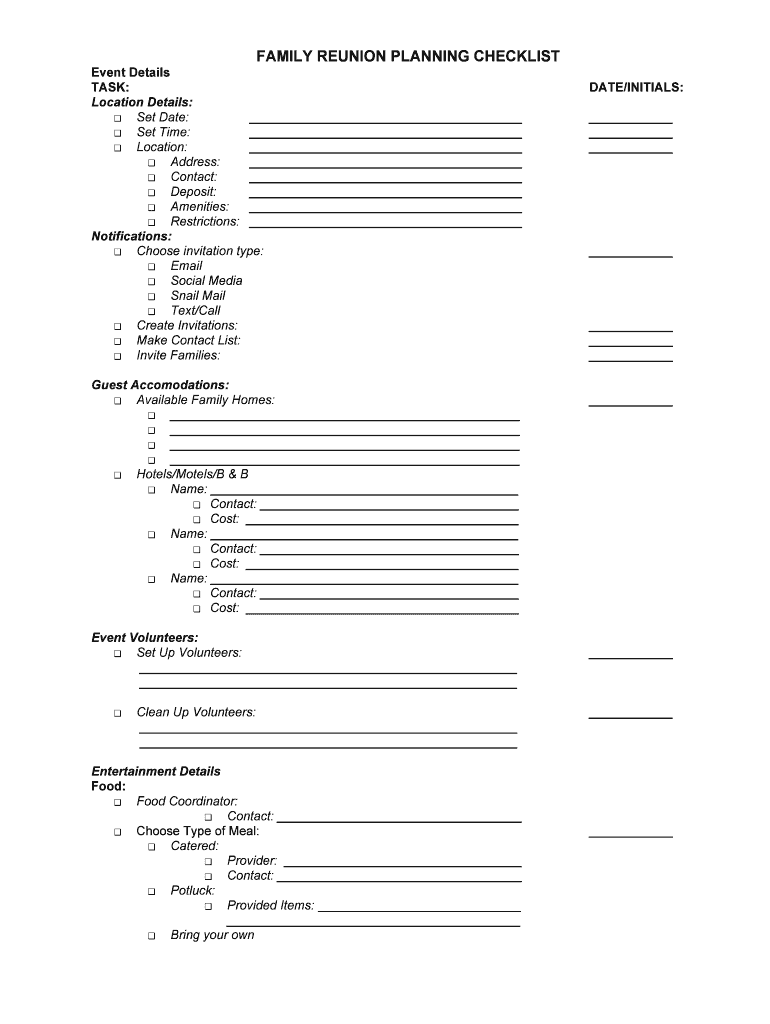







Key Elements of the Family Reunion Planning Checklist
The Family Reunion Planning Checklist is a vital tool designed to ensure all aspects of organizing a family reunion are thorough and effective. It typically includes.
-
Logistics: Planning the date, time, and location of the event. Factors such as weather, venue availability, and travel considerations for attendees should be taken into account.
-
Guest Accommodations: Arranging accommodations for out-of-town guests. This involves booking hotels or coordinating home stays and considering group bookings for discounts.
-
Food Arrangements: Deciding whether to cater or have a potluck-style meal. This may include setting a menu, considering dietary restrictions, and organizing food preparation.
-
Entertainment: Selecting entertainment options such as games, music, or hired performers. Planning activities for different age groups ensures all attendees have a memorable experience.
-
Volunteer Coordination: Organizing roles for family members to assist with various tasks. This allows for an efficient distribution of responsibilities and enhances involvement.
-
Guest List: Compiling a comprehensive list of attendees. This ensures that all family members are invited and that necessary arrangements for the event's scale are made.
Steps to Complete the Family Reunion Planning Checklist
-
Initiate Planning Early: Start the planning process 6-12 months in advance. This time frame allows for venue booking and accommodation arrangements.
-
Form a Planning Committee: Choose individuals to serve as decision-makers. A diverse group can help gather different perspectives and distribute tasks.
-
Establish a Budget: Set a financial plan encompassing all elements of the reunion. Budgeting includes venue costs, catering, entertainment, and any additional expenses.
-
Create a Timeline: Define major deadlines and milestones. This includes the RSVP deadline, menu finalization, and entertainment booking.
-
Finalize the Venue and Date: Secure the location and confirm the date. Ensure the venue can accommodate the number of guests and offers the facilities needed.
-
Coordinate Activities and Entertainment: Plan events and activities to engage participants throughout the reunion.
Why Use a Family Reunion Planning Checklist
A Family Reunion Planning Checklist provides a structured approach to organizing a successful event. Key benefits include:
- Efficiency: Streamlines planning by providing a clear framework, ensuring nothing is overlooked.
- Organization: Keeps all participants informed and on track with tasks, reducing stress and last-minute mishaps.
- Inclusivity: Ensures all family members are considered in the planning process, accommodating diverse preferences and needs.
Who Typically Uses the Family Reunion Planning Checklist
This checklist is primarily employed by:
- Family Members: Those tasked with organizing reunions often lead the planning process.
- Event Planners: Professionals who coordinate family events to ensure detailed planning and execution.
- Volunteers or Committees: Groups formed within families to divide the workload and manage various aspects of the event.


How to Use the Family Reunion Planning Checklist
To effectively use the checklist:
- Review All Items: Familiarize yourself with each checklist item to understand its role in the planning.
- Assign Responsibilities: Allocate specific tasks to committee members or volunteers based on their skills and availability.
- Track Progress: Periodically review and update the checklist to monitor completed tasks and pending items.
Important Terms Related to Family Reunion Planning
- RSVP: A request for confirmation of attendance, essential for finalizing numbers for catering and seating.
- Venue: The location where the reunion takes place must accommodate all planned activities and guests.
- Caterer: A service providing food and beverages, essential for family meals during the reunion.
Examples of Using the Family Reunion Planning Checklist
Consider a scenario where a family organizing a reunion follows the checklist:
-
Venue Selection: After identifying potential venues, the planning committee uses the checklist to evaluate capacity, cost, and facilities.
-
Menu Planning: The checklist helps identify dietary needs and preferences, guiding the selection of caterers or menu items.
-
Activity Scheduling: With the checklist, organizers ensure all age groups are entertained, planning activities like sports, games, and arts and crafts.
Software Compatibility for Family Reunion Planning
While planning a family reunion, consider using compatible software for documentation and coordination:
- DocHub: Allows for document management, such as budget sheets, guest lists, and planning documents.
- Google Workspace: Provides tools for organizing spreadsheets, creating documents, and sharing information within the planning committee.
- Event Management Apps: Use applications like Eventbrite to manage RSVPs and tickets for paid or larger family reunions.