






Definition and Purpose of the Special Inspections and Testing Agreement
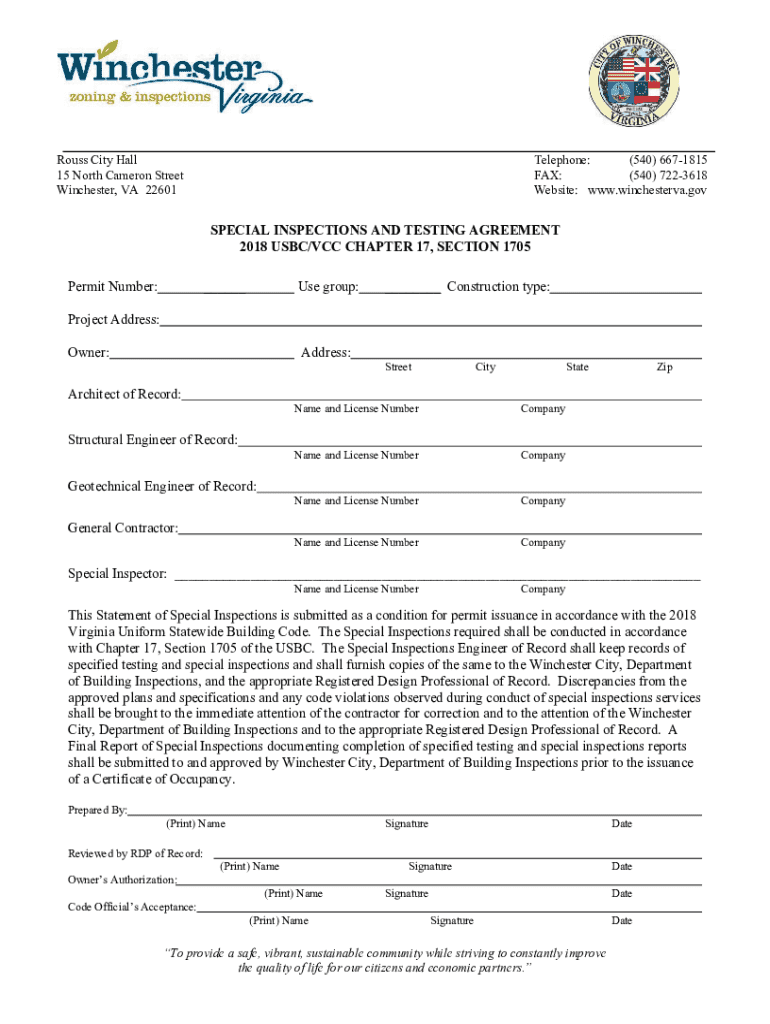
The Special Inspections and Testing Agreement is a critical document used in construction projects to ensure compliance with building codes and standards. This agreement details the specific inspections and testing required during construction, aligning with the 2018 Virginia Uniform Statewide Building Code. The purpose of this agreement is to outline the roles and responsibilities of involved parties, such as the Special Inspector and Design Professionals. By adhering to approved plans and specifications, this document helps guarantee the structural integrity and safety of the construction project.
In essence, the agreement serves as a contract among stakeholders, delineating who is responsible for various inspections and tasks, thus ensuring a smooth and compliant construction process. Failure to adhere to the agreement's stipulations can lead to delays in obtaining a Certificate of Occupancy, ultimately affecting the project's timeline and legality.
How to Use the Special Inspections and Testing Agreement
The Special Inspections and Testing Agreement should be used throughout the construction process to guide inspections and testing. It is a working document that aids in planning and executing the necessary evaluations to meet building codes and standards. To utilize this document effectively:
-
Familiarize Stakeholders: Ensure that all parties involved, including contractors, inspectors, and design professionals, are aware of their respective roles and responsibilities as outlined in the agreement.
-
Schedule Inspections: Use the agreement to plan inspection timings, ensuring they occur at critical stages of construction to identify and rectify issues promptly.
-
Documentation: Maintain thorough records of all inspections and test results. This documentation will support compliance claims and be vital for obtaining occupancy certificates.
-
Continuous Review: Regularly review and update the agreement to reflect any changes in the project's scope or regulatory requirements.
The document acts as an operational guide to ensure that inspections and related tasks are completed timely and correctly, keeping the construction project on track and within regulatory bounds.
Steps to Complete the Special Inspections and Testing Agreement
Completing the Special Inspections and Testing Agreement involves several key steps, each critical for ensuring full compliance with building regulations:
-
Initial Assessment: Begin by evaluating the project requirements and the types of inspections and tests needed according to the building code.
-
Assign Responsibilities: Clearly define the roles and responsibilities of each party involved in the inspection and testing process.
-
Detail Inspections: Specify the inspections to be conducted, including the required procedures and standards each must meet.
-
Establish Timelines: Develop a timeline for each inspection stage, ensuring alignment with the construction schedule to avoid delays.
-
Review and Approval: Have all relevant parties review the agreement, ensuring all sections are clear and acceptable. Obtain necessary approvals to finalize the document.
-
Implementation: Once approved, integrate the agreement's details into the construction process, using it as a checklist to ensure compliance.
Each step should be approached methodically, with thorough collaboration between parties to ensure the agreement's effectiveness throughout the project's lifecycle.
Key Elements of the Special Inspections and Testing Agreement
The Special Inspections and Testing Agreement comprises several essential components, each crucial to its functionality:
-
Scope of Work: Defines what inspections and tests will be conducted, covering aspects such as structural integrity and material compliance.
-
Parties Involved: Identifies the Special Inspector, Design Professionals, and other key personnel, detailing their responsibilities.
-
Inspection Protocols: Outlines the processes and standards for inspections to ensure consistency and regulatory compliance.
-
Documentation Requirements: Specifies how results should be recorded and reported, ensuring transparency and traceability.
-
Compliance Assurance: Includes measures for managing non-compliance issues, providing solutions to stay aligned with building codes.
Each element of the agreement is integral to maintaining clarity and consistency, ensuring that all inspections are conducted effectively and in line with required standards.
Important Terms Related to the Special Inspections and Testing Agreement
Understanding the terminology associated with the Special Inspections and Testing Agreement is crucial for proper implementation:
-
Special Inspector: A qualified individual or agency responsible for performing inspections and tests outlined in the agreement.
-
Design Professionals: Architects or engineers responsible for the project's design and ensuring its compliance with specifications.
-
Certificate of Occupancy: A document issued by the local authority confirming that the building complies with applicable building codes and is safe for use.
-
Building Code Compliance: Adherence to specific codes that dictate the standards for construction projects.
Familiarity with these terms helps all parties involved in the agreement to communicate effectively and understand their roles in the inspection process.
State-Specific Rules and the Special Inspections and Testing Agreement
State-specific regulations heavily influence the Special Inspections and Testing Agreement, as each state may have unique building codes and requirements. In Virginia, adherence to the 2018 Virginia Uniform Statewide Building Code is mandatory:
-
Local Modifications: Some counties or municipalities may impose additional requirements beyond state codes that need consideration.
-
State-Specific Training: Inspectors need to be familiar with state-specific codes and may require local certification to conduct inspections.
-
Approval Processes: Procedures for submitting inspection results and obtaining occupancy certificates might vary by state.
Understanding and incorporating these state-specific nuances helps ensure the agreement covers all local legal requirements, preventing project delays and legal issues.
Examples of Using the Special Inspections and Testing Agreement
Real-world scenarios where the Special Inspections and Testing Agreement plays a vital role:
-
Large-Scale Commercial Construction: Ensures structural elements meet safety standards to protect public safety.
-
Residential Developments: Guides the inspections for homes, ensuring they comply with local building codes and energy efficiency standards.
-
Infrastructure Projects: Coordinates multi-stage inspections for bridges and roads, ensuring safety standards are met.
In each case, the agreement provides a framework for systematically addressing the inspection and testing needs, ensuring complete compliance throughout the construction process.
Legal Use of the Special Inspections and Testing Agreement
The legal framework governing the Special Inspections and Testing Agreement ensures that construction projects comply with pertinent laws:
-
Contractual Obligations: Parties agree legally to perform specific inspections as laid out in the agreement.
-
Regulatory Compliance: Ensures adherence to state and local building codes, preventing legal penalties or construction halts.
-
Dispute Resolution: Clearly delineates roles and processes, reducing the potential for disputes between parties.
-
Audit Trail: Provides a comprehensive record of compliance, useful for legal reviews and audits.
Legal adherence to the agreement protects all parties involved, ensuring the project is built safely and lawfully, minimizing risks of non-compliance.