




01. Edit your form online
Type text, add images, blackout confidential details, add comments, highlights and more.

Type text, add images, blackout confidential details, add comments, highlights and more.

Draw your signature, type it, upload its image, or use your mobile device as a signature pad.

Send it via email, link, or fax. You can also download it, export it or print it out.
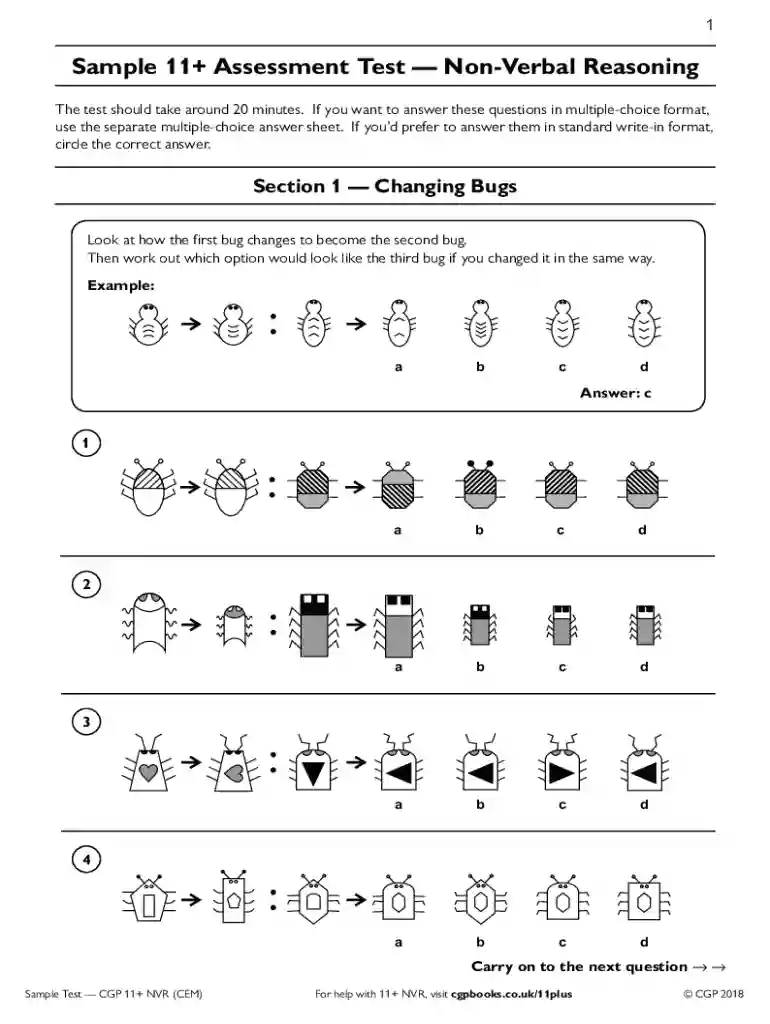
The "11 Plus CEM Non Verbal Reasoning Question Booklet" is a specialized tool designed to assess students' non-verbal reasoning skills, which are part of the broader 11+ examination process. Non-verbal reasoning tests aim to evaluate how well students can analyze and process visual information, rather than relying on verbal communication or knowledge-based skills. This booklet typically includes a variety of visual puzzles and challenges that test students’ abilities to interpret shapes, patterns, and sequences.
The booklet contains distinct sections focused on assessing different non-verbal reasoning capabilities. Key elements include:
Using the booklet effectively involves familiarizing students with the types of questions and formats they will encounter. Steps to optimize use include:
Completing the booklet involves practicing in a structured manner:
The primary users of this booklet are students preparing for the 11+ exams, particularly those focusing on schools that use the CEM format. Educators and tutors also use this resource to instruct, guide, and support students as they develop their non-verbal reasoning skills. It is especially useful for parents who support home study sessions.


Understanding key terms is crucial for effective use:
While not a legal document, using the booklet appropriately involves understanding its role in the standardized testing process. The booklet forms part of a fair assessment strategy that enables educational institutions to select students based on merit.
There are various versions and alternatives available:
For those opting for digital versions of the booklet, compatibility with various educational software and platforms, such as Google Classroom and LMS (Learning Management Systems), allows for easy integration into school curriculums. These platforms can offer enhanced features such as progress tracking, collaborative tools, and remote accessibility.
We've got more versions of the 11 Plus Cem Non Verbal Reasoning Question Booklet form. Select the right 11 Plus Cem Non Verbal Reasoning Question Booklet version from the list and start editing it straight away!
At DocHub, your data security is our priority. We follow HIPAA, SOC2, GDPR, and other standards, so you can work on your documents with confidence.





Collins 11+ 11+ Verbal Reasoning, Non-Verbal Reasoning Maths Practice Papers Book 2 (Bumper Book with 4 sets of tests) For the CEM 2021 tests.
Here are some of the most frequent question types found in non verbal reasoning papers: including CEM and GL assessments. 11 plus non verbal reasoning


