




01. Edit your 1099s 2019 form online
Type text, add images, blackout confidential details, add comments, highlights and more.

Type text, add images, blackout confidential details, add comments, highlights and more.

Draw your signature, type it, upload its image, or use your mobile device as a signature pad.

Send it via email, link, or fax. You can also download it, export it or print it out.
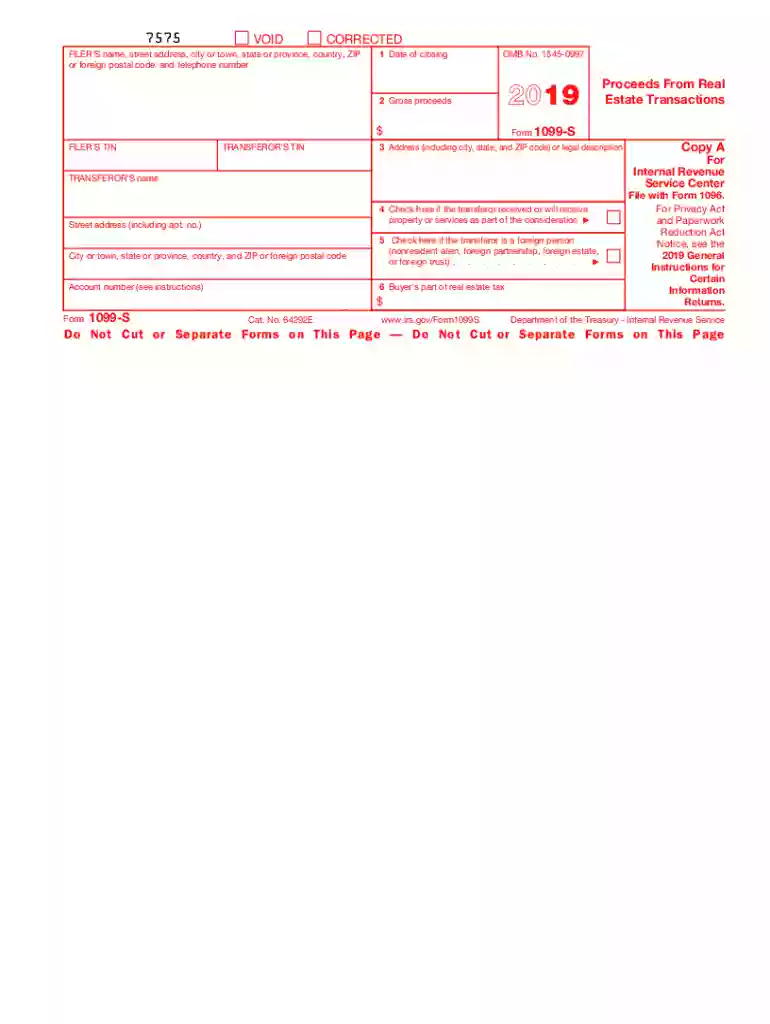
Form 1099-S is used to report the proceeds from real estate transactions to the Internal Revenue Service (IRS). This document is crucial for ensuring that all gains from the sale or exchange of real property are appropriately documented for tax purposes. Businesses and individuals involved in real estate should understand its function to maintain compliance. By logging these transactions, the IRS can verify that sellers and other parties accurately report income derived from real estate activities, which includes the sale of land, commercial and residential buildings, and more.
Utilizing Form 1099-S involves several key steps. Primarily, it serves real estate sale coordinators, attorneys, and brokers who must report gross proceeds to the IRS. The form should be filed for each transaction involving reportable estate activities. Generally, the entity managing the closing of the sale is responsible for filing the form and issuing a copy to the seller. Multiple sales or exchanges within the same calendar year require separate forms for each transaction. Understanding who, when, and how to file this specific form aids in fulfilling your tax responsibilities accurately.
To acquire a 1099-S form, you may reach out to the IRS through their official website or contact certified tax form suppliers. Most financial software platforms also offer this form for businesses managing multiple transactions. Additionally, tax advisors and professional accountants can provide guidance on accessing and filling out the form correctly, avoiding delays or compliance issues.
Completing the 1099-S form requires attention to detail and adherence to IRS instructions. The process starts with identifying and accurately documenting the amount of gross proceeds from the real estate transaction. Important sections of the form include the date of closing, amount realized, and tick boxes addressing transaction specifics. Accuracy in these fields is imperative to prevent filing errors that might result in penalties.
The 1099-S form contains several essential elements that must be accurately recorded. These include the gross proceeds from the transaction, the reporting person’s details, and the transaction's closing date. These elements form the core data that enables the IRS to assess the transaction accurately. Special attention must be paid to identifying any required exclusions or specific details depending on the nature of the transaction.
The IRS provides explicit guidelines on the usage and submission of Form 1099-S. These guidelines emphasize the importance of reporting all relevant transactions and ensure only qualified transactions are included. Following these guidelines helps entities avoid common mistakes, such as misreporting transaction amounts or failing to file within prescribed timelines, and thus prevents potential penalties.
Failing to file the 1099-S form accurately or timely can result in significant penalties. The IRS imposes fines on entities that fail to report real estate transactions, misreport critical information, or do not provide forms to relevant parties. Penalties are typically per form and escalate with prolonged delays or repeat offenses, emphasizing the importance of understanding and meeting compliance requirements.
Submission of Form 1099-S can be conducted through multiple channels, ensuring flexibility and convenience. The IRS accepts submissions via electronic filing, mail, or through authorized tax professionals. Each method has its specific requirements and processing times, underscoring the need for early submission planning and verification of receipt by the IRS.
While Form 1099-S is federally mandated, particular states have additional regulations or requirements regarding the filing and processing of real estate transactions. Understanding these particularities can prevent conflicts and ensure compliance with both state and federal law. States like California and New York, with their specific real estate markets, might impose additional reporting criteria or documentation.
Understanding practical usage scenarios for Form 1099-S is essential for clarity. For instance, in cases where a property sold results in a profit for the seller, the gains must be reported. Similarly, a broker involved in the sale would ensure that the 1099-S reflects the final sale amount. These scenarios exemplify the everyday applications of the form in the real estate sector.
Thorough comprehension and completion of Form 1099-S are crucial for transparent and compliant real estate transactions. Understanding its application, guidelines, and practical usage not only facilitates smoother tax processes but also mitigates risks associated with IRS penalties and erroneous filings.
We've got more versions of the 1099s 2019 form form. Select the right 1099s 2019 form version from the list and start editing it straight away!
| Versions | Form popularity | Fillable & printable |
|---|---|---|
| 2022 | 4.4 Satisfied (24 Votes) | |
| 2021 | 4.8 Satisfied (46 Votes) | |
| 2020 | 4.2 Satisfied (86 Votes) | |
| 2019 | 4.4 Satisfied (442 Votes) | |
| 2018 | 4.4 Satisfied (213 Votes) | |
| 2017 | 4.4 Satisfied (740 Votes) | |
| 2016 | 4.4 Satisfied (529 Votes) | |
| 2015 | 4.1 Satisfied (36 Votes) | |
| 2014 | 4.1 Satisfied (68 Votes) | |
| 2013 | 4 Satisfied (31 Votes) | |
| 2012 | 4 Satisfied (60 Votes) | |
| 2011 | 4.4 Satisfied (65 Votes) | |
| 2010 | 4 Satisfied (26 Votes) | |
| 1999 | 4.7 Satisfied (28 Votes) |
At DocHub, your data security is our priority. We follow HIPAA, SOC2, GDPR, and other standards, so you can work on your documents with confidence.





A 1099 issuance will be sent to all independent contractors or individuals who receive total payments of $600.00 or more from the University within a calendarRead more
List the organizations five current highest compensated employees (other than an officer, director, trustee, or key employee) who received reportableRead more
Jan 23, 2026 Use Form 1099-S to report the sale or exchange of real estate. Current Revision. Form 1099-S PDF Instructions for Form 1099-S (PrintRead more


