





Definition and Purpose of Form 1099-S
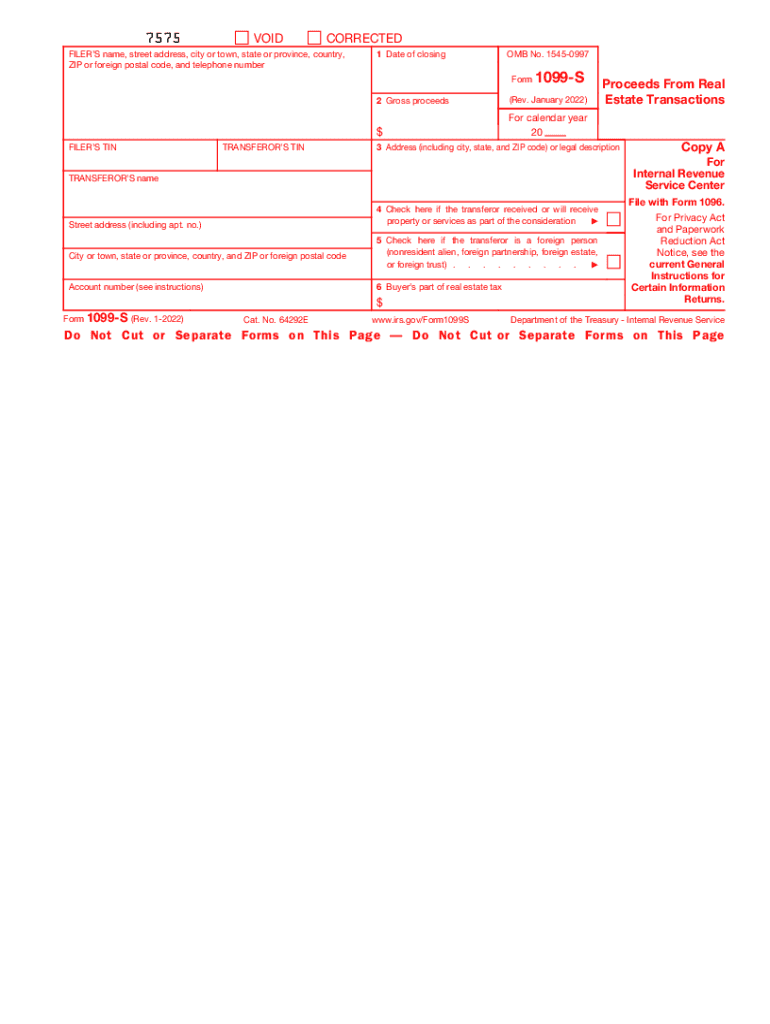
Form 1099-S is essential for reporting proceeds from real estate transactions to the IRS. It's used primarily to document the sale or exchange of real estate, ensuring tax compliance by both the transferor and the party making the payment. Understanding this form is vital for accurately reporting capital gains and meeting federal tax obligations.
- Applies to transactions like sales, exchanges, and communal housing sales.
- Used by real estate agents, title companies, and other involved parties to report real estate sales to the IRS.
- Designed to capture specific data about the property transaction, including gross proceeds.
Key Elements of Form 1099-S
This form includes several critical elements that ensure the proper reporting of real estate transactions. Accurate completion of each section is crucial for adherence to IRS regulations.
- Transferor’s Information: Includes the name, address, and taxpayer identification number (TIN) of the individual or entity selling the property.
- Description of Property: Provides a detailed description of the property sold, such as addresses and legal descriptions for unique property identification.
- Gross Proceeds: The total amount received from the sale or exchange before deductions.
Steps to Complete the Form 1099-S
Completing Form 1099-S accurately involves several detailed steps to ensure compliance.
- Gather Required Information: Collect all pertinent details about the transaction, including the seller's TIN and property details.
- Fill Out Transferor’s Information: Enter the seller’s name and address as it appears on IRS records for proper identification.
- Describe the Property: Provide the property's legal description to clarify which asset is involved in the transaction.
- Input Gross Proceeds: Record the total sales price or exchange value received.
How to Obtain Form 1099-S
Obtaining Form 1099-S can be done through several official channels, ensuring that users have access to the most recent version for their reporting needs.
- IRS Website: Direct download from the Internal Revenue Service's official site.
- Tax Software: Typically available within professional tax preparation programs, allowing seamless integration and filing.
- Financial Institutions: Accessible through banks and financial advisors who may assist in preparing the form.
Who Typically Uses Form 1099-S
A variety of individuals and entities are required to use Form 1099-S in their reporting processes, playing a significant role in real estate transactions.
- Real Estate Agents: Responsible for reporting sales they facilitate.
- Title Companies and Closing Agents: Often involved in handling the paperwork during transactions.
- Individuals Who Self-Represent: Required for those handling their own real estate transactions without intermediary assistance.
IRS Guidelines for Form 1099-S
Adhering to IRS guidelines when dealing with Form 1099-S ensures compliance and avoids potential penalties.
- Electronic Filing: Encouraged for ease and efficiency, especially for those required to file multiple forms.
- Record Keeping: Maintain copies of filed forms for a minimum of three years.
- Amendment Procedures: Follow specific instructions for correcting errors in previously filed forms to avoid fines.
Penalties for Non-Compliance
Failing to properly complete, file, or provide Form 1099-S can result in penalties from the IRS, making adherence to filing protocols crucial.
- Late Filing: Monetary fines applied if forms are submitted past the deadline without valid reason.
- Incorrect Information: Penalties for inaccurate data that results in misreporting.
- Failure to Furnish: Significant fees if recipients do not receive necessary documentation about real estate transactions.
Legal Use of Form 1099-S
Understanding the legal intricacies associated with Form 1099-S helps ensure compliance with federal requirements.
- Reporting Obligation: Legally necessary for any reportable real estate transaction as determined by IRS guidelines.
- Recipient Copy: Sellers must receive a copy to accurately declare proceeds on their tax returns.
- Avoidance of Misrepresentation: Proper use of Form 1099-S prevents accusations of tax evasion or fraud.


