




Definition and Purpose of the 1099-S 2020 Form
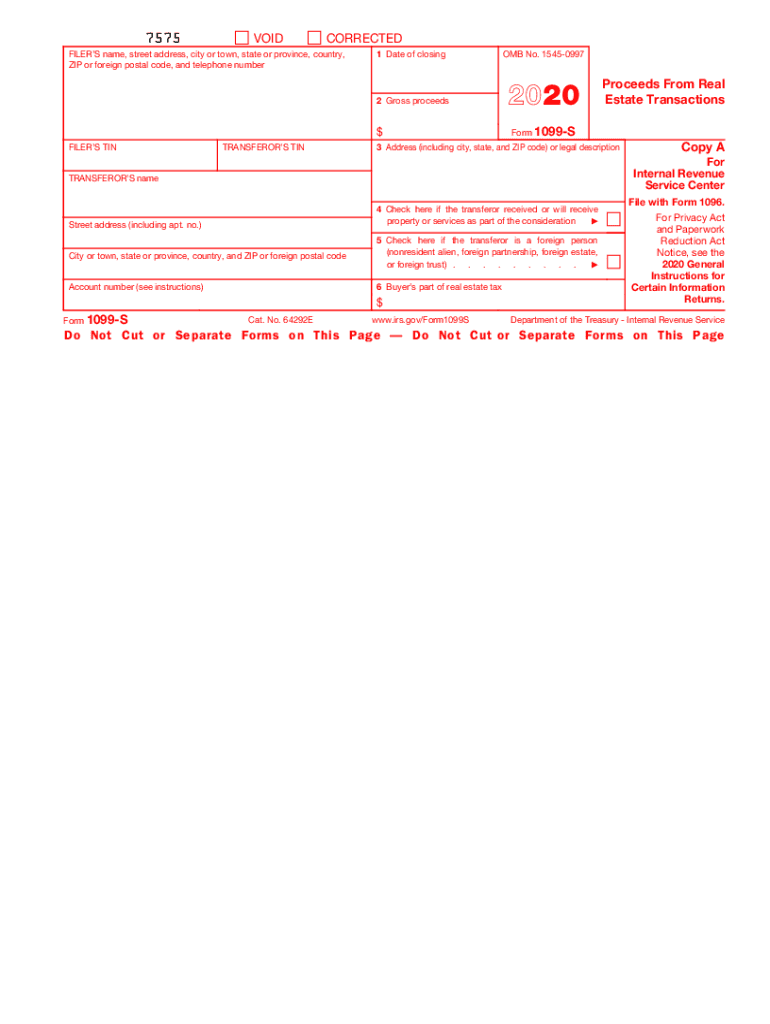
The Form 1099-S is primarily used to report proceeds from real estate transactions to the Internal Revenue Service (IRS). It plays a crucial role in ensuring that both the IRS and the sellers are aware of the proceeds received from these transactions, contributing to accurate income reporting. Understanding the significance of this form is vital for those involved in real estate sales to comply with federal tax regulations.
Key Components of Form 1099-S
- Proceeds Information: Includes the gross proceeds from the sale or exchange of property.
- Transferor Details: Information about the individual or entity receiving the proceeds.
- Property Description: A brief outline of the property involved in the transaction.
The 2020 version of the form must be used for transactions that occurred in that specific tax year. Ensuring that the proper version of the form is employed is critical for compliance.
How to Use the 1099-S 2020 Form
Using Form 1099-S involves several steps to accurately report the required information. The process requires understanding each section and successfully completing the form to meet IRS requirements.
Steps to Follow
- Gather Necessary Documents: Collect all documents related to the real estate transaction, including closing documents and any prior agreements.
- Fill Out Transferor Information: Accurately report the seller’s name, address, and Taxpayer Identification Number (TIN).
- Report Proceeds and Transaction Date: Record the total proceeds and the transaction date, typically found in the closing documents.
- Submit Correct Copies: Ensure that Copy A is sent to the IRS, and provide relevant copies to all parties involved in the transaction.
Obtaining the 1099-S 2020 Form
Obtaining the correct form is essential for streamlined reporting. The IRS provides the 1099-S form for public access, requiring that official copies be used for submission.
Methods to Obtain
- IRS Website: Download the official version from the IRS website.
- Office Supply Stores: Many stores carry IRS-approved forms.
- Tax Software: Software platforms often include built-in access to necessary forms.
Ensuring the use of scannable forms is crucial for compliance; non-scannable copies can cause delays and potential fines.
Completing the 1099-S 2020 Form
Completing the Form 1099-S requires attention to detail to ensure all fields are accurately filled. Errors can result in fines or additional scrutiny from the IRS.
Highlights of the Completion Process
- Use Black Ink: Ensure all fields are legible and clear.
- Check Date Formats: Use the standard MM/DD/YYYY format for dates.
- Review for Errors: Double-check all entries before submission.
Responsibilities and Compliance
Correctly filing the 1099-S form is a legal obligation for those involved in property sales. Compliance with IRS requirements helps prevent fines and maintains accurate tax records.
Essential Compliance Points
- Filing Deadlines: Ensure forms are submitted by the specified IRS deadline to avoid late penalties.
- Record Keeping: Keep copies of all submitted forms for at least three years.
- Confirm Receipt: Verify that all stakeholders receive their respective copies of the form.
Example Scenarios for the 1099-S 2020 Form
Understanding real-world applications of the 1099-S form can be beneficial, particularly for those new to real estate transactions or tax preparation.
Common Use Cases
- Residential Property Sales: Reporting proceeds from selling a home.
- Commercial Transactions: Compliance requirements when commercial properties are sold, including partnerships or corporate owners.
- Land Sales: Transactions involving vacant land or lots.
Importance of Legal Use and Compliance
Adhering to legal requirements when using the 1099-S form is essential for avoiding potential legal issues or fines.
Legal Compliance Guidelines
- Ensure Accurate Reporting: Misreporting can lead to audits and penalties.
- Consult Professionals: When in doubt, seek advice from tax professionals or legal advisors to ensure precise compliance.
- Understand Variations: Be aware of the different requirements based on transaction type and property location.
Filing Deadlines and Important Dates
Filing the 1099-S form on time is critical for tax compliance and avoiding penalties.
Key Dates to Remember
- Recipient Copy: Distribute copies to transferors by January 31.
- IRS Submission: File Copy A with the IRS by February 28 if filing by paper, or March 31 if filing electronically.
These deadlines are non-negotiable, and missing them can result in substantial fines.
Digital vs. Paper Filing Methods
Advances in technology have streamlined the filing process for tax forms, including the 1099-S.
Filing Options
- Electronic Filing: Offers quick submission and an immediate confirmation of receipt by the IRS.
- Paper Filing: Traditional submission through mail, requiring careful attention to form details and deadlines.
Filing electronically is often encouraged due to its efficiency and reduced margin for error.