




01. Edit your 1099s 2021 form online
Type text, add images, blackout confidential details, add comments, highlights and more.

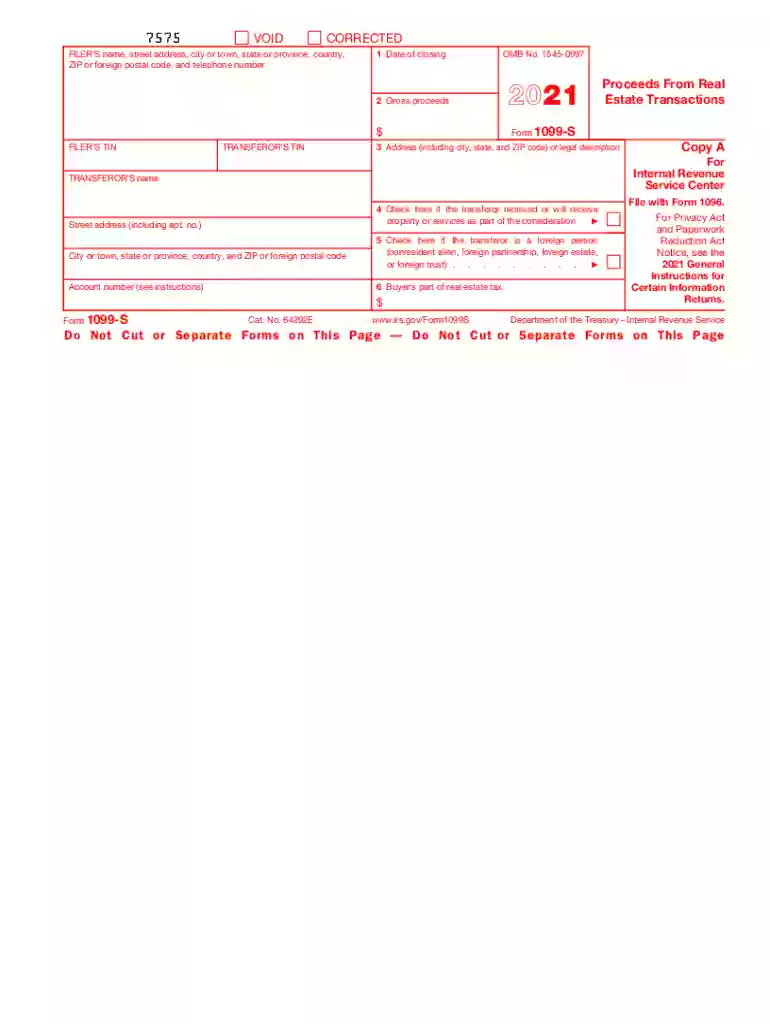
Type text, add images, blackout confidential details, add comments, highlights and more.

Draw your signature, type it, upload its image, or use your mobile device as a signature pad.

Send 1099 s form 2021 via email, link, or fax. You can also download it, export it or print it out.
The Form 1099-S is an IRS tax form used for reporting the sale or exchange of real estate properties. This form communicates the proceeds generated from transactions to the IRS. It is typically handled by the person responsible for closing the transaction, often a real estate broker, mortgage lender, or title company. The 2021 version of Form 1099-S captures the transaction details of real estate sales completed in that year. Understanding the fundamental use of this form helps taxpayers ensure compliance and prevent potential issues during tax filings.
Identify the Filer: Include the information of the person responsible for reporting the sale, such as the real estate broker or closing agent.
Receive Transferor’s Information: Gather details from the property seller, including their name, address, and taxpayer identification number.
Complete Transaction Details: Enter the gross proceeds from the sale and any additional financial amounts pertinent to the closing.
Specify Property Details: Record the property location and description to align with IRS requirements.
Submit Copy A to the IRS: As per IRS instructions, send Copy A to the IRS and retain other copies for records and distribution to involved parties.
Completing this form accurately is crucial for avoiding penalties and ensuring compliance with federal tax obligations.
The primary users of Form 1099-S include:
These users need to collaborate to ensure the form is completed and submitted accurately, helping maintain transparent and lawful transaction records.


Filer Information Box: This section identifies the entity responsible for reporting the transaction.
Transferor’s Information Box: Details of the individual or entity selling the property.
Gross Proceeds Box: The total amount received from the real estate sale.
Property Description Box: Captures detailed information about the location and nature of the sold property.
Understanding these elements is vital for the accurate completion and submission of Form 1099-S, ensuring compliance with IRS regulations.
The IRS provides specific guidelines on how the Form 1099-S should be filled out and submitted. Key guidelines include:
Timely Filing: Copy A must be filed with the IRS by the end of February if filing on paper; March 31 for electronic filings.
Copies Distribution: Distribute copies to the seller and, if applicable, buyer to ensure all parties are informed of the report.
Accuracy is Mandatory: Mistakes can lead to fines; ensuring all information is correct is crucial.
Electronic Submission: Encouraged by the IRS for faster and more efficient processing.
Following these guidelines can help prevent errors that might lead to penalties.
January 31st: Deadline for providing the form to transferors.
End of February: Deadline for paper filing with the IRS.
March 31st: Deadline for electronic filing with the IRS.
Ensuring timely filing aligns with IRS requirements and mitigates the risk of penalties for late submissions.
Failure to comply with the filing requirements of Form 1099-S can result in substantial penalties imposed by the IRS:
Late Filing Penalties: Starting at $50 per information return if filed within 30 days after the due date, increasing over time.
Intentional Disregard Penalties: Much higher penalties for intentionally failing to file or provide correct information.
Understanding and adhering to filing requirements mitigate the risk of such penalties.
Digital Filing: Offers a streamlined process and reduces the risk of errors associated with manual entry. It also provides quicker IRS responses.
Paper Filing: Traditional method but can be prone to errors and slower in processing.
Advantages of Digital: More eco-friendly, cost-effective, and can easily integrate with accounting software, benefiting those managing large volumes of transactions.
Choosing the right filing method ensures efficiency and compliance, particularly for entities managing multiple transactions.
DocHub, TurboTax, and QuickBooks are among the software solutions that facilitate the management of Form 1099-S:
TurboTax and QuickBooks: Allow users to integrate form completion with other tax or business functions.
DocHub Integration: Enables seamless document import, editing, and signing, streamlining the form completion process, especially for teams working collaboratively.
Selecting compatible software and utilizing it effectively can make tax season less burdensome for filers.
We've got more versions of the 1099s 2021 form form. Select the right 1099s 2021 form version from the list and start editing it straight away!
| Versions | Form popularity | Fillable & printable |
|---|---|---|
| 2022 | 4.4 Satisfied (24 Votes) | |
| 2021 | 4.8 Satisfied (46 Votes) | |
| 2020 | 4.2 Satisfied (86 Votes) | |
| 2019 | 4.4 Satisfied (442 Votes) | |
| 2018 | 4.4 Satisfied (213 Votes) | |
| 2017 | 4.4 Satisfied (740 Votes) | |
| 2016 | 4.4 Satisfied (529 Votes) | |
| 2015 | 4.1 Satisfied (36 Votes) | |
| 2014 | 4.1 Satisfied (68 Votes) | |
| 2013 | 4 Satisfied (31 Votes) | |
| 2012 | 4 Satisfied (60 Votes) | |
| 2011 | 4.4 Satisfied (65 Votes) | |
| 2010 | 4 Satisfied (26 Votes) | |
| 1999 | 4.7 Satisfied (28 Votes) |
At DocHub, your data security is our priority. We follow HIPAA, SOC2, GDPR, and other standards, so you can work on your documents with confidence.


List the organizations five current highest compensated employees (other than an officer, director, trustee, or key employee) who received reportableRead more
Sales or exchanges involving foreign transferors are reportable on Form 1099-S. For information on the transferees responsibility to withhold income tax when aRead more
by KDL Thomas 2024 Cited by 3 This new quarterly information returnwhat this Article calls Form 1099-ESshould communicate the taxpayers quarterly earnings and provide clear instructionsRead more


