




01. Edit your 1099s 2017 form online
Type text, add images, blackout confidential details, add comments, highlights and more.

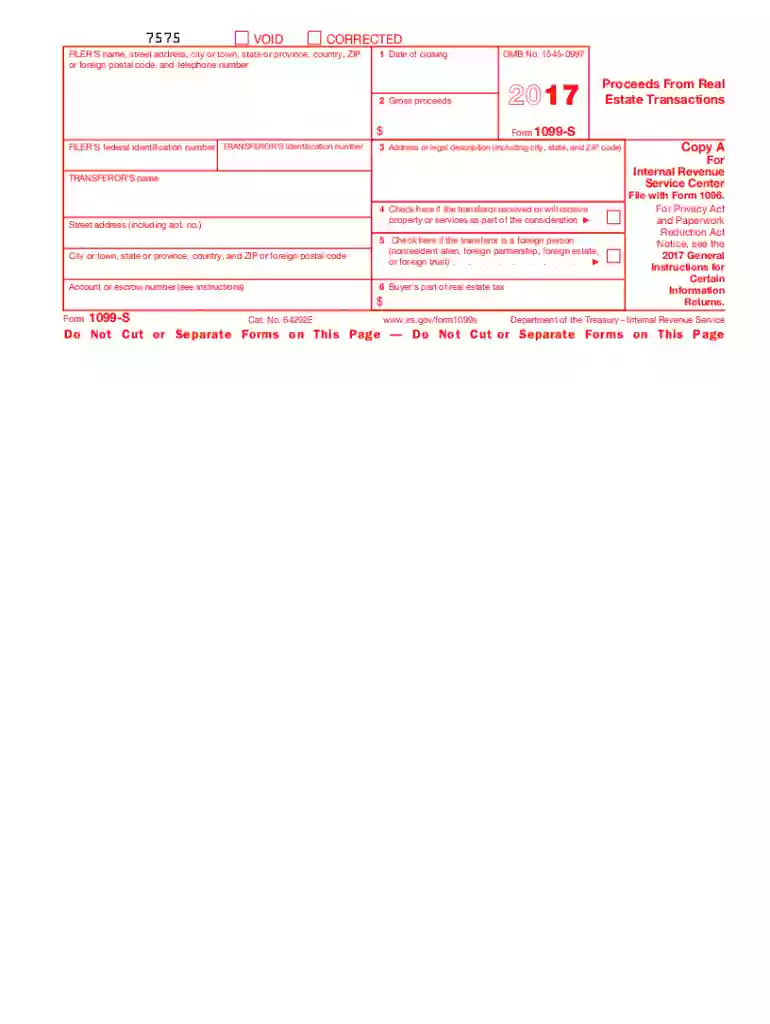
Type text, add images, blackout confidential details, add comments, highlights and more.

Draw your signature, type it, upload its image, or use your mobile device as a signature pad.

Send 2017 form 1099 misc fillable pdf via email, link, or fax. You can also download it, export it or print it out.
The 2017 Form 1099 is an IRS document used for reporting various types of income other than wages, salaries, and tips. It covers income from independent contracting, interest and dividends, rental property income, and other financial transactions. This form is vital for tax compliance, as it provides the IRS with necessary information to verify a taxpayer's income and ensure accurate reporting.
Individuals and businesses can obtain the 2017 Form 1099 from the IRS website. It is possible to download and print the forms directly. Additionally, tax preparation software often includes this form to streamline the filing process. For those who prefer a physical copy, local IRS offices can provide the form upon request.
The 2017 Form 1099 is primarily used by businesses and individuals who pay others outside of salaried employment situations. Companies hiring freelancers, financial institutions reporting dividends or interest, and landlords documenting rental income frequently use this form. It is essential for taxpayers who have multiple streams of non-wage income to ensure compliance with federal tax obligations.


Follow IRS guidelines closely to ensure that the form is filled out correctly. These guidelines cover everything from what type of income each box represents to how copies of the completed forms should be distributed. The IRS also provides instructions for electronic submission of the form, which can be more efficient and faster than traditional mailing methods.
The IRS requires that Form 1099 is filed by January 31 for certain types, such as 1099-MISC for non-employee compensation. Other 1099 forms may have different deadlines, particularly where electronic filing is an option. Recipients of a 1099 Form must also receive their copy by January 31. It is crucial to check each type of 1099 for its specific deadlines to avoid penalties.
Failing to file the 2017 Form 1099 correctly or on time can result in financial penalties. Penalties increase the longer a form is overdue, ranging from $50 per form for less than 30 days late to $270 per form if filed after August 1. Intentional disregard of filing requirements could lead to greater penalties and potential audits.
Several software programs, such as TurboTax, QuickBooks, and other tax preparation tools, are compatible with the 2017 Form 1099. These tools facilitate easier data entry and filing, as well as ensuring compliance with IRS formats and requirements. Using software for tax preparation can help avoid errors and streamline the entire filing process.
We've got more versions of the 1099s 2017 form form. Select the right 1099s 2017 form version from the list and start editing it straight away!
| Versions | Form popularity | Fillable & printable |
|---|---|---|
| 2022 | 4.4 Satisfied (24 Votes) | |
| 2021 | 4.8 Satisfied (46 Votes) | |
| 2020 | 4.2 Satisfied (86 Votes) | |
| 2019 | 4.4 Satisfied (442 Votes) | |
| 2018 | 4.4 Satisfied (213 Votes) | |
| 2017 | 4.4 Satisfied (740 Votes) | |
| 2016 | 4.4 Satisfied (529 Votes) | |
| 2015 | 4.1 Satisfied (36 Votes) | |
| 2014 | 4.1 Satisfied (68 Votes) | |
| 2013 | 4 Satisfied (31 Votes) | |
| 2012 | 4 Satisfied (60 Votes) | |
| 2011 | 4.4 Satisfied (65 Votes) | |
| 2010 | 4 Satisfied (26 Votes) | |
| 1999 | 4.7 Satisfied (28 Votes) |
At DocHub, your data security is our priority. We follow HIPAA, SOC2, GDPR, and other standards, so you can work on your documents with confidence.

If your net income from self-employment is $400 or more, you must file a return and compute your SE tax on Schedule SE (Form 1040). See Pub. 334 for moreRead more
Jan 23, 2018 Form 1099-R shows your pen- sion or annuity for the year and any income tax withheld. You should receive a Form W-2 if you receive distributions.Read more


