






Definition and Meaning
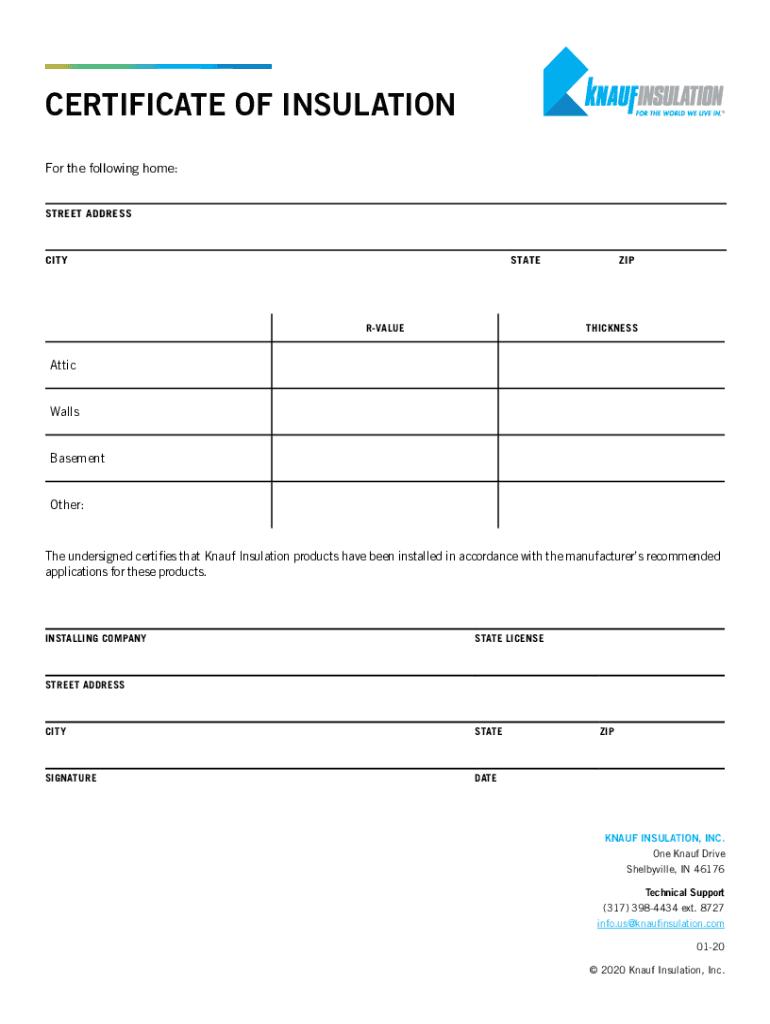
The "Knauf-Manufacturer-Certification-Statement-" is a formal document that confirms the installation of Knauf Insulation products within a specified property. The certification statement provides detailed information about the insulation materials used, such as the R-value and thickness applied in different areas of the building, including the attic, walls, and basement. The R-value indicates the thermal resistance capability of the insulation product, which is critical for ensuring energy efficiency and maintaining indoor temperature regulation.
Knauf Insulation products are widely recognized for their efficiency and sustainability in energy consumption reduction. By using this certification, homeowners can demonstrate compliance with manufacturer specifications and provide a verifiable record of the materials installed. This document is often a key requirement during property transactions or when applying for certain energy efficiency incentives and rebates.
How to Use the Knauf-Manufacturer-Certification-Statement
The Knauf Manufacturer Certification Statement serves various purposes, primarily related to verifying compliance with insulation standards. Here's how you can effectively use this document:
-
Verification of Installation: The certification serves as evidence that the insulation products installed in your property meet the Knauf manufacturer guidelines. This is useful for maintaining the building's energy efficiency ratings and ensuring that the property adheres to suggested specifications.
-
Facilitating Real Estate Transactions: This statement can be provided to potential buyers as part of the property disclosure process. It highlights the quality and specifications of the insulation, adding value to the property by showcasing energy-efficient features.
-
Supporting Energy Efficiency Incentives: In some jurisdictions, specific insulation installations may qualify for tax incentives or rebates. The certification statement can be used to apply for these benefits, as it verifies the use of approved insulation materials.
-
Compliance with Local Building Codes: When renovating or building, this document may be needed to prove compliance with local building codes concerning insulation standards.
Steps to Complete the Knauf-Manufacturer-Certification-Statement
Filling out the Knauf Manufacturer Certification Statement involves a systematic approach to ensure all relevant details are accurately recorded. Here is a step-by-step guide:
-
Collect Property Information: Start by gathering all necessary details about the property where the insulation is installed, including the address, owner's contact information, and any project identification numbers.
-
Document Insulation Specifications: Record the type of Knauf Insulation products used, specifying areas such as the attic, walls, and basement. Note the R-values and thickness for each installation area.
-
Identify the Installing Company: Provide the name, license number, and contact information of the company responsible for the installation. This section certifies that the work was performed by a licensed professional.
-
Confirm Compliance: Ensure the document certifies that the insulation installation complies with Knauf's recommendations and local building codes. This statement is crucial for passing inspections and qualifying for energy incentives.
-
Review and Sign: Double-check all entries for accuracy. The authorized personnel from the installation company should then sign the document to verify its authenticity.
Key Elements of the Knauf-Manufacturer-Certification-Statement
Several critical elements must be included in the Knauf Manufacturer Certification Statement to ensure its validity and completeness:
-
Property Details: Precise information regarding the location and ownership of the property where the insulation is installed.
-
Insulation Product Specifications: Detailed descriptions of the type and characteristics of the Knauf Insulation products used, particularly the R-values and thickness for each area.
-
Installer Information: Identification and credentials of the company or professional who carried out the installation. This should include licensing details and any project-specific identifiers.
-
Compliance Statement: A declaration that the installation aligns with all applicable Knauf guidelines and meets local building code requirements.
-
Signatures: Authorized signatures from the installing entity's representatives to authenticate the document's contents.
Legal Use of the Knauf-Manufacturer-Certification-Statement
The legal utility of the Knauf Manufacturer Certification Statement primarily revolves around its use as a documented assurance of compliance. Here are some scenarios in which this document holds legal significance:
-
Property Sales and Transactions: It may be required in real estate sales as a part of the documentation that certifies a property's insulation status, providing buyers with peace of mind regarding energy efficiency.
-
Construction and Remodeling Inspections: Local regulations may mandate the submission of certification documents during inspections to verify adherence to building codes concerning thermal requirements.
-
Legal Disputes: In cases where the quality or integrity of insulation is questioned, this document serves as evidence of the products used and compliance with recommended practices.
Who Typically Uses the Knauf-Manufacturer-Certification-Statement
Various stakeholders in the construction and real estate industries use this certification for different purposes:
-
Homeowners and Property Managers: Use the statement to maintain records of compliance with energy efficiency standards for their properties.
-
Real Estate Agents and Brokers: Utilize the document to facilitate smoother transactions by providing prospective buyers with verified information regarding insulation quality.
-
Construction and Installation Professionals: Ensure they have the documentation needed for inspections or certifications of completed projects to demonstrate compliance with installation standards.
-
Energy Auditors: Rely on the certification during energy assessments to confirm that the installations align with energy-saving measures.


Required Documents for the Knauf-Manufacturer-Certification-Statement
To complete this certification statement effectively, several documents and pieces of information should be gathered in advance:
-
Proof of Installation: Documents such as installation invoices or contracts to verify the completion date and details of the work.
-
Product Specifications: Manufacturer data sheets or labels that detail the insulation product's specifications, including R-value and thickness.
-
Installer Credential Proof: Licenses or certifications for the installer, which establish their qualification for carrying out the installation project.
-
Compliance Records: Any documents or certification that confirm adherence to local building codes and standards related to insulation installations.
Business Types That Benefit Most from the Knauf-Manufacturer-Certification-Statement
Various business types find considerable value in using the Knauf Manufacturer Certification Statement, particularly those engaged in energy efficiency and sustainable building practices:
-
Construction Firms: Benefit from having certification statements as part of their documentation portfolio, showcasing their commitment to quality and compliance with industry standards.
-
Real Estate Companies: Utilize these certifications to affirm property listings as energy-efficient, adding value and trustworthiness in the competitive real estate market.
-
Home Inspection Services: Use certified documentation to provide clients with verified records during inspections, ensuring everything conforms with local building and energy conservation requirements.
-
Property Management Firms: Maintain these documents as part of their property records to uphold compliance and assist in future property transactions or audits.