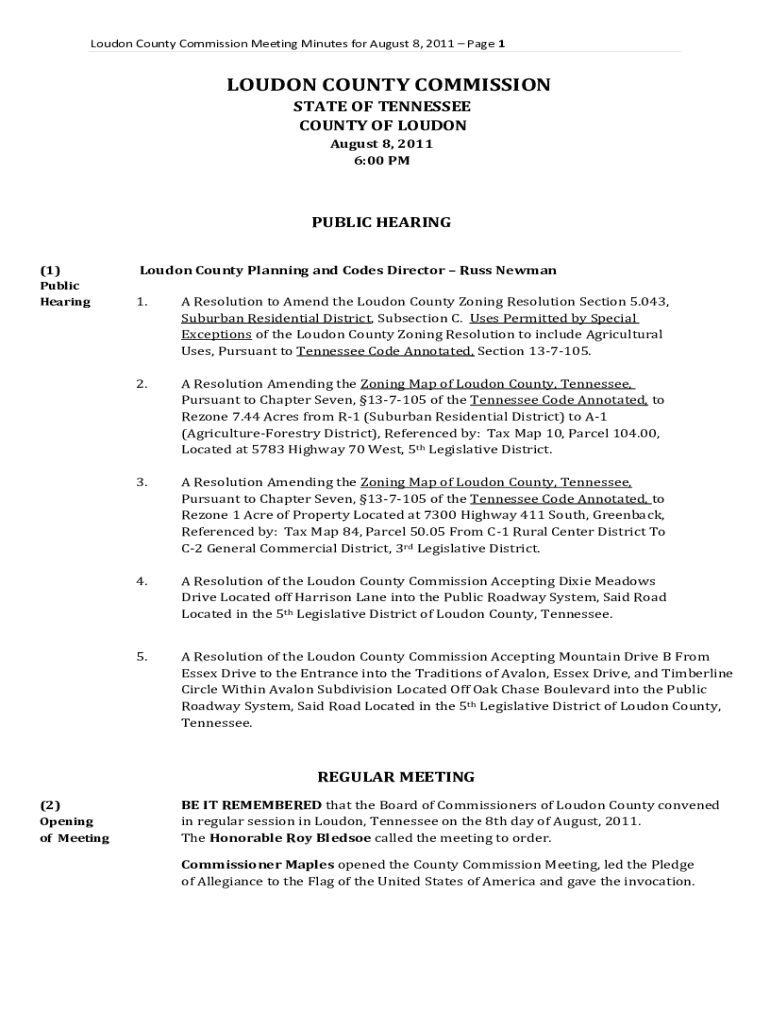







Definition and Purpose of the Resolution
The resolution to amend the Loudon County Zoning Resolution Section 5 serves as a formal proposal to make changes to the existing zoning regulations within Loudon County. This amendment process usually involves adjusting zoning laws to accommodate new land uses, zoning classifications, or specific property developments. The purpose of this amendment is often to address changes in the community's needs, facilitate economic development, or rectify existing zoning issues that have become apparent over time.
Key Components
- Zoning Classes: Amendments might introduce new zoning classes or revisions to existing classifications to incorporate different land uses such as residential, commercial, or agricultural.
- Land Use Regulations: Updates may be made to land use regulations to align with current development trends and community objectives.
- Public Health & Safety: Consideration of public health and safety impacts resulting from potential zoning changes is a crucial element.
How to Use the Amendment Form
The form for amending the Loudon County Zoning Resolution Section 5 outlines specific procedures and required information for submitting a proposal. Users should meticulously fill it out to ensure compliance with local zoning requirements.
Essential Steps
- Review Current Regulations: Understand the existing Section 5 zoning laws to identify what aspects require amendment.
- Complete Form Details: Provide comprehensive details of the proposed changes, including the reasons and expected impact on the community.
- Public Notices: Draft public notices, when applicable, to meet requirements for community transparency and involvement.
How to Obtain the Resolution Form
Obtaining the necessary form for a zoning amendment involves interfacing with county regulatory bodies.
Sources for Acquisition
- County Offices: Visit local government offices that handle zoning and planning regulations.
- Official Website: Check the Loudon County official website where downloadable PDF versions might be available.
Steps to Complete the Amendment Process
Completing the zoning amendment involves several procedural steps, which must be meticulously followed to ensure successful processing and approval.
Procedural Breakdown
- Initial Proposal Submission: Submit the proposed amendment form with detailed descriptions and justifications.
- Stakeholder Engagement: Conduct meetings or hearings with stakeholders, including local residents and business owners.
- Review by Planning Commission: The local planning commission will review the proposal to assess compliance and impact.
- Decision by County Commission: Following the review, the county commission will approve or deny the amendment.
Importance of the Zoning Amendment
Changing zoning resolutions can significantly impact community development and property values.
Benefits
- Economic Growth: Facilitates new business opportunities and residential developments, enhancing economic vibrancy.
- Community Development: Aligns land use with current community needs and demographic shifts.
- Legal Compliance: Ensures that existing land uses are in compliance with updated legal standards and expectations.
Who Typically Uses This Amendment Form
The amendment form is primarily used by various stakeholders within the community, each with specific interests.
Typical Users
- Real Estate Developers: To propose zoning changes that allow for the construction of new developments.
- Local Government Bodies: Engage in zoning updates that reflect strategic planning goals.
- Homeowners Associations: Petition for zoning changes that benefit residential communities.
Key Elements of the Resolution Form
Understanding the core data requirements of the resolution form is crucial for successful completion and submission.
Essential Components
- Proposed Changes: A clear description of the amendments.
- Supporting Documents: Include analyses, maps, and any other documentation supporting the amendment.
- Fee Details: Attach necessary fees as dictated by county regulations to process the amendment.
Examples of Utilizing the Amendment
Several scenarios showcase the practical application of zoning amendments in Loudon County.
Practical Applications
- Infrastructure Development: Changing zoning in certain areas to enable new infrastructure, such as shopping centers or public utilities.
- Environmental Protection: Revising zoning to establish conservation areas or restrict certain types of development.
- Mixed-Use Developments: Modifying zoning laws to support developments that combine residential and commercial spaces in a single project.
State-Specific Rules and Variations
Different states may have varying regulations related to zoning processes, affecting how amendments are proposed and approved.
Loudon County Specifics
- Public Hearings: Required participation in public hearings where community input impacts final decisions.
- State Compliance: Ensure that local amendments are in alignment with Tennessee state zoning statutes.