01. Edit your form online
Type text, add images, blackout confidential details, add comments, highlights and more.

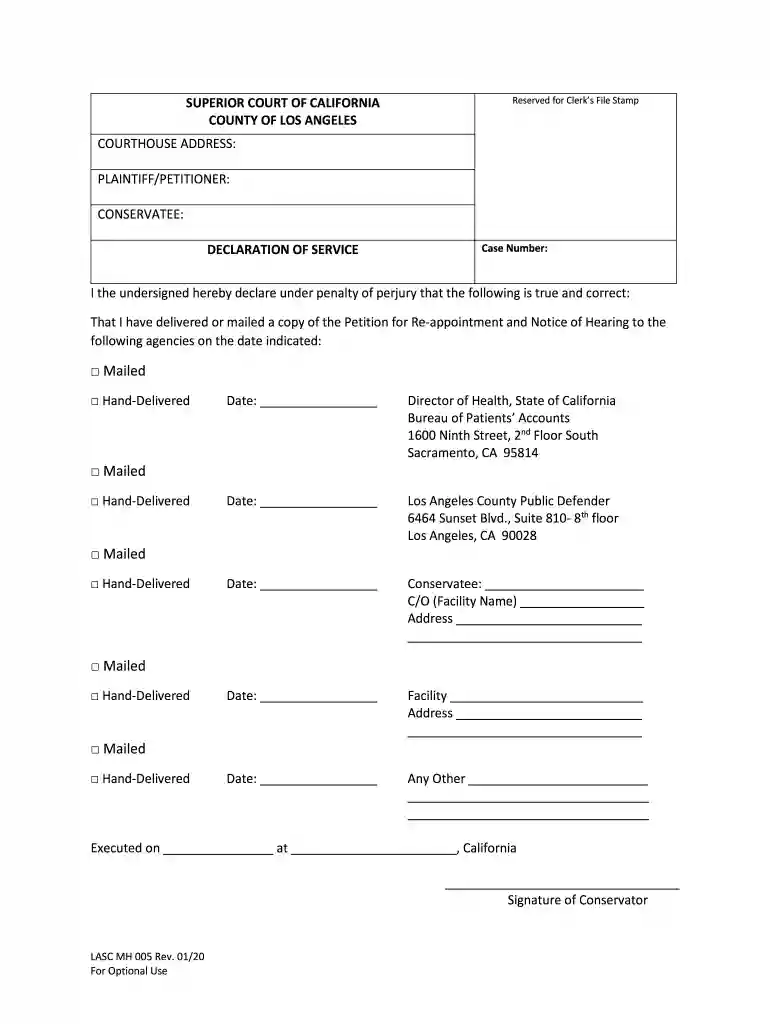
Type text, add images, blackout confidential details, add comments, highlights and more.

Draw your signature, type it, upload its image, or use your mobile device as a signature pad.

Send it via email, link, or fax. You can also download it, export it or print it out.
The phrase "I declare under the penalty of perjury under" is a legal statement used in a variety of forms and documents. It signifies that the person signing the document is affirming the truthfulness of the statements or information provided. This assertion is made under the understanding that providing false information can result in legal consequences, including charges of perjury. Perjury is the crime of lying under oath, and signing a document with this declaration makes the signer legally accountable for the accuracy of the contents.
To employ the declaration effectively, individuals should ensure that the information they are attesting to under this phrase is complete and truthful. This involves double-checking all the data provided in the document, such as personal information, dates, and any other relevant details. If you're unsure about any part of the information, it's advisable to consult with a legal professional to avoid potential legal ramifications. Using this declaration correctly is crucial in legal settings to uphold the integrity of the document.
This declaration is commonly found in various legal forms and documents, which can be sourced from government websites, legal offices, or specific agencies relevant to the document’s context. For instance, court documents, affidavits, and various government forms might contain this statement. It’s important to obtain the form from a reliable source to ensure it is the correct and most recent version. Legal offices and online platforms providing official forms are typically dependable sources.
Review the Document: Ensure you understand the entire content of the document you are signing. Check for any sections requiring additional information or clarification.
Provide Accurate Information: Fill in the necessary fields accurately, including full names, addresses, and any other requested data.
Include Necessary Attachments: If the document requires additional documents or proof, gather and attach these as specified.
Sign with the Declaration: Carefully sign the document where the declaration is included, ensuring your signature matches any legal or official signatures on file.
Submit the Form: Submit the completed document through the specified method, whether it be online, by mail, or in person.
The declaration is critical because it serves as a legal affirmation of truthfulness within the document. It holds signers accountable and ensures that all parties can trust the provided information. This is particularly important in legal proceedings, government applications, and formal declarations where the integrity of the information can impact decisions and outcomes.
Statement of Truth: A clear indication that the signer asserts that all information is true and correct to their knowledge.
Legal Accountability: Acknowledgment that providing false information could lead to penalties, including perjury charges.
Signature Line: A designated area for the signer to provide their legal signature, affirming their understanding and agreement to the declaration.
The legal application of this declaration spans various scenarios, such as court affidavits, tax forms, and official government documentation. Its main function is to enhance the credibility and reliability of the information presented. In legal trials, for instance, a document containing this statement can be presented as evidence, with the signer’s acknowledgment serving as a guarantee of authenticity and truthfulness.
Failure to comply with the implications of this declaration can lead to significant legal consequences. The most direct penalty is a charge of perjury, which is a criminal offense. Consequences may include fines, community service, or even imprisonment. Therefore, it’s imperative that signers are fully aware of the seriousness of the declaration before signing any document.
The application and verbiage of the declaration can vary by state, although the fundamental concept remains consistent. Some states may have specific requirements or additional statements that need to accompany this declaration in their legal documents. Consulting state-specific guidelines or legal counsel can provide clarity on any unique requirements or variations present in certain jurisdictions.
The declaration can be included in both digital and paper forms. With the increasing shift towards digital documentation, many official forms are available in electronic formats that include this declaration. Digital signatures accompanying the declaration must comply with legal standards to be considered valid, mirroring the authenticity of traditional handwritten signatures on paper documents.
We've got more versions of the I DECLARE UNDER THE PENALTY OF PERJURY UNDER form. Select the right I DECLARE UNDER THE PENALTY OF PERJURY UNDER version from the list and start editing it straight away!
At DocHub, your data security is our priority. We follow HIPAA, SOC2, GDPR, and other standards, so you can work on your documents with confidence.