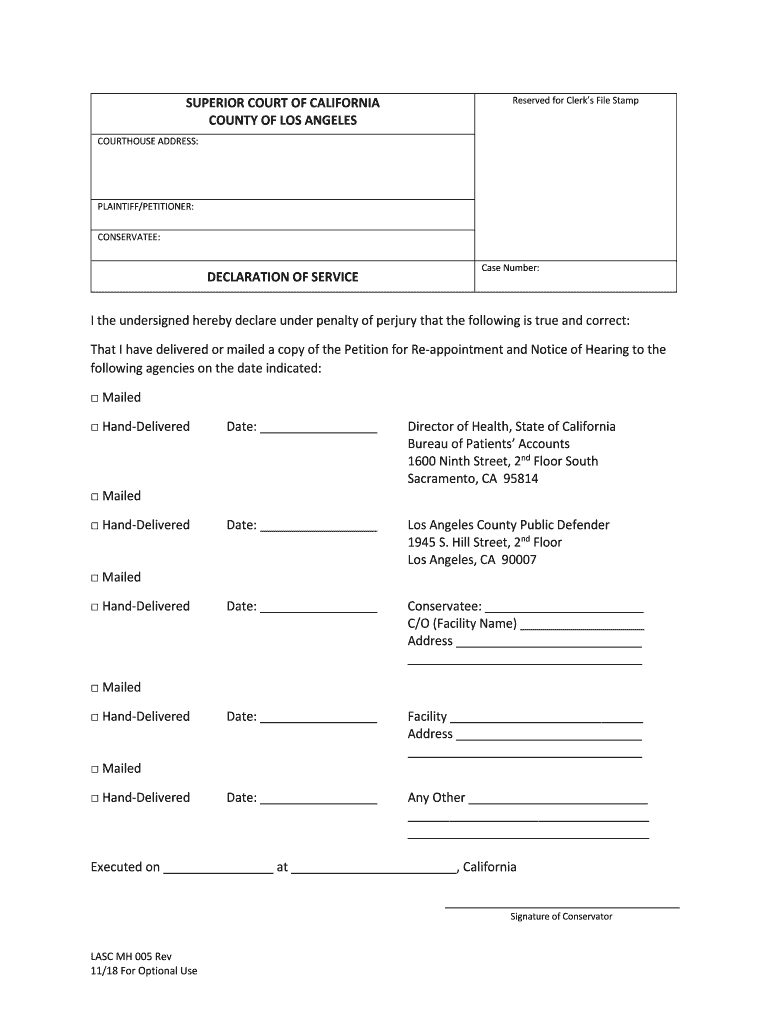







Definition & Meaning
The GC-399, officially known as the "Notice of the Conservatee's Death" used by the California Courts, is a crucial legal document. This form serves as a formal declaration that notifies the court of the death of a conservatee, an individual under court-appointed guardianship due to incapacity to manage personal and/or financial affairs. Upon the death of a conservatee, the conservator must promptly inform the court using this document. This notification plays a vital role in ensuring the legal resolution of the conservatorship and related financial or estate matters.
How to Use the GC-399 Notice
To effectively complete the GC-399 form, it is essential to understand its purpose and the necessary details involved. The conservator begins by accurately filling out the form with the conservatee's personal details, including their full name and date of death. The form requires specific information about the conservatorship case, such as the case number and the status of any outstanding court orders or financial obligations. Once completed, the conservator submits the form to the relevant California Superior Court handling the conservatorship case, following stipulated filing procedures and deadlines.
Steps to Complete the GC-399 Notice
-
Gather Necessary Information: Collect all required information relating to the conservatee, including their full legal name, date of birth, and date of death. Ensure you have the case number and any existing orders from the court.
-
Access the Form: Obtain the GC-399 form from the California Courts website or the clerk's office of the local Superior Court.
-
Fill in the Details: Carefully fill out the form, ensuring accuracy and completeness. Provide information about the conservatee, the conservator, and any relevant case details.
-
Attach Supporting Documents: Include any required attachments, such as a copy of the death certificate and documentation of any unresolved court orders.
-
Review for Accuracy: Double-check all entered information for accuracy and completeness, ensuring no fields are left blank unless specifically instructed otherwise.
-
Submit the Form: File the completed form according to the court’s instructions, either by mailing it to the designated court address or delivering it in person.
Why You Need the GC-399 Notice
Filing the GC-399 serves several legal and practical purposes. Most importantly, it fulfills the conservator’s legal obligation to inform the court of the conservatee's death, prompting the discontinuation of the conservatorship. This notification allows the court to update its records and oversee the appropriate distribution of the conservatee's estate based on wills or existing legal structures. It also protects the conservator from potential legal repercussions associated with failing to notify the court of the change in status promptly.
Who Typically Uses the GC-399 Notice
The GC-399 form is primarily used by the conservator assigned to a conservatee through the California legal system. Typically, conservators are family members, close friends, or professional fiduciaries appointed by the court to manage the affairs of an incapacitated individual. Legal professionals, including lawyers specializing in estate or elder law, may assist in completing and filing the form, ensuring compliance with legal obligations and adherence to necessary procedures.


Legal Use of the GC-399 Notice
The legal framework surrounding the GC-399 involves specific responsibilities and obligations for conservators under the jurisdiction of California law. The notice must be filed within a certain timeframe after the conservatee's death, ensuring that the court efficiently processes the termination of the conservatorship. Failure to timely submit the form can lead to legal penalties or complications related to the conservatee’s estate management.
Important Terms Related to the GC-399 Notice
- Conservatee: The individual under conservatorship for whom the form is filed.
- Conservator: The person appointed by the court to manage the affairs of the conservatee.
- Notice: The formal declaration of the death, submitted to the court to address pending conservatorship matters.
- Superior Court: The court handling conservatorship cases within its specific jurisdiction in California.
Filing Deadlines / Important Dates
The GC-399 form must be filed promptly following the death of the conservatee, usually within 30 days, though exact deadlines may vary by jurisdiction. Courts may set specific timelines for filing related documents or closing financial affairs, so checking with the assigned Superior Court for precise deadlines is advisable.
Form Submission Methods (Online / Mail / In-Person)
The method of submitting the GC-399 can vary. Traditional submission involves delivering the form to the court in person or mailing it. Some courts may offer online submission capabilities through the court's electronic filing systems, providing convenience for conservators. Confirm the acceptable submission methods with the specific Superior Court managing the conservatorship to ensure compliance.
Penalties for Non-Compliance
Failing to file the GC-399 notice can lead to severe penalties, including fines or legal action against the conservator. These repercussions underscore the importance of submitting the notification within the required timeframe. Non-compliance may also complicate the legal dissolution of the conservatorship and affect the orderly distribution of the conservatee’s assets.