Definition & Purpose of the Septic Waste Hauler Manifest
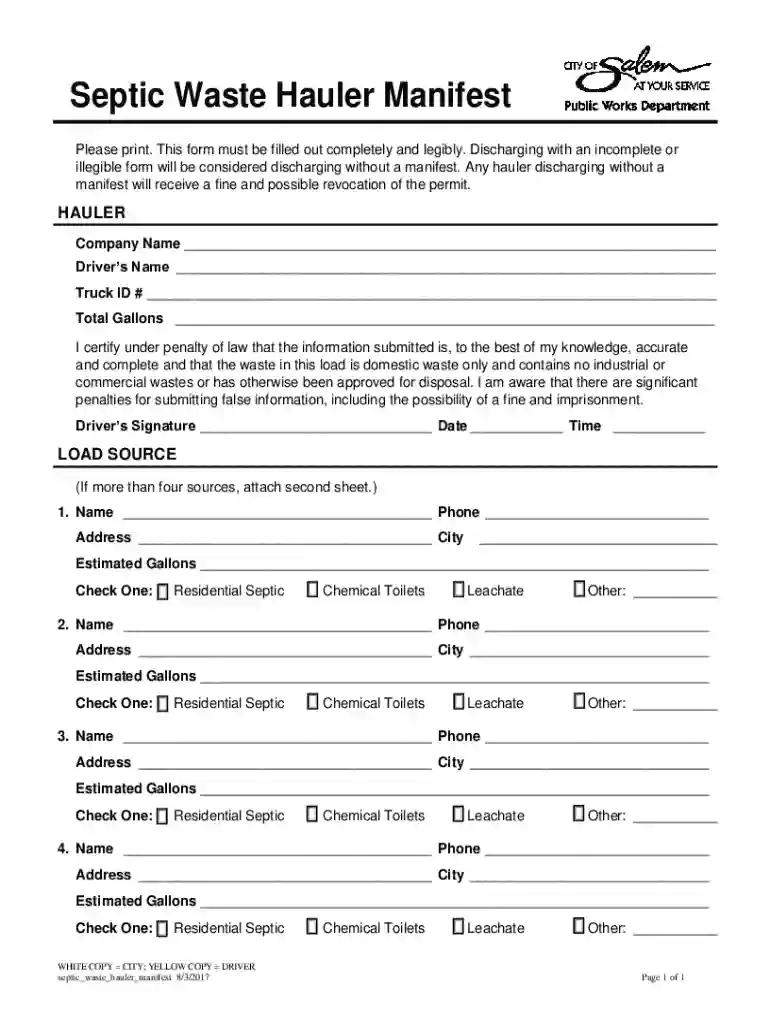
The Septic Waste Hauler Manifest is a critical document that waste haulers must complete before discharging waste. It serves as an official record ensuring that waste disposal complies with environmental regulations. The form includes detailed sections for the hauler's information, load source details, and certification of compliance with legal requirements regarding the nature of the waste. Accurate completion of this form is essential to avoid legal repercussions, including fines and permit revocation.
Completing the Septic Waste Hauler Manifest
To properly fill out the Septic Waste Hauler Manifest, haulers must:
-
Enter Hauler Information: Include the company's name, address, contact information, and license number. This ensures accountability and traceability of the waste transport process.
-
Detail Load Source: Provide the origin of the waste, the volume being transported, and any related environmental permits. This data helps in environmental impact tracking and management.
-
Certification Section: The hauler must certify compliance with all relevant environmental laws, confirming that the waste has been handled and will be disposed of following regulatory standards.
Obtaining the Septic Waste Hauler Manifest
Haulers can obtain the Septic Waste Hauler Manifest from:
- Local Environmental Agencies: Many state and local agencies provide forms directly or via their websites.
- Industry Associations: Some associations offer standardized forms to members involved in waste management.
- Online Government Portals: Various state environmental departments have downloadable versions on their official sites, ensuring easy access for haulers.
Legal Implications and Compliance
Non-compliance with completing the Septic Waste Hauler Manifest can result in:
- Fines and Penalties: Substantial fines may be imposed on haulers who fail to submit the form or incorrectly fill out details.
- Permit Revocation: Repeated violations can lead to the loss of operating permits, severely impacting business operations.
- Legal Action: In severe cases, legal proceedings may be initiated for environmental negligence.
Importance of Using the Septic Waste Hauler Manifest
The use of the Septic Waste Hauler Manifest is integral to:
- Environmental Protection: Ensures waste is managed responsibly, reducing risk to water supplies and ecosystems.
- Industry Accountability: Tracking and documentation of waste flows enhance transparency in waste disposal, promoting better practices industry-wide.
- Regulatory Compliance: Helps businesses adhere to local, state, and federal waste management regulations, minimizing legal risks.
Typical Users of the Septic Waste Hauler Manifest
Users primarily include:
- Septic Waste Haulers: Companies engaged in the collection and transportation of septic waste.
- Environmental Compliance Officers: Professionals responsible for ensuring that waste management activities meet regulatory standards.
- Facilities Managers: Operators of wastewater treatment facilities who receive and process septic waste.
Key Elements of the Septic Waste Hauler Manifest
Critical components of the form include:
- Hauler and Vehicle Identification: Specific fields for entering vehicle details and license numbers to track movement.
- Waste Description: Accurate description of the waste type, including any hazardous materials, to guide proper disposal methods.
- Signatory Verification: A section requiring signatures from authorized personnel, confirming the accuracy and authenticity of the information provided.
State-Specific Regulations
Regulations may vary by state:
- California: Enforces stricter regulations with additional reporting requirements and higher penalties for non-compliance.
- Texas: Offers a streamlined electronic submission process to improve efficiency and reduce paper use.
- New York: Mandates detailed source documentation for each load, reflecting its focus on traceability and accountability.
Digital vs. Paper Version
Considerations include:
- Digital Versions: Facilitate easier storage, retrieval, and environmental benefits by reducing paper use. They're often integrated into electronic waste management systems.
- Paper Versions: Useful in areas with limited digital infrastructure or for haulers who prefer physical documentation for record-keeping.
Examples and Real-world Scenarios
Several scenarios where the form proves essential:
- Environmental Audits: During regulatory inspections, having a complete and accurate manifest validates compliance and avoids penalties.
- Cross-border Waste Disposal: When transporting waste across state lines, manifests ensure all involved parties understand and satisfy respective legal requirements.
Penalties for Non-Compliance
Consequences for non-compliance include:
- Financial Penalties: Fines per incident, which could escalate with repeat offences.
- Operational Delays: Suspension of operations until compliance is demonstrated.
- Legal Proceedings: Potential lawsuits from environmental bodies or affected parties.