






Definition and Overview of "In the Matter of CHESTER"
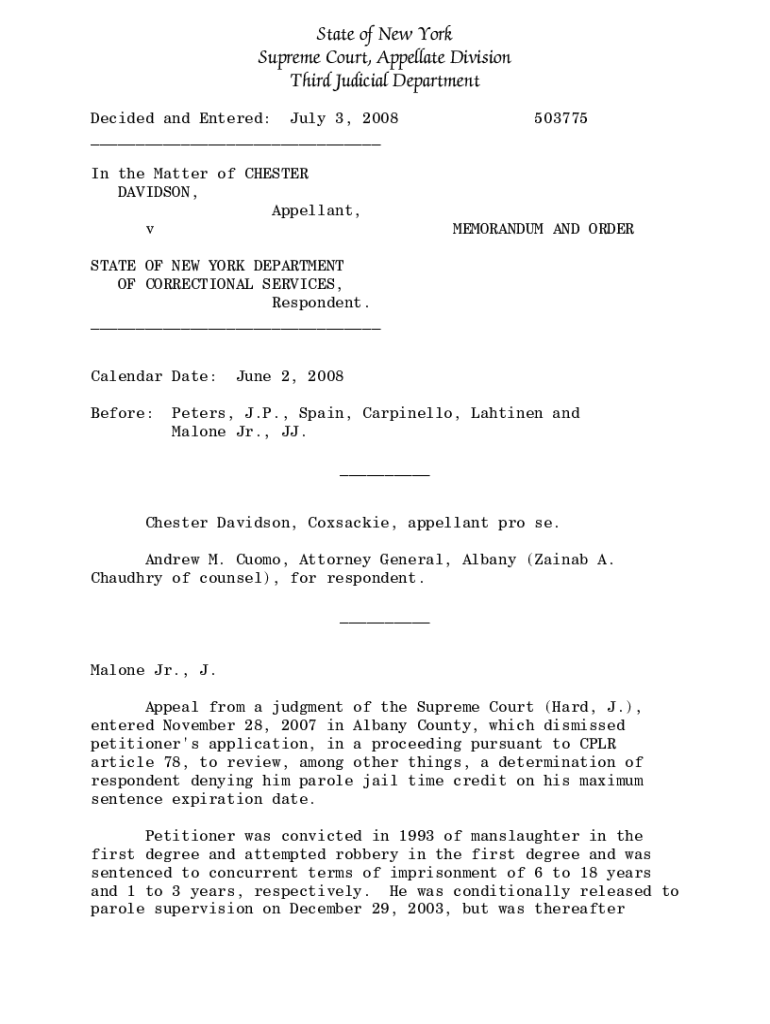
The "In the Matter of CHESTER" is a legal document that records proceedings related to the case of Chester Davidson against the State of New York Department of Correctional Services. This memorandum and order from the New York Supreme Court, Appellate Division, addresses an appeal concerning parole jail time credit. Davidson's application was dismissed, affirming that he was credited appropriately for 11 days of jail time following an interruption in his parole due to delinquency and arrest. The document outlines the legal framework and requirements pertinent to the case, highlighting the court's decision and reasoning.
How to Use "In the Matter of CHESTER"
Using the "In the Matter of CHESTER" requires careful examination of its legal content, as it pertains to parole and sentencing issues. Users typically involve legal professionals, such as attorneys, who interpret the document to understand its implications for similar cases. The document outlines specific court decisions and legal precedent, making it a valuable reference for arguing or evaluating parole-related cases. Within the legal framework, this document is utilized to ensure that jail time credits and parole conditions are properly considered in similar legal circumstances.
Steps to Complete Related Legal Documentation
- Consult Legal Counsel: Secure the assistance of an attorney familiar with parole and sentencing laws.
- Review Relevant Cases: Examine similar cases, including "In the Matter of CHESTER," to understand precedents.
- Prepare Legal Argument: Develop a legal strategy that incorporates insights from the document.
- Document Evidence: Collect evidence and records supporting the case specifics.
- Draft Legal Documents: Prepare necessary filings and motions in accordance with legal standards.
- Submit to the Court: Ensure all documentation is filed with the appropriate legal body in a timely manner.
Key Elements of "In the Matter of CHESTER"
- Legal Context: Clarifies the legal issues surrounding parole and jail time credits.
- Case-Specific Information: Details related to Chester Davidson's parole, including his delinquency and incarceration.
- Court's Decision: The ruling that upholds the dismissal and confirms the 11 days jail time credit.
- Aggression Replacement Training Program: Requirement for Davidson as a condition of his parole.
- Implications for Similar Cases: Sets a legal precedent that could influence future rulings on similar matters.
Who Typically Uses "In the Matter of CHESTER"
The "In the Matter of CHESTER" is primarily used by:
- Legal Practitioners: Attorneys and legal professionals dealing with parole cases.
- Judges and Court Officials: Individuals involved in adjudicating parole-related cases.
- Law Students and Academics: Those studying legal precedents and case law.
- Parole Officers: Professionals overseeing parole conditions and compliance.
Legal Use of "In the Matter of CHESTER"
The document serves as a legal precedent in matters of parole credit and compliance conditions. It is used in courtrooms to argue or support claims regarding the accuracy and application of jail time credits. Legal practitioners may reference this document to understand how specific training programs, like Aggression Replacement Training, influence parole decisions. Furthermore, the case aids in interpreting the legal standards for documenting parole interruptions due to delinquency.
State-Specific Rules for Parole and Jail Time Credits
While "In the Matter of CHESTER" pertains specifically to New York state law, it’s important to know that rules about parole and jail time credits can vary significantly across different states. Each state has its guidelines concerning parole conditions, the calculation of jail time credits, and the legal processes for addressing delinquency. Legal advisors often need to compare state-specific statutes with the rulings reflected in this document to apply it accurately.
Important Terms Related to Parole and Legal Compliance
- Parole: The conditional release of a prisoner before the completion of their sentence.
- Jail Time Credit: Time deducted from a sentence based on time already served in custody.
- Delinquency: A violation of parole terms that may result in reincarceration.
- Training Program Requirements: Court-mandated programs that a parolee must complete as part of their release conditions.
Penalties for Non-Compliance With Parole Conditions
Failure to comply with parole conditions, such as participating in a mandated training program or correctly reporting jail time, can result in:
- Reincarceration: Returning to prison to serve additional time.
- Extended Parole Period: Lengthening the time under parole supervision.
- Additional Charges: Facing new legal penalties or charges related to non-compliance.