Definition & Meaning
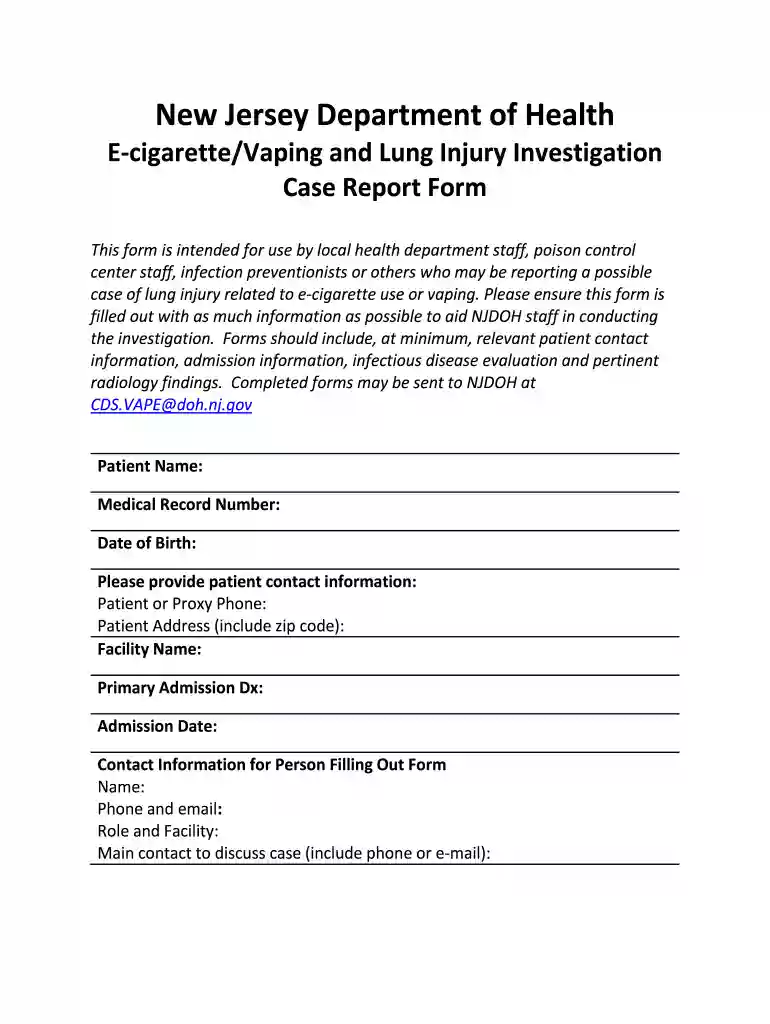
"Lung Injury in People Who Report E-cigarette Vaping Update" refers to a case report form utilized by health professionals to document incidences of lung injury associated with e-cigarette or vaping usage. This form captures detailed patient information, medical findings, and diagnostic data critical for analyzing and understanding the public health impact of vaping.
Key Components
- Patient Information: Initial section collects basic biographical details including age, gender, and contact information.
- Medical History: Chronicles previous health issues that could influence lung health, providing context for current injuries.
- Symptom Description: Detailed account of symptoms experienced by the patient, helping to correlate vaping with lung injury.
Purpose
The form serves multiple objectives, such as tracking vaping-related health issues, aiding in state-level public health assessments, and potentially informing federal regulatory measures.
How to Use the Lung Injury in People Who Report E-cigarette Vaping Update
Understanding the usage of the form involves familiarizing oneself with its structured layout and mandatory fields.
Navigating the Form
- Section-by-Section Completion: Each part must be meticulously filled out with accurate data, starting from patient information to the specifics of e-cigarette products used.
- Medical Evaluation: Requires thorough input, detailing clinical examinations, imaging results, and laboratory findings.
Practical Techniques
- Data Verification: Contact and medical data should be cross-referenced with patient records to ensure precision.
- Consultation with Specialists: Collaboration with pulmonologists can offer deeper insights into the lung injury patterns.
Steps to Complete the Lung Injury in People Who Report E-cigarette Vaping Update
Efficiently completing the form involves understanding its sequential structure and ensuring accurate data entry.
- Gather Necessary Information: Ensure all relevant patient and medical data is collected beforehand.
- Fill Patient Details: Begin with the demographic information to set the context of the report.
- Detail Medical History: Accurately reflect any prior lung or related health conditions.
- Input Vaping Specifics: Specify brands, substances, and frequency of e-cigarette usage.
- Document Clinical Findings: Note any diagnostic results including X-rays or CT scans.
- Review & Submit: Double-check for completion and accuracy before submission to the appropriate health department.
Target Users
- Healthcare Providers: Required to report cases for statistical and health surveillance purposes.
- Public Health Departments: Utilize aggregated data to monitor and respond to public health trends.
- Research Institutions: Analyze form data to study the epidemiology of vaping-related lung injuries.
Important Terms Related to Lung Injury in People Who Report E-cigarette Vaping Update
Grasping common vocabulary within the context of the form is essential for proper interpretation and reporting.
Key Terms
- EVALI: E-cigarette or Vaping Associated Lung Injury, a condition often documented in these forms.
- Nicotine & THC: Primary components of concern related to vape products.
- Pulmonary Function Test: Assesses lung capacity and function, often referenced in the form.
Legal Use of the Lung Injury in People Who Report E-cigarette Vaping Update
Using this form respects both medical privacy laws and public health mandates.
Legal Considerations
- HIPAA Compliance: Ensure patient data is handled with confidentiality in adherence to the Health Insurance Portability and Accountability Act.
- Public Health Reporting Mandates: Aligning with state regulations on reporting vaping-related lung injuries.
Key Elements of the Lung Injury in People Who Report E-cigarette Vaping Update
Recognizing the critical sections that constitute the form is vital.
Base Elements
- Patient Details: Provides a snapshot of the individual affected by lung injury.
- Exposure Information: Correlates vaping exposure with injury symptoms.
- Healthcare Provider Certification: Verifies the authenticity and accuracy of reported information.
Examples of Using the Lung Injury in People Who Report E-cigarette Vaping Update
Practical examples illustrate the form's application.
Case Study
- A local health department uses aggregated form data to identify increased lung injury cases following a surge in e-cigarette popularity. This leads to targeted public health campaigns and policy recommendations.
Real-world Scenarios
- Emergent Trends: Tracking spikes in young adult vaping can lead to quick intervention measures.
- Geographic Focus: Identifying clusters of cases in specific regions can prioritize resource allocation.
By evaluating these blocks, you'll gain comprehensive insight into the "Lung Injury in People Who Report E-cigarette Vaping Update," its usage, and importance in public health documentation.