






Definition and Meaning of op129
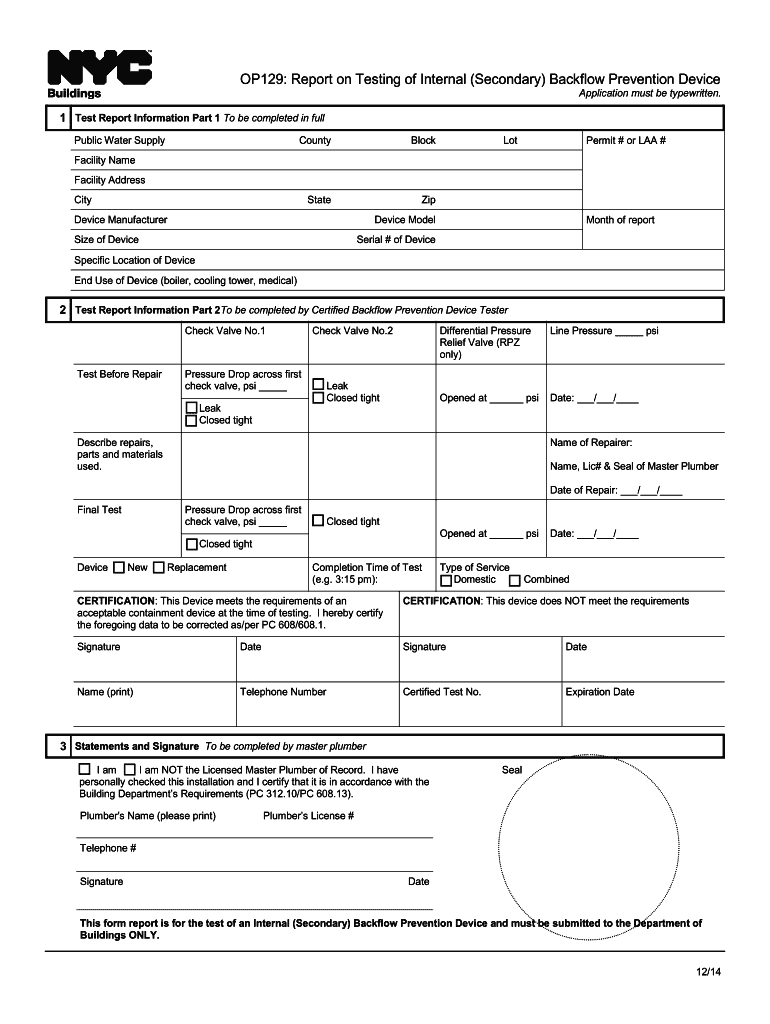
The op129 form is a specialized document used for the testing and certification of Internal (Secondary) Backflow Prevention Devices. This form serves as a structured report template that includes sections for both the tester and the master plumber to fill out. The purpose of the form is to ensure compliance with local building department requirements and to certify the device's functionality and safety. The op129 is integral to maintaining water system integrity and preventing contamination in plumbing systems. By providing a standardized method for reporting and certification, this form plays a crucial role in safeguarding public health and environmental standards.
Steps to Complete the op129
Completing the op129 requires careful attention to detail. Here is a step-by-step guide:
- Gather Required Information: Ensure you have all necessary details, such as the serial number of the device, location, and contact information of the involved parties.
- Test Report Information: Record the results of the backflow prevention device test. This includes inlet and outlet pressure readings and pass/fail status.
- Certification of Compliance: The master plumber must certify that the device meets all specified requirements. This section usually involves signing and dating the form.
- Building Department Statements: Include statements confirming adherence to local building department standards, which may vary depending on the jurisdiction.
Important Terms Related to op129
Understanding the terminology used in the op129 form is essential for accurate completion:
- Backflow Prevention Device: A mechanism installed in water systems to prevent the reverse flow of water, thereby avoiding contamination.
- Master Plumber: A licensed professional responsible for certifying the compliance and functionality of plumbing systems.
- Pass/Fail Status: An indication of whether the device meets established safety and performance criteria.
Legal Use of the op129
The legal requirements surrounding the op129 are crucial for compliance. The form must accurately reflect the testing outcomes and be completed by qualified personnel. The use of this form ensures entities fulfill local legal mandates concerning water safety standards. Legal compliance involves ensuring that the form's data is truthful, the test is properly conducted, and the necessary signatures are obtained.
State-Specific Rules for the op129
Different states may have unique regulations regarding the op129. Variations include:
- Certification Requirements: Some states mandate additional certifications or licenses for the tester or the master plumber.
- Testing Frequency: States may specify different intervals for the testing and reporting of backflow prevention devices, reflecting local environmental and safety standards.
Form Submission Methods (Online, Mail, In-Person)
Submitting the op129 form can typically be done through several methods, offering flexibility to the user:
- Online Submission: Often available through state or local government websites, allowing for quick and efficient processing.
- Mail: Provides a traditional option with a hard copy of the form sent to the relevant department.
- In-Person Submission: Allows for direct interaction and submission to the appropriate authorities.
Penalties for Non-Compliance
Failing to submit the op129 form or inaccurately completing it can result in penalties. These may include:
- Fines: Monetary charges imposed for failing to comply with reporting deadlines or inaccurately reporting test results.
- Revocation of License: Repeated non-compliance can lead to the suspension or revocation of professional licenses, such as those for master plumbers.
- Legal Action: Potential lawsuits or legal disputes with property owners or governing bodies.
Key Elements of the op129
Several essential components define the op129 form's utility:
- Comprehensive Testing Sections: Detailed fields for recording test results and ensuring device integrity.
- Certification by Qualified Personnel: Signature fields specifically for licensed professionals.
- Adherence to Standards: Sections explicitly referencing local building codes and standards, which vary by jurisdiction and must be strictly adhered to.
Form Variants (Related or Older Versions)
While op129 is standardized, variants may exist:
- Older Versions: Previous editions of the op129 may lack updated fields or sections reflecting current regulations.
- Related Forms: Some jurisdictions may offer alternative forms that serve similar functions but cater to different types of water systems or compliance needs.
These headings and detailed content blocks provide thorough information about the op129 form, covering all aspects from definition to compliance and submission to enhance understanding and utility for professionals dealing with this document.