







Definition and Purpose of an NGO Profile Template
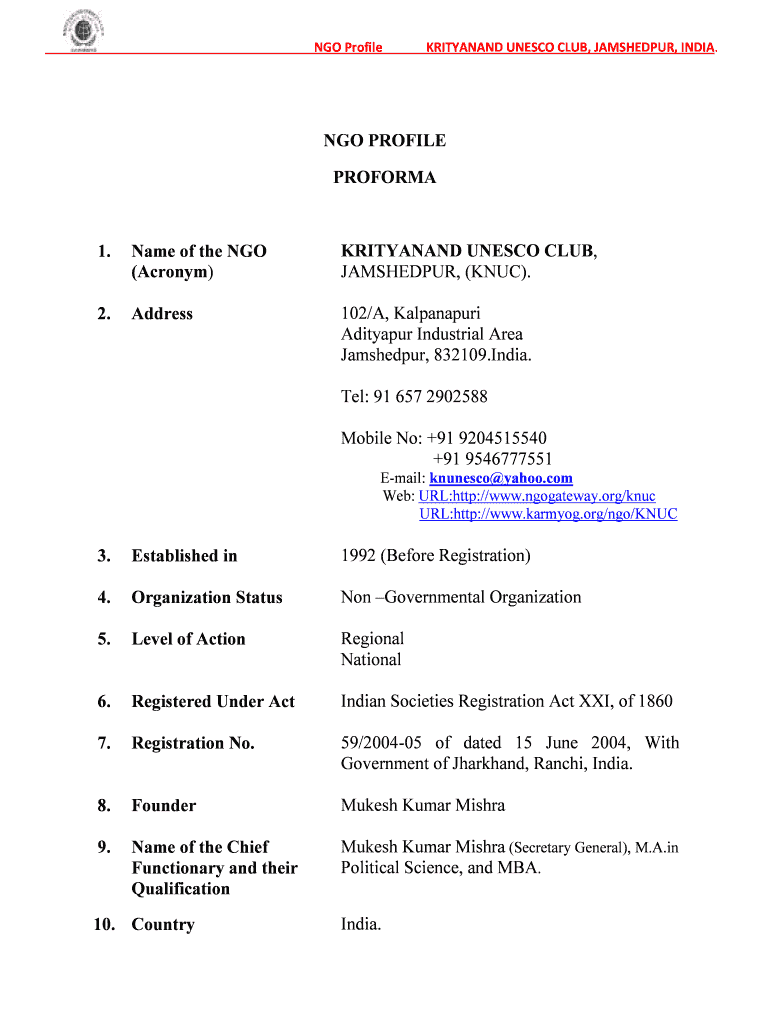
An NGO profile template serves as a structured document that outlines essential information about a non-governmental organization. This template is crucial for presenting the organization’s mission, vision, activities, and achievements in a clear and organized manner. The profile typically includes sections detailing the organization’s history, target populations, programs, funding sources, and partnerships. The primary purpose of utilizing this template is to facilitate communication with stakeholders, including donors, volunteers, and the general public, ensuring that all relevant details are available at a glance.
The use of a standard format enhances consistency across various NGO profiles, making it easier for new staff members to gather and report information. Furthermore, it can assist organizations in alignment with funding requirements by addressing specific sections that potential funders might be interested in.
Key Elements Typically Found in an NGO Profile
- Organization Name and Logo: Branding elements are critical for recognition and professionalism.
- Mission Statement: A concise declaration that encapsulates the purpose and core values of the organization.
- History and Background: A brief overview explaining how and when the organization was founded, including significant milestones.
- Programs and Services: Detailed descriptions of the main initiatives the NGO undertakes, targeting specific community needs.
- Target Population: Identification of the demographic groups the organization serves, along with relevant data illustrating the need for its programs.
- Funding Sources: Summary of the financial support the organization receives, which may include grants, donations, and partnerships.
How to Use the NGO Profile Template Effectively
Using the NGO profile template effectively involves a systematic approach to fill in all pertinent sections with relevant information. Follow these general steps to ensure that your profile is comprehensive and informative.
-
Download or Access the Template: Make sure you have the correct version of the NGO profile template that suits your organization’s specific needs.
-
Gather Relevant Information: Collect necessary data regarding all components of your NGO, focusing particularly on mission, activities, and accomplishments.
-
Fill in Each Section: Begin populating the template according to the guidance provided in each section. Ensure clarity and conciseness, avoiding jargon where possible.
-
Include Supporting Documents: Attach any additional materials that enhance the profile, such as recent reports, financial statements, and brochures.
-
Review and Edit: Once completed, review the profile for accuracy and clarity. It may be beneficial to have someone outside the organization read it for feedback.
By thoroughly utilizing the NGO profile template, organizations can create a valuable communication tool that can be shared widely.
Steps to Complete the NGO Profile Template
Completing the NGO profile template requires thoughtful organization of information. Below are structured steps to guide you through the process.
-
Prepare Background Information: Gather essential details about your organization, including history, mission statement, and current programs.
-
Executive Summary Section: Draft a brief overview that encapsulates what your NGO stands for and its operational ethos.
-
Detail Programs and Services: For each program, summarize its objectives, target demographics, and outcomes. Use bullet points for clarity.
-
Impact and Achievements: State specific accomplishments with quantifiable metrics, such as the number of beneficiaries served or outcomes achieved.
-
Funding Sources and Partnerships: Clearly outline how the organization is funded and mention important collaborations that enhance program delivery.
-
Final Review: Edit the entire document for coherence and ensure that all required sections are completed.
Utilizing a systematic approach when completing the form ensures that the profile is both informative and engaging to potential stakeholders.
Who Typically Uses the NGO Profile Template?
The NGO profile template is versatile and can be utilized by different stakeholders within the nonprofit sector.
-
Nonprofit Organizations: NGOs at various stages of operation use this template to create a clear organizational identity and communicate effectively with the public and donors.
-
Funding Agencies: Government bodies, foundations, and grant-making organizations may use these profiles to evaluate potential partners for funding opportunities.
-
Volunteer Coordinators: Individuals seeking to recruit volunteers can use NGO profiles to present the organization positively and clarify available roles.
-
Board Members: Board members and leadership teams can refer to these profiles for understanding key elements of the organization and conveying this information during meetings or presentations.
-
Research Entities: Academics, students, and researchers studying the nonprofit sector may find these profiles helpful as case studies or organizational references.


Examples and Variants of the NGO Profile Template
Several variants of the NGO profile template exist, tailored to different audiences and purposes.
General Structure Variants
-
Standard NGO Profile Template: This version covers basic organizational information with a focus on mission, activities, and community impact.
-
Project-Specific Profile Template: Tailored for individual projects, it provides detailed descriptions of specific initiatives along with their targets and outcomes.
-
Funding Proposal Profile Template: Designed for grant applications, focusing on financial needs, expected outcomes, and alignment with the funder's objectives.
Examples of Consideration
-
Sample NGO Profile in PDF: A downloadable example that illustrates how to fill out the template effectively and can be referenced as a model.
-
Association Profile Sample: A specific format for associations or coalitions, detailing their collaborative efforts and member organizations.
Having various templates aids organizations in addressing unique needs while maintaining clear communication strategies.




