






Definition and Purpose of Blue Card Certification
Blue Card Certification is a specialized program aimed at standardizing incident command training for fire departments. It focuses on ensuring that all personnel in command during emergencies are equipped with consistent and effective strategies. This certification is essential for implementing standardized local incident operations, providing comprehensive training that blends online education and practical simulation exercises. The goal is to enhance emergency response effectiveness and ensure a unified approach to incident management.
Elements of the Certification
- Online Training: Offers approximately 50 hours of comprehensive coursework accessible from any location, allowing for flexibility in scheduling.
- Simulation Lab: A hands-on component taking place over three days, where participants engage in realistic emergency scenarios to apply learned techniques.
Who Should Consider This Certification
Typically, fire chiefs, firefighting officers, and emergency medical service leaders seek Blue Card Certification to improve their expertise in incident command. Departments aiming to adopt a uniform approach to incident management also benefit from this credential.
How to Obtain Blue Card Certification
Achieving Blue Card Certification involves a structured process designed to accommodate the busy schedules of emergency personnel while ensuring thorough training.
Steps to Completion
-
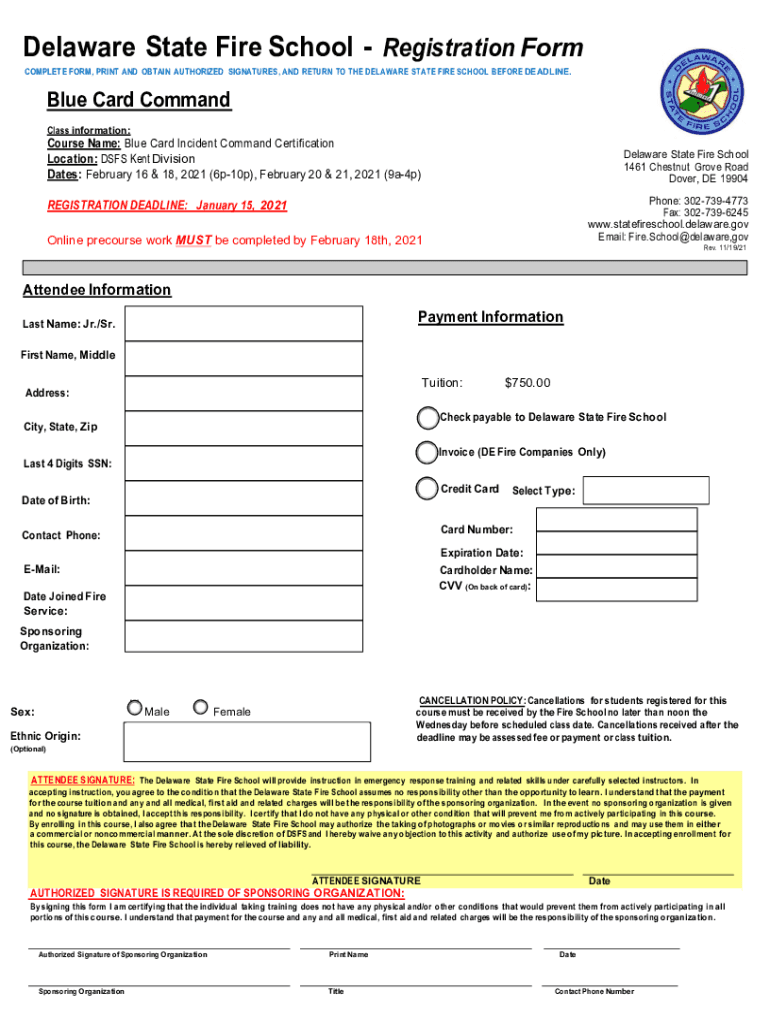
Registration: Begin by enrolling in the course before the advertised deadline, which is typically scheduled well in advance of the start date.
-
Online Coursework: Complete the mandatory 50 hours of online training modules, which cover various aspects of incident command protocols and strategies.
-
Interactive Simulation Lab: Participate in a three-day simulation lab that provides practical, hands-on training in managing emergency incidents using standard operating procedures.
-
Assessment and Certification: After successful completion of both the online and practical components, participants receive certification, affirming their readiness and proficiency in standardized command practices.
Why Pursue Blue Card Certification
Obtaining Blue Card Certification is pivotal for several reasons, primarily focused on enhancing the efficiency and safety of emergency responses.
Benefits of Certification
-
Standardized Operations: Promotes a cohesive and consistent response across all levels of emergency operation.
-
Enhanced Leadership: Improves leadership skills within emergency scenarios, enabling better decision-making and coordination.
-
Credential Verification: Provides measurable proof of an individual's command capabilities, essential for career advancement in emergency services.
Key Elements of Blue Card Certification Training
Understanding the essential components of Blue Card Certification is crucial for prospective participants. The program highlights various operational aspects for managing incidents effectively.
Core Training Modules
-
Incident Evaluation: Techniques for assessing situations to determine the best response strategies.
-
Strategic Decision Making: Training on how to prioritize actions and allocate resources efficiently during emergencies.
-
Command and Communication: Emphasizes the importance of clear communication and maintaining effective control over incidents, especially in high-pressure situations.
State-Specific Requirements for Blue Card Certification
While the Blue Card Certification provides a standardized framework, individual states may have specific mandates that alter its application or require additional components.
Considerations for Different States
-
Licensing Conditions: Some states may require additional certifications to align with their specific firefighting regulations.
-
Continuing Education: States might mandate periodic refresher courses to ensure that personnel are updated on the latest practices and procedures.
Legal Implications and Use of Blue Card Certification
Blue Card Certification holds particular significance in the legal framework of emergency management, given its focus on creating standardized responses.
Legal Benefits
-
Liability Reduction: Ensures adherence to recognized procedures, potentially reducing liability in post-incident legal evaluations.
-
Compliance with National Standards: Aligns with nationally recognized incident command protocols, promoting uniformity and compliance across jurisdictions.
Examples and Case Studies of Blue Card Certification Application
Real-world applications of Blue Card Certification reveal its practical benefits and effectiveness in emergency management.
Noteworthy Scenarios
-
Large-Scale Emergencies: In multi-agency responses, certified command teams have demonstrated improved coordination and reduced incident resolution times.
-
Community Preparedness: Departments with certified personnel report enhanced preparedness for natural disasters, thanks to uniform training and protocols.
Important Terms and Concepts Related to Blue Card Certification
Understanding the terminology associated with Blue Card Certification is crucial for those undergoing training or interacting with certified personnel.
Key Terminologies
-
Incident Command System (ICS): A standardized approach for managing emergency responses, which is central to Blue Card training.
-
Standard Operating Procedures (SOPs): Established processes used to achieve uniformity in emergency response efforts, heavily emphasized in Blue Card Certification.
By focusing on these structured topics and details, anyone interested in Blue Card Certification can gain a thorough understanding of its purpose, application, and benefits within emergency management fields.