






Definition and Meaning
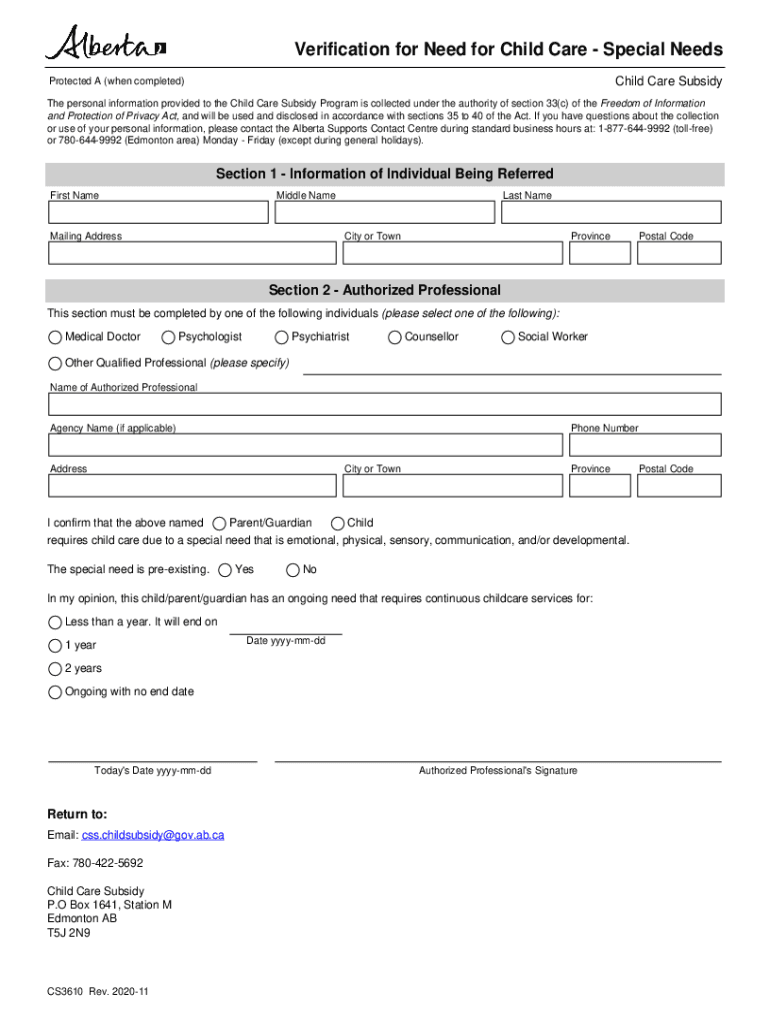
The form "Services for Children with Disabilities - Child Care" is designed to verify the eligibility for child care subsidies for children with special needs. It serves as a comprehensive document to assess the requirements and support needed for children facing emotional, physical, sensory, communication, or developmental challenges. These subsidies aim to alleviate financial burdens for families, ensuring that children with disabilities receive suitable care tailored to their individual needs.
How to Use the Services for Children with Disabilities - Child Care
To make the most of this form, start by collecting all necessary information regarding the child's specific needs, as well as personal details. It's essential to accurately fill out each section to provide a complete picture of the child’s requirements. After gathering personal and professional information, the form should be filled out methodically. Cross-check all details before submission to ensure accurate data provision.
How to Obtain the Services for Children with Disabilities - Child Care
This form can be accessed through designated government websites or child care service providers. Sometimes, local government offices or online portals dedicated to disability services offer downloadable versions of the form. It might also be available through organizations that specialize in supporting children with disabilities. Ensuring accessibility to this form is crucial for families seeking financial assistance for child care.
Steps to Complete the Services for Children with Disabilities - Child Care
- Gather Supporting Documents: Obtain all necessary documents, such as medical reports and professional assessments.
- Fill Out Personal Information: Accurately provide details like the child's name, address, and guardians' information.
- Professional Details Section: Fill in information about the qualified professionals confirming the disability and need for childcare.
- Submit Supporting Evidence: Attach documentation that supports the need for special care.
- Review and Finalize: Double-check all entered information for correctness.
- Submit the Form: Follow the submission instructions provided, whether online, via mail, or in-person at the relevant office.
Who Typically Uses the Services for Children with Disabilities - Child Care
Families and guardians of children with disabilities are the primary users of this form. It serves as a critical resource for those needing financial assistance for child care services. Additionally, educational institutions and child care providers might use this form to better understand the child's needs and ensure appropriate accommodations.


Important Terms Related to Services for Children with Disabilities - Child Care
- Subsidies: Financial assistance provided to offset child care costs.
- Disability: Includes emotional, physical, sensory, communication, or developmental challenges.
- Authorized Professional: Qualified individuals who assess and confirm the child’s need for specialized care.
Legal Use of the Services for Children with Disabilities - Child Care
The form must be used in accordance with U.S. legal standards governing the provision of child care services for children with disabilities. It is designed to ensure that the information provided accurately reflects the needs of the child and complies with privacy and data protection laws. Misrepresentation or falsification of information within the form can lead to legal repercussions.
Key Elements of the Services for Children with Disabilities - Child Care
- Personal Information: Essential details about the child and their guardians.
- Authorized Professional Section: Information about the professional confirming the disability.
- Care Needs Assessment: Detailed description of the child’s specific needs and recommended care.
- Submission Instructions: Clear guidelines on how to complete and deliver the form for evaluation.
State-specific Rules for the Services for Children with Disabilities - Child Care
States across the United States may have specific guidelines and eligibility criteria for the form. It is crucial to understand any state-specific rules or additional documentation requirements that might be necessary. These differences can affect both the application process and the availability of subsidies, impacting how families access these valuable resources.