






Definition and Meaning of the Affidavit Statement Form
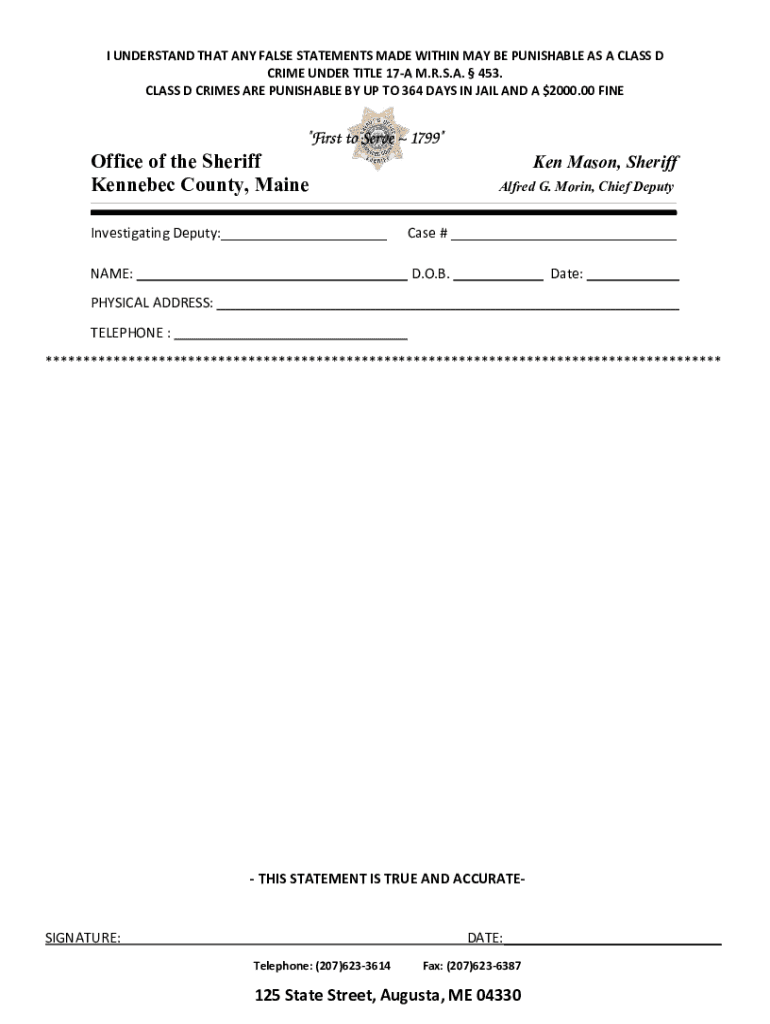
An Affidavit Statement Form (PDF) is a legal document used to declare a fact under oath. Typically, it signifies that the information provided is true and correct to the best knowledge of the person signing it. This form is widely used in legal proceedings, where verbal assurances are insufficient, and a written, sworn statement is required by law. By setting forth specific details, the affidavit serves as evidence or a supporting document in various legal contexts, highlighting its importance in the legal domain.
Components of an Affidavit Statement
- Personal Information: Includes the name, address, and contact details of the individual making the statement.
- Statement of Facts: The core section where the individual outlines the facts they affirm to be true.
- Signature: The individual signs the affidavit in the presence of a notary or authorized officer.
- Notary Public Section: For authentication, this section is completed by the notary, providing details like their signature, seal, and commission number.
How to Use the Affidavit Statement Form (PDF)
Using an Affidavit Statement Form requires a series of meticulous steps to ensure accuracy and compliance with legal standards. Upon downloading the PDF version, individuals should carefully fill out each section, providing truthful and precise information. The form is typically used in situations such as court cases, property disputes, or any situation requiring formal veracity of the details provided. Before submission, the individual must sign the document in the presence of a notary public who will officially witness and certify the affidavit.
Steps for Effective Use
- Download the PDF Form: Start by accessing the document from a reliable source.
- Carefully Fill Out All Sections: Ensure all personal data and factual statements are correct and complete.
- Review for Accuracy: Double-check all entries to avoid errors.
- Notarization: Arrange for a notary public to witness the signing, which legitimizes the document.
- Submit as Required: Depending on the context, submit the form to the appropriate legal entity or as instructed.
Important Terms Related to Affidavit Statement Form
Understanding the language used in affidavit forms is crucial for ensuring proper completion and submission.
Key Terms
- Affiant: The individual who swears to the truthfulness of the statement in the affidavit.
- Notary Public: An official authorized to witness the signing of documents and administer oaths.
- Jurisdiction: The legal authority under which the affidavit is being executed.
- Penalty for Perjury: Legal ramifications imposed when false statements are made within the affidavit.
Legal Use of the Affidavit Statement Form
Legally, an affidavit is a powerful assertion of truth that must be handled with great care. It can serve as evidence in court, safeguarding the affiant’s rights and contributing to the judicial process. Given the legal bearings, affidavits must meet jurisdictional requirements and adhere to specific standards of language and content to be deemed valid. Misuse or the provision of false information can lead to serious consequences, including criminal charges of perjury.
State-Specific Rules for the Affidavit Statement Form
Each state in the U.S. has its own specific set of rules governing the creation and use of affidavits. Differences primarily arise in the notary requirements, the format and language required for the affidavit, and specific uses that are recognized under each state's law. For example, some states may require additional information or different certifications.
Notable Variations
- Format: Varying requirements about the layout and content.
- Language: Specific legal terminology that must be included.
- Jurisdictional Acknowledgments: Some states may need additional certifications to acknowledge the document's validity beyond state lines.
Steps to Complete the Affidavit Statement Form (PDF)
Completing an Affidavit Statement Form can be detailed, with precise instructions guiding the affiant through each stage.
Step-by-Step Guide
- Read Instructions Thoroughly: Before starting, review any guidance associated with the form.
- Fill Personal Information: Enter accurate personal details at the top.
- Draft Truthful Statements: Articulate each fact clearly, being as specific as possible.
- Review: Go through the entire document to ensure everything is filled correctly without discrepancies.
- Set Time with Notary: Book a session with a notary public to execute and witness the signing.
- Finalize: Once notarized, submit the affidavit to the appropriate entity.
Who Typically Uses the Affidavit Statement Form
Affidavit forms are utilized by different individuals and entities to support various claims and declarations. Generally, the individuals using these forms include:
- Legal Professionals: Lawyers, paralegals, and parties involved in litigation use affidavits as part of their evidence.
- Property Owners and Buyers: For transactions that require sworn statements about property conditions or ownership status.
- Financial Institutions: Banks might demand affidavits in specific loan applications, certifying employment or financial standing.


Key Elements of the Affidavit Statement Form
An Affidavit Statement Form is composed of several critical components to ensure its validity and enforceability.
Essential Elements
- Title: Clearly labeled as an affidavit.
- Introduction: A clear statement that the individual is swearing under oath.
- Detailed Declarations: Facts presented should be precise, as these influence the proceedings it is supporting.
- Signature and Date: To authenticate the time and individual's responsibility.
- Notary Certification: Completed by a notary to finalize the document’s legality.