
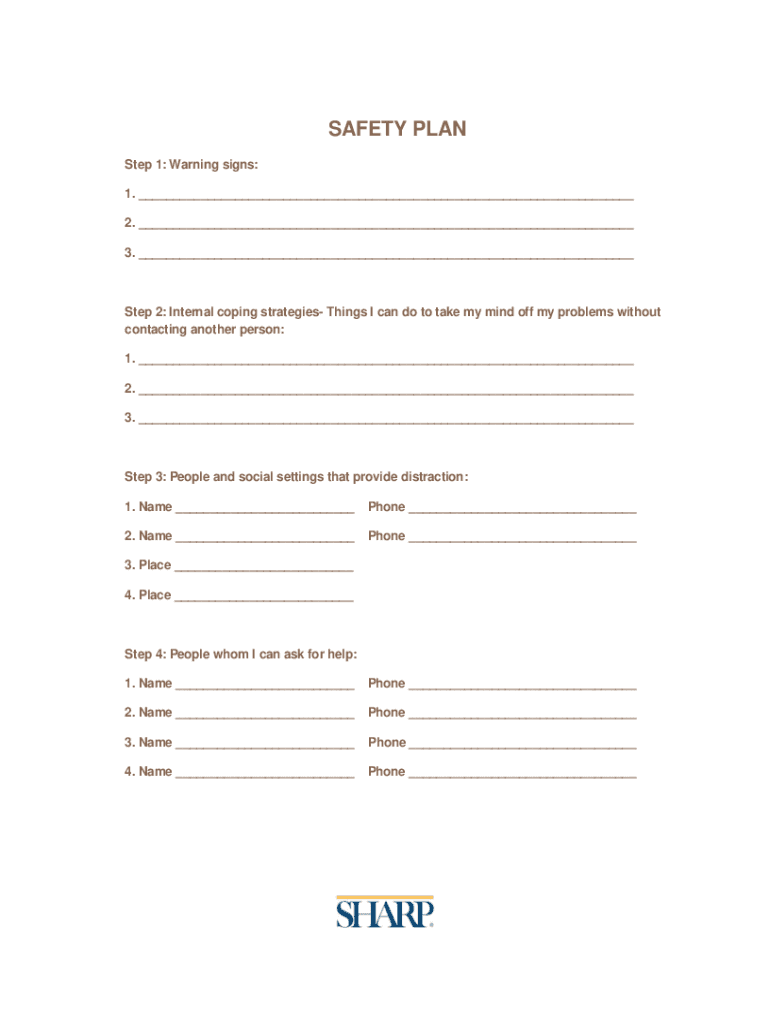







Definition and Purpose of the Safety Plan Template: Adult Step 1
The Safety Plan Template: Adult Step 1 is a structured tool designed to help individuals proactively manage personal crises by outlining steps for safety and support. This document serves as a personalized guide for identifying and addressing early warning signs of distress, establishing coping mechanisms, and listing essential contacts and resources. Unlike general safety protocols, this template specifically targets adult users experiencing emotional or psychological difficulties, helping them navigate through challenging periods with a clear, actionable plan.
Importance of the Template
- Personalized Guide: Each safety plan is tailored to individual needs, taking into account personal triggers, preferred coping strategies, and specific support networks.
- Crisis Management: By identifying warning signs and developing preemptive strategies, users are better prepared to manage potential crises effectively.
- Support System: Incorporates contacts and resources, ensuring users have quick access to trusted individuals and professional help when needed.
Key Elements of the Safety Plan Template
The Safety Plan Template comprises several critical elements that together create a comprehensive safety net. Users will typically outline:
- Warning Signs: Personal indicators and behaviors that signal an impending crisis.
- Coping Strategies: Techniques and activities that effectively reduce stress and prevent escalation.
- Supportive Contacts: List of individuals who can provide immediate emotional support or practical help.
- Professional Resources: Information on therapists, counselors, or helplines available for professional assistance.
How to Use the Safety Plan Template: Adult Step 1
To maximize the effectiveness of the Safety Plan Template, follow these steps:
- Identify Personal Triggers: Reflect on past experiences to recognize warning signs that precede a crisis.
- Develop Coping Strategies: Choose activities that have been successful in calming or redirecting intense emotions in the past.
- List Support Contacts: Document names and contact information of trusted people who can be reached quickly during a crisis.
- Compile Professional Resources: Include relevant contact details for mental health professionals and crisis hotlines.
- Review and Revise: Regularly update the plan to reflect any changes in personal circumstances or support networks.
Practical Examples
- A user notices isolation and withdrawal as early warning signs, thus includes calling a friend as a coping strategy.
- An individual lists meditation and journaling as coping mechanisms to manage anxiety, while also having their therapist's contact details readily available.
Steps to Complete the Safety Plan Template: Adult Step 1
Completing the Safety Plan Template involves a step-by-step approach:
- Understand the Template Structure: Begin by familiarizing yourself with each section of the template.
- Self-Assessment: Engage in thorough self-reflection to accurately fill out sections on triggers and coping strategies.
- Consult with Professionals: Where possible, seek input from mental health professionals to ensure the strategies and contacts are appropriate.
- Fill Out the Template: Systematically work through each section, ensuring all relevant information is included.
- Finalize and Store Safely: Once complete, secure the template in an easily accessible location, whether digital or physical.
Edge Cases
- Users new to recognizing emotional triggers may require additional guidance or consultation with therapists to complete the assessment accurately.
- In some cases, individuals may need to experiment with different coping strategies to find what works best before documenting them.
Who Typically Uses the Safety Plan Template
The primary users of the Safety Plan Template: Adult Step 1 are adults experiencing emotional, psychological, or situational crises. This form can be particularly beneficial for:
- Individuals with Chronic Mental Health Conditions: Those managing ongoing psychological challenges such as anxiety or depression.
- People Undergoing Major Life Changes: Individuals facing significant life transitions, such as divorce or job loss, which may heighten stress levels.
- Support Networks: Therapists and counselors may use the template in conjunction with their clients to facilitate discussions and establish a clear framework for action.


Case Study
A college student experiencing overwhelming pressure from academic responsibilities uses the template to pinpoint feelings of burnout and identify relaxation techniques like yoga and deep breathing exercises as coping mechanisms.
Legal Use of the Safety Plan Template
In the United States, the Safety Plan Template holds no legal status but serves as an essential preventative measure for personal well-being.
Key Legal Aspects
- Confidentiality: Users must ensure that any contact information and personal strategies detailed within the template are protected to maintain privacy.
- Non-Binding Document: While highly beneficial for crisis management, the template does not substitute for legal documents or medical advice.
- Input from Professionals: It is advisable that users consult with mental health professionals to ascertain the appropriateness of strategies and supports listed in their safety plan.
Creating a Supportive Environment Using the Template
Engaging Supportive People and Settings
The Safety Plan Template encourages users to identify and engage with supportive environments and individuals who contribute positively to their mental health journey.
- Trusted Friends or Family Members: Individuals who understand the user's needs and provide non-judgmental support.
- Safe Physical Spaces: Identifying locations that evoke a sense of calm and security, such as a local park or a favorite room at home.
Importance of Continuous Review and Adaptation
Given that personal circumstances, support systems, and coping mechanisms may change, it is crucial to review and update the Safety Plan Template regularly to ensure it remains a relevant and effective resource for crisis management.




