01. Edit your form online
Type text, add images, blackout confidential details, add comments, highlights and more.

Type text, add images, blackout confidential details, add comments, highlights and more.

Draw your signature, type it, upload its image, or use your mobile device as a signature pad.

Send it via email, link, or fax. You can also download it, export it or print it out.
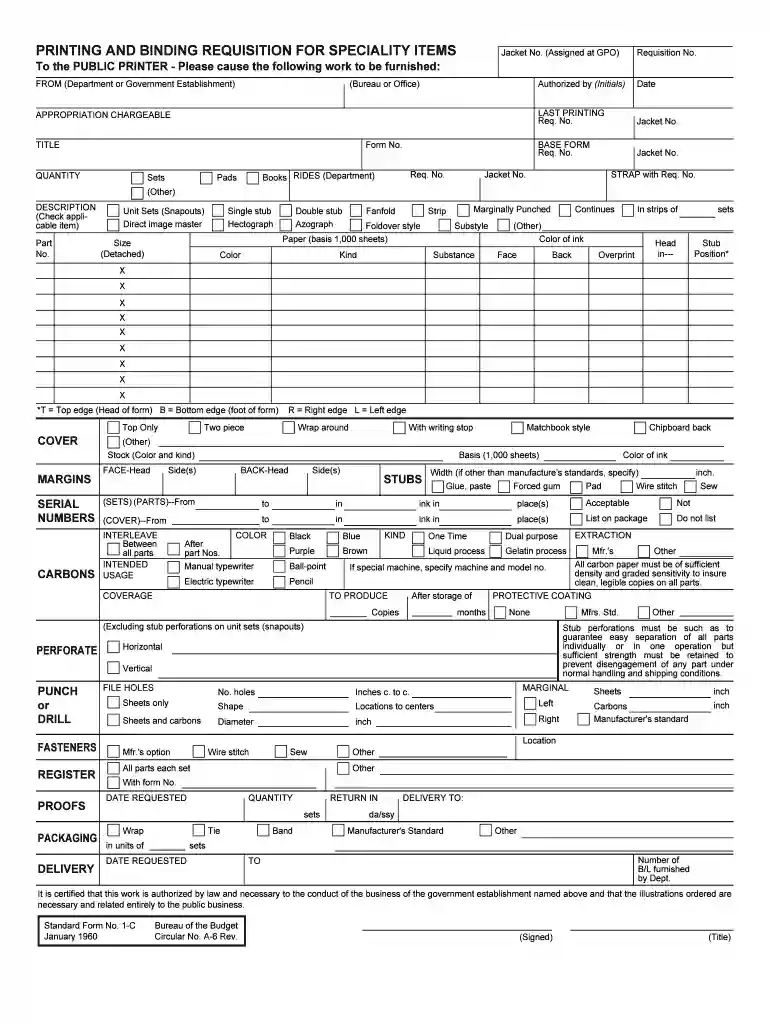
The SF-1 Printing and Binding Requisition is a critical government form used to detail the specifications, quantities, and authorization for printing and binding services. Primarily utilized by government agencies, it defines the expectations for specialty printing projects to ensure compliance with the U.S. Government Publishing Office (GPO) standards. This form includes comprehensive sections for item descriptions, materials, colors, and delivery instructions, ensuring consistency and adherence to guidelines across federal departments.
To effectively use the SF-1 form, it is important to understand its structured approach to detailing requisition needs. Users must:
This process ensures that all necessary information is conveyed, preventing any miscommunication or non-compliance issues.
Completing the SF-1 form involves several key steps:
The SF-1 form comprises several crucial elements:
These elements ensure comprehensive communication of the project details to the GPO.
The SF-1 Printing and Binding Requisition form is predominantly used by:
These users rely on the SF-1 to facilitate precise communication of their printing needs, ensuring standards are met.
To submit the SF-1 form, the following documents are usually required:
These documents guarantee the GPO receives a complete and actionable request.
Legal use of the SF-1 form entails adhering to all federal and departmental regulations regarding government printing:
Adhering to these practices safeguards against potential violations and ensures smooth processing of requisitions.
Users can choose between digital and paper versions of the SF-1 form based on their needs:
Choosing the appropriate version depends on the user’s accessibility to technology and the specific requirements of their agency.
We've got more versions of the SF-1 Printing and Binding Requisition Instructions - GPO form. Select the right SF-1 Printing and Binding Requisition Instructions - GPO version from the list and start editing it straight away!
At DocHub, your data security is our priority. We follow HIPAA, SOC2, GDPR, and other standards, so you can work on your documents with confidence.