
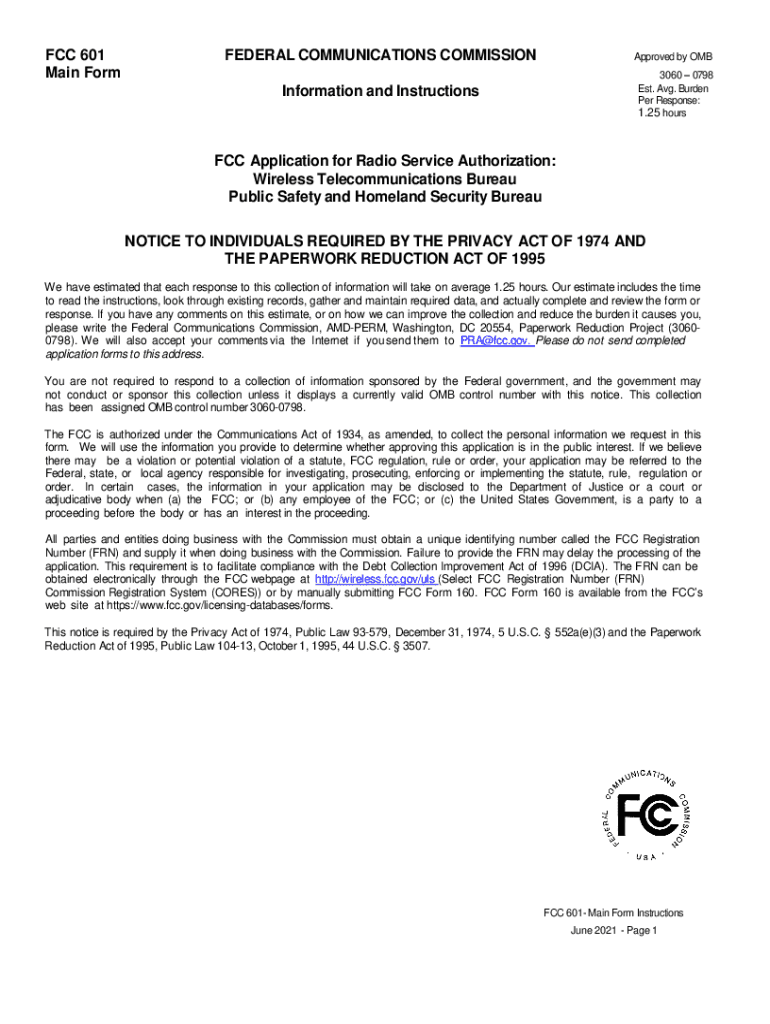







Definition and Purpose of FCC Form 601
FCC Form 601 is a crucial document utilized for applying for various types of radio service authorizations in the United States. Its primary function is to help individuals and organizations acquire, modify, or renew licenses for operating within different wireless telecommunications services. The form covers an extensive range of wireless radio services, which include cellular, microwave, broadcast auxiliary, and maritime mobile services.
The form is structured to capture detailed technical data and ensure compliance with Federal Communications Commission (FCC) regulations. By submitting the 601 FCC form, applicants ensure their operations are compliant with national communication standards, facilitating efficient spectrum management and service coordination.
How to Use FCC Form 601 Effectively
To effectively use the FCC Form 601, individuals or organizations should first determine the type of radio service authorization they are applying for. The form includes multiple schedules, from A to N, each dedicated to specific service types and requirements. Understanding which schedule applies to your application ensures you are compliant with the relevant regulatory framework and technical specifications.
- Schedule A: Common for all applicants and gathers general licensing information.
- Schedule B to N: Each schedule targets specific services like broadcast auxiliary services (Schedule F) or maritime services (Schedule H), containing pertinent fields for those categories.
Before filling out the form, gather all necessary documents and information, like technical data, and any required frequency coordination details. This preparation helps streamline your application process and reduces the risk of errors or incomplete submissions.
Step-by-Step Process to Complete FCC Form 601
Completing FCC Form 601 involves a precise approach, ensuring all parts and schedules relevant to your application type are filled accurately. Below is a structured step-by-step guide:
-
Gather Required Information: Compile technical data, personal or organizational information, frequency coordination documents, and compliance verifications.
-
Select Appropriate Schedules: Identify which schedules apply to your specific radio service authorization request. Each schedule demands unique data related to the type of service.
-
Fill Out Main Form: Start with the main sections, providing basic details such as entity name, contact information, and service type.
-
Complete Relevant Schedules: Proceed with the necessary schedules, ensuring accuracy in technical specifications and regulatory compliance fields.
-
Review Privacy Notices and Burden Estimates: Review these sections to understand information handling and the expected completion time for the form.
-
Submit the Form: The application can be submitted electronically through the FCC's Universal Licensing System (ULS) or, alternatively, via mail, depending on preference and accessibility.
Key Elements of FCC Form 601
Several critical components are embedded within FCC Form 601 to guide applicants through the radio service authorization process:
-
Applicant Information: Includes details about the individual or business applying for the license.
-
Technical Specifications: Captures data on frequencies, power levels, and operation characteristics to ensure safe and compliant service deployment.
-
Regulatory Compliance: Sections designed to ensure applicants meet all FCC standards and guidelines.
-
Certification and Signature: Final sections verify that the information provided is truthful and the applicant is authorized to sign on behalf of the entity.
Legal Implications and Compliance
Submitting incomplete or inaccurate FCC Form 601 can lead to legal complications, including fines or denial of the license. The form's legal notices inform applicants of their obligations under the Communications Act of 1934 and related FCC rules. Users are encouraged to adhere strictly to the guidelines to avoid penalties, ensure public safety, and maintain service integrity.
Variations and Alternatives to FCC Form 601
There are no major alternatives to the FCC Form 601 for radio license applications. However, the form may undergo updates for compliance with evolving technologies and regulations. It's crucial to check for the latest versions and amendments to ensure that submissions consistently meet FCC protocols.
Technological Integration with FCC Form 601
DocHub’s platform supports the completion and submission of digital forms like FCC Form 601, providing tools to edit, annotate, and electronically sign the document. The software allows users to import documents directly from cloud services like Google Drive or Dropbox, facilitating an efficient digital workflow. Integration with digital platforms ensures seamless handling and submission of regulatory forms, enhancing accuracy and accessibility while fostering compliance with communication standards.




