






Definition and Purpose of the CG-6000-1 PDF Acute Exposure Information Form
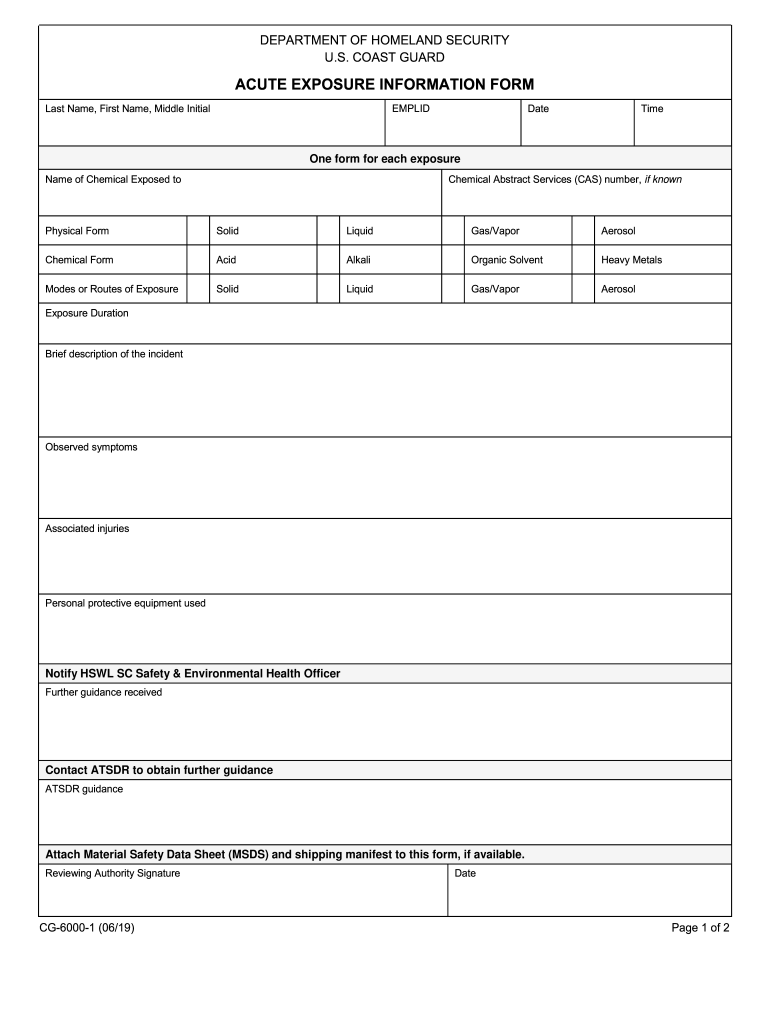
The CG-6000-1 PDF Acute Exposure Information Form is a critical document developed by the U.S. Coast Guard to collect comprehensive details regarding chemical exposure incidents among personnel. Designed to document essential aspects of exposure situations, the form serves not only as a record for medical evaluation but also as a tool for ensuring regulatory compliance and enhancing workplace safety. By capturing information on personal data, chemical types, exposure circumstances, and subsequent symptoms, this form plays a vital role in risk assessment and health management within a military environment.
Key Components of the CG-6000-1 PDF Acute Exposure Information Form
This form is systematically organized into distinct sections that collectively ensure a holistic overview of exposure incidents. Key components typically encompass:
- Personal Information: Details such as the affected individual's name, rank, and unit assignment.
- Chemical Details: Information regarding the specific chemical involved, including its name, concentration, and potential hazards.
- Exposure Routes: Documentation of how the chemical exposure occurred, whether dermal, inhalational, or another method.
- Symptomatology: A detailed account of symptoms presented post-exposure, facilitating prompt and accurate medical response.
- Safety Measures: Procedures undertaken to mitigate exposure risk, including decontamination efforts and the use of protective equipment.
Each section is meticulously structured to capture relevant data, contributing to effective follow-up actions and policy improvements.
How to Use the CG-6000-1 PDF Acute Exposure Information Form
Proper utilization of the CG-6000-1 form is essential for it to serve its intended purpose. When an incident occurs, the personnel involved, along with their supervisors, should fill out the form promptly and accurately. This may involve:
- Gathering Preliminary Information: Collect essential data about the incident scene and those affected.
- Completing Initial Sections: Enter personal and chemical details quickly to provide a foundation for understanding the incident.
- Documenting Symptoms and Actions: Use clear and precise language when documenting symptoms and the immediate response to exposure.
- Review and Verification: Once completed, the form should be reviewed by a designated officer to ensure accuracy and completeness before submission.
This process will aid in minimizing errors and ensuring that all necessary exposure details are thoroughly documented.
Who Typically Uses the CG-6000-1 PDF Acute Exposure Information Form
The CG-6000-1 form is primarily employed by U.S. Coast Guard personnel and other military staff who might be exposed to hazardous chemicals. It is also utilized by:
- Medical Staff: For assessing the health status of exposed individuals and determining appropriate medical interventions.
- Safety Officers: Who analyze the data to enhance safety protocols and reduce future exposure risks.
- Regulatory Compliance Teams: To ensure that all incidents are documented following statutory requirements and organizational guidelines.
This broad usage across various roles underscores the form's importance in maintaining chemical safety within military operations.


Steps to Complete the CG-6000-1 PDF Acute Exposure Information Form
Completing the CG-6000-1 form involves several clear steps to capture all necessary information effectively:
- Personal Details Entry: Include the affected person's contact and demographic information.
- Document Chemical Exposure: Identify and record the specific chemical compound, along with its source and exposure duration.
- Symptom Cataloging: List all symptoms observed immediately follow exposure to aid in medical diagnosis.
- Capture Response Actions: Document any immediate actions taken, including notifying emergency services or conducting evacuations.
- Check for Completeness: Ensure no section is left incomplete and verify the accuracy of all entered information.
These structured steps facilitate a comprehensive record that's readily available for review and action.
Legal Use and Importance of Compliance
The CG-6000-1 form is not merely an administrative tool; it holds legal importance in the context of occupational health and safety regulations. Compliance with the guidelines surrounding this document is imperative for:
- Legal Documentation: Serving as admissible evidence for regulatory bodies investigating chemical exposure incidents.
- Insurance and Liability: Providing documentation necessary for insurance claims or liability assessments following exposure.
- Health Regulations: Ensuring that all personnel adhere to health and safety regulations mandated by military and federal standards.
Failure to use the form correctly or within specified timelines may lead to legal consequences or jeopardize the health claims process of affected personnel.
Examples of Using the CG-6000-1 PDF Acute Exposure Information Form
To illustrate its real-world applicability, consider scenarios such as:
- Training Exercises: During a chemical drill, a participant reports symptoms of dizziness after handling a training agent. The CG-6000-1 form becomes pivotal in documenting the incident and assessing training risks.
- Operational Mishaps: During deployment, a spill occurs involving a hazardous solvent. Immediate use of the form helps document the chemical properties and measures taken to protect personnel.
- Health Assessments: Retrospective reviews of completed forms help medical teams identify patterns in symptoms and exposures, guiding future preventive health strategies.
These examples highlight the form's adaptability in varied situations where exposure risk is present.
Obtaining and Submitting the Form
The CG-6000-1 form can typically be obtained through official U.S. Coast Guard channels or online repositories hosting regulatory forms. Submitting the form may involve:
- Online Submission: Using digital channels through secure platforms, offering quick turnaround and immediate acknowledgment.
- Physical Mail: For those with access limitations to digital platforms, forms can be sent through official mail channels.
- In-Person Delivery: In cases of emergencies or when digital options aren't available, submitting the form directly to designated safety officers ensures timely processing.
These submission methods offer flexibility in ensuring the swift relay of critical exposure data.