






Definition and Meaning of Standard Form 1406
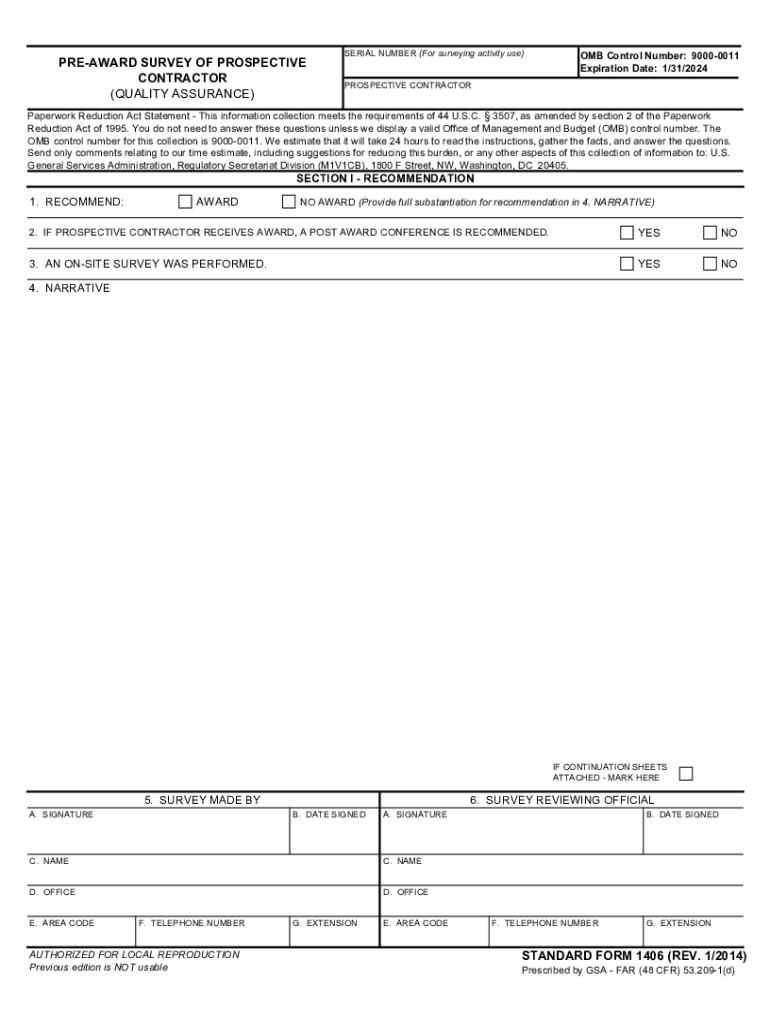
Standard Form 1406, known as the Pre-Award Survey of Prospective Contractor (Quality Assurance), is a document used to assess a contractor's capability to meet quality assurance standards required for a potential contract. This form evaluates various aspects such as a contractor’s quality control system, inspection procedures, and overall ability to deliver products or services to specified quality standards. It plays a critical role in ensuring that only contractors who can meet these quality requirements are awarded contracts, thereby maintaining the integrity and reliability of the procurement process.
How to Use the Standard Form 1406
To use the Standard Form 1406 effectively, follow these steps:
- Obtain the Form: Ensure you have the correct version of the form, which can be acquired through official government procurement channels or relevant regulatory bodies.
- Understand the Sections: Familiarize yourself with the sections and what information is needed for each part. This will typically include sections on quality control systems and inspection procedures.
- Complete the Form: Provide detailed responses in each section, ensuring that all aspects of the contractor’s quality assurance capabilities are accurately described.
- Submit for Evaluation: Once the form is completed, submit it to the relevant authority responsible for the pre-award evaluation.
- Follow Up: Stay informed about the evaluation process and be prepared to provide additional documentation or clarification if needed.
Steps to Complete the Standard Form 1406
Filling out the Standard Form 1406 must be done methodically:
- Gather Necessary Information: Collect all pertinent information regarding the contractor’s quality assurance systems, including certifications, past performance records, and internal audit results.
- Review Requirements: Before starting the form, thoroughly review the requirements to ensure compliance with all sections of the survey.
- Accurate Data Entry: Enter all data carefully, double-checking for accuracy and relevance. Common sections include company data, quality control procedures, and an evaluation checklist.
- Provide Supporting Documents: Attach any necessary documentation that supports your claims, such as inspection records or quality management certifications.
- Finalize and Submit: Ensure that every section is complete and submit the form through designated channels, whether electronically or through postal services.
Key Elements of the Standard Form 1406
The Standard Form 1406 is composed of several critical components that must be carefully addressed:
- Company Data: Basic information about the contractor, such as name, address, and contact information.
- Quality Control System: Detailed explanation of the contractor's system for ensuring quality standards.
- Inspection Procedures: Description of the methods used by the contractor to inspect products or services before delivery.
- Evaluation Checklist: A comprehensive checklist that helps assess various aspects of the contractor’s capabilities.
- Recommendations: A section where evaluators can provide recommendations based on their assessment of the contractor's quality assurance readiness.
Who Typically Uses the Standard Form 1406
The Standard Form 1406 is primarily used by:
- Government Procurement Agencies: To evaluate potential contractors before awarding contracts.
- Contractors: To demonstrate their quality assurance capabilities to potential clients.
- Quality Assurance Professionals: To ensure that contractors meet specific quality standards before they’re considered for contract awards.


Importance of the Standard Form 1406
This form is vital because it:
- Ensures Quality Standards: It ensures only competent contractors are awarded contracts, maintaining high quality in goods and services.
- Protects Public Resources: Safeguards government and public interests by preventing low-quality service delivery.
- Streamlines Procurement: Facilitates a fair and comprehensive assessment of contractors’ abilities, contributing to a smooth procurement process.
Legal Use of the Standard Form 1406
The Standard Form 1406 serves specific legal functions:
- Contractual Compliance: Ensures contractors are legally bound to meet specified quality standards.
- Regulatory Adherence: Aligns with procurement regulations that mandate quality assessments before award decisions.
- Audit Trail: Provides a documented process that can be reviewed during audits to verify compliance and decision-making.
Examples of Using the Standard Form 1406
Real-world application scenarios of the Standard Form 1406 include:
- Defense Contracts: Used to ensure military suppliers meet stringent quality criteria.
- Infrastructure Projects: Assesses construction contractors' quality assurance systems before project commencement.
- Manufacturing Agreements: Essential in verifying that manufacturing partners can produce goods meeting agreed specifications.
Required Documents for Standard Form 1406 Submission
When submitting the Standard Form 1406, ensure you include:
- Certifications: Such as ISO or other relevant quality management standards.
- Inspection Records: Documentation of past inspection results.
- Performance History: Information on previous contracts and performance evaluations.
- Quality Management Plans: Detailed plans outlining quality management strategies and procedures.