






Definition and Meaning
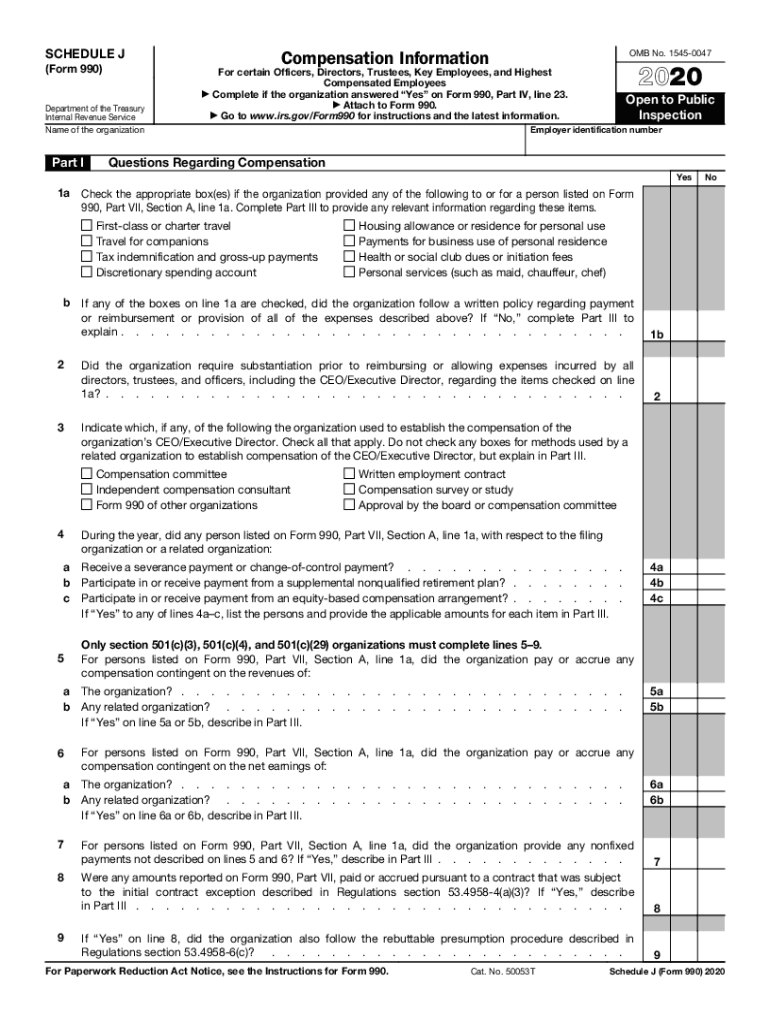
Schedule J of Form 990, commonly referred to as "IRS J," is a federal tax form used by nonprofit organizations to report compensation information for specific officers, directors, trustees, and key employees. This form requires organizations to disclose various types of compensation, including salaries, bonuses, benefits, and other financial arrangements. It provides transparency about how funds are allocated within non-profit environments, ensuring that compensation practices comply with federal regulations.
Key Elements of the IRS J
Schedule J includes several sections that detail compensation structures. Organizations must report base compensation, bonuses, incentive pay, deferred compensation, and retirement benefits. Additionally, IRS J requires details on any expense allowances, such as travel or housing, which are not included in traditional payroll. This extensive breakdown is critical for the IRS to assess compliance with compensation guidelines and avoid excessive remuneration for nonprofit executives.
How to Use the IRS J
To properly use the IRS J form, organizations need to gather comprehensive compensation data for their highest-paid employees. Include not only regular salaries but also any fringe benefits or bonuses paid during the tax year. Accurate completion requires collaboration between the financial and human resources departments to ensure all compensation variables are accounted for. Understanding these figures helps organizations maintain transparency and fulfill federal reporting requirements.
Steps to Complete the IRS J
- Collect Data: Gather all necessary compensation details for each reportable employee. This includes salaries, bonuses, deferred compensation, and any non-cash benefits.
- Calculate Totals: Determine total compensation for each eligible individual by adding base pay, bonuses, and other benefits.
- Review Policies: Ensure that compensation policies adhere to the organization's written guidelines, as this information will be required on the form.
- Fill Sections: Complete each section of the IRS J form with accurate figures and relevant organizational information.
- Validate Information: Review all entries for accuracy and consistency with internal records.
- Submit Form: File the completed IRS J as part of the organization's annual Form 990 submission.
Legal Use of the IRS J
The IRS J form is essential for legal compliance in disclosing nonprofit compensation practices. It provides a detailed record that assists in verifying adherence to guidelines on appropriate compensation levels. Nonprofits must ensure that their compensation reporting aligns with federal regulations to avoid penalties or potential audits. Proper use of the form is crucial for safeguarding organizational integrity and avoiding legal complications.
Important Terms Related to IRS J
- Base Compensation: Regular salary paid to an employee.
- Deferred Compensation: Earnings set aside to be paid out at a future date.
- Fringe Benefits: Additional benefits supplementing an employee's salary, such as healthcare or retirement plans.
- Incentive Pay: Additional funds provided based on performance metrics.
- Expense Allowances: Budgetary provisions for specific needs, like travel or housing, not included in salary.
Examples of Using the IRS J
Consider a nonprofit that pays its executive director a salary of $150,000 per year. The director also receives a performance bonus of $10,000, a $5,000 travel stipend, and has $20,000 deferred for retirement. The IRS J would collect these figures, ensuring that total compensation is reported as $185,000. This detailed reporting allows the IRS to assess whether compensation aligns with industry standards and organizational policies.
IRS Guidelines
The IRS provides specific guidelines for the reporting and completion of the IRS J form. Organizations must follow instructions outlined in Form 990's guidelines to ensure accuracy and compliance. It is crucial to adhere to these instructions to avoid discrepancies in reporting, which could trigger an audit or penalties. Organizations are encouraged to consult with tax professionals or legal advisors to navigate complex compensation structures and ensure full compliance with IRS standards.
Filing Deadlines and Important Dates
Typically, Form 990, including Schedule J, must be filed by the 15th day of the 5th month after the end of the organization's accounting period. For example, if a nonprofit operates on a calendar year, the filing deadline would be May 15th of the following year. It's vital for organizations to track these dates carefully to avoid late filing penalties and ensure timely compliance with federal requirements.