Definition & Meaning
The consent order in a divorce context is a legal agreement that formalizes arrangements related to financial matters following the dissolution of a marriage. Specifically, Form A initiates the process of seeking a financial remedy, while Form D81 is used to provide a statement of information for a consent order in financial proceedings. The Divorce Advice Forum is a resource where individuals can discuss and gain support on such matters.
Nuances and Purpose
- Formal Agreement: A consent order is drafted when both parties reach an agreement regarding the division of assets, child arrangements, or other financial obligations post-divorce.
- Court Approval: Even if both parties agree, the order must be approved by the court to ensure fairness and compliance with legal standards.
How to Use the Consent Order - Form A and D81
Completing these forms is a multi-step process designed to ensure all financial arrangements are transparent and agreed upon.
- Gather Financial Information: Before beginning, collect all necessary documents, such as bank statements, mortgages, and assessments of assets.
- Fill Out Form A: This form is designed to apply for a financial order and should be filled out with accurate, comprehensive financial information.
- Provide Supplementary Details with Form D81: Use this form to list your financial details and affirm the agreement is fair.
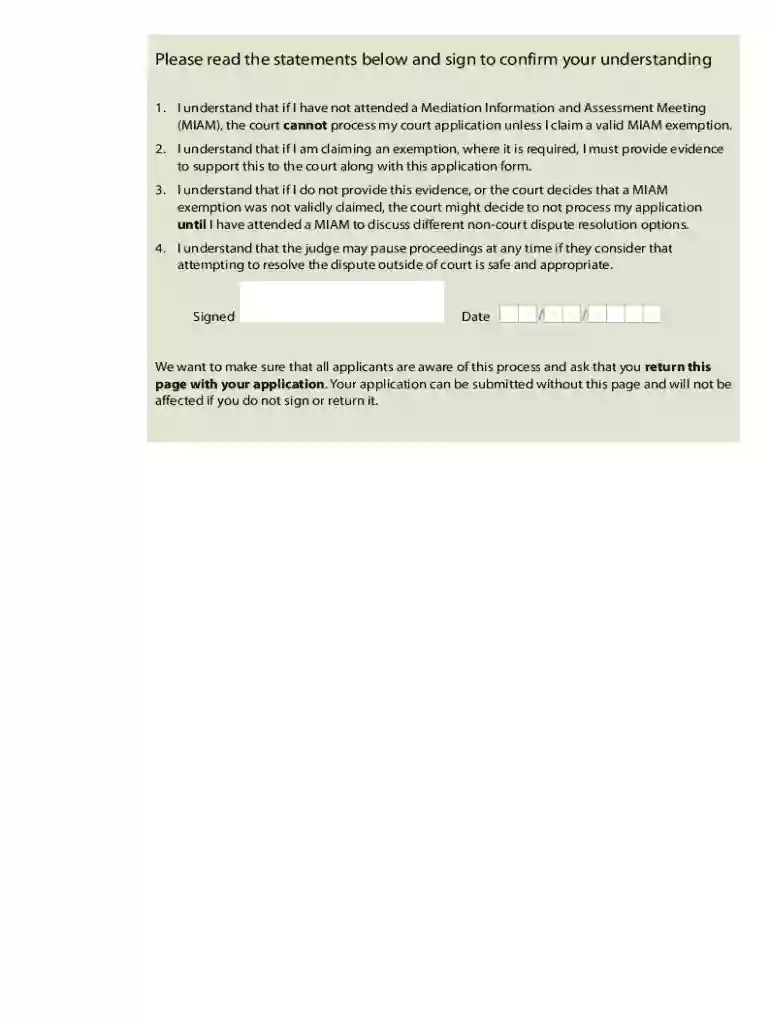
- Validation through Mediation: In many jurisdictions, proof of mediation attempts may be required before submission.
Real-world Scenario
If a couple mutually decides on asset division, they would use these forms to make the agreement legally binding, offering both security and enforceability.
Steps to Complete the Consent Order - Form A and D81
Completing these forms involves a careful approach to ensure accuracy and validity.
- Read Instructions Thoroughly: Begin by carefully reviewing any guidelines provided by your local court.
- Detail Financial Information on Form A: Include income, spending, property, and savings.
- Document Agreement in Form D81: Clearly lay out the settlement terms.
- Seek Legal Advice: It's advisable to consult a lawyer to ensure comprehensive coverage and adherence to legal standards.
Important Sections
- Asset Disclosure: This section requires transparency and the joint listing of all financial entities.
- Child Maintenance: Outline any agreed-upon child support arrangements.
Who Typically Uses the Consent Order - Form A and D81
These forms are primarily used by divorcing couples who wish to make their financial arrangements official and enforceable.

- Individuals Finalizing Divorces: Those who want to ensure financial settlements are honored.
- Legal Representatives: Lawyers or legal aides assisting clients through a divorce process.
Practical Use Cases
- A typical couple finalizing their divorce and wishing to agree on a fair split of marital property and, where applicable, child arrangements.
Legal Use of the Consent Order - Form A and D81
A consent order must comply with several legal stipulations to protect both parties’ interests.
Compliance and Approval
- Judicial Review: A judge reviews and must approve the order to ensure fairness.
- Obligations: Orders are legally binding once approved, and failure to comply can result in legal penalties.
Key Elements of the Consent Order - Form A and D81
Knowing the key elements is crucial for a complete and legally valid submission.
- Comprehensive Financial Statement: Include all assets, liabilities, and income sources.
- Agreement Terms: Detailed explanation of agreed terms, including any special conditions or future obligations.
Elements Breakdown
- Joint Assets: Property, savings, and shared investments are typically included.
- Child Arrangements: Detailed plans regarding custody and support.
State-Specific Rules for the Consent Order
Different states might have slight variations regarding the requirements or process of consent orders.
Notable State Differences
- Requirement Variations: Some states might require additional documentation or mediation verification before acceptance.
- Approval Processes: The typical approval time and necessary appearances at court vary by jurisdiction.
Examples of Using the Consent Order - Form A and D81
Understanding application through examples can provide clearer insights.
Case Study
- High Net-Worth Couples: A couple with significant assets may require detailed listing of investments and properties, leading to a more complex consent order process.