






Definition & Meaning
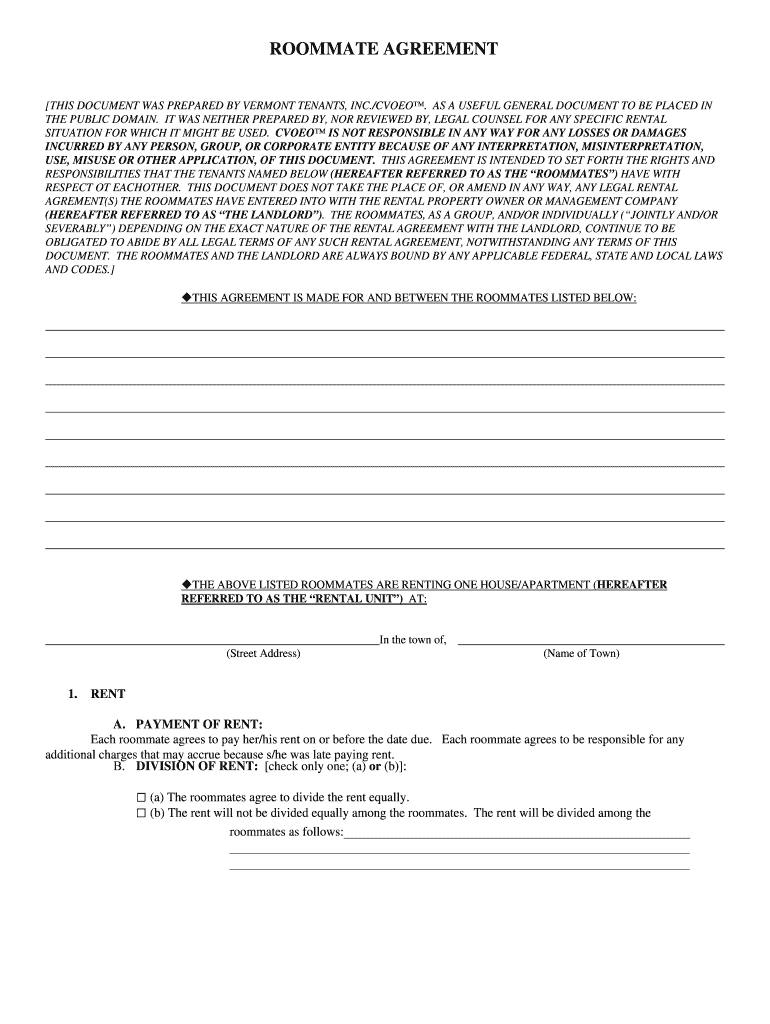
The "ROOMMATE AGREEMENT - rentinvt" is a formal document prepared by Vermont Tenants, Inc./CVOEO™ that outlines the shared rights and obligations of individuals living together in a rental property. This agreement helps establish clear expectations regarding rent payments, security deposits, utility costs, and other communal living terms. Although it encapsulates critical aspects of cohabitation, it is important to note that this document does not supersede any legal agreements that exist between the tenant and the landlord.
Key Elements of the ROOMMATE AGREEMENT - rentinvt
The agreement delineates several key aspects to ensure smooth cohabitation:
- Rent Payment: It specifies how the total rent is divided among the roommates and the due dates for each individual’s payment.
- Security Deposits: Clear guidelines on the handling, contribution, and return of security deposits to prevent disputes.
- Utility Payments: Outlines responsibility for shared bills like electricity, water, and internet services.
- Communication: Encourages open dialogue regarding living standards, noise levels, and potential issues.
- Move-Out Procedures: Details the obligations of roommates when someone decides to move out, ensuring a responsible transition.
How to Use the ROOMMATE AGREEMENT - rentinvt
Proper use of this agreement can prevent misunderstandings and disputes between roommates. Here's how to effectively utilize it:
- Initial Discussion: Before moving in together, all parties should discuss and agree on the terms listed in the agreement.
- Review and Customize: Customize the agreement to reflect specific needs, such as special living arrangements or additional terms.
- Sign and Store: Once finalized, all parties should sign the document and keep a copy for future reference.
Important Considerations
- Make amendments in writing and with mutual consent to ensure every roommate's understanding and agreement.
- Regularly revisit and revise the agreement as needed to reflect any changes in the living arrangement.
Steps to Complete the ROOMMATE AGREEMENT - rentinvt
Completing the Roommate Agreement requires attention to detail:
- Gather Information: Collect the full names, contact information, and payment responsibilities of each roommate.
- Fill Out Rent and Deposit Details: Specify the amount of rent each individual is responsible for, as well as the security deposit contributions.
- Utilities Division: Clearly outline how utilities will be divided among the roommates.
- Set House Rules: Agree on and document any additional house rules, like noise levels or guest policies.
- Review as a Group: Go through the document with all roommates and make any necessary adjustments.
- Sign and Date: All parties should sign and date the agreement to confirm their acceptance of the terms.
Why You Should Use the ROOMMATE AGREEMENT - rentinvt
Utilizing a Roommate Agreement is beneficial for several reasons:
- Prevents Disputes: Clearly outlines each person’s duties, reducing misunderstandings.
- Provides Legal Protection: Can serve as a reference point in case of disputes, although it's not a legal document with landlords.
- Establishes Clear Communication: Encourages open dialogue from the start, fostering a harmonious living environment.
Legal Use of the ROOMMATE AGREEMENT - rentinvt
While the Roommate Agreement is not legally binding in the same way a lease is, it serves as a mutual understanding among roommates. In cases of disputes, it could be brought to small claims courts as evidence of agreed-upon terms. It’s vital to remember that this agreement does not alter any aspect of the lease with the landlord, nor does it absolve individuals from their legal rental obligations.
State-Specific Rules for the ROOMMATE AGREEMENT - rentinvt
Though the primary focus of the Roommate Agreement is for tenants in Vermont, it can serve as a general framework for cohabitants in other states. However, state-specific rental laws remain applicable even with this agreement. Renters should familiarize themselves with their state's particular landlord-tenant regulations to ensure the agreement aligns with local laws.
Examples of Using the ROOMMATE AGREEMENT - rentinvt
Consider a group of students sharing an apartment off-campus. The Roommate Agreement can help them:
- Divide Responsibilities: By clearly listing who pays for which utility, students can avoid future financial disputes.
- Set Guest Policies: Limits on guest visits can keep communal spaces pleasant for everyone.
- Clarify Move-Out Procedures: Outlines processes if a student decides to study abroad or move elsewhere, ensuring a smooth transition.
Who Typically Uses the ROOMMATE AGREEMENT - rentinvt
This document is commonly employed by:
- Students: Individuals attending universities and living off-campus with peers.
- Young Professionals: Those starting their careers and looking to minimize living costs by sharing space.
- Temporary Residents: Employees or contractors on short-term assignments who seek shared housing to reduce expenses.