




01. Edit your michigan cohabitation online
Type text, add images, blackout confidential details, add comments, highlights and more.

Type text, add images, blackout confidential details, add comments, highlights and more.

Draw your signature, type it, upload its image, or use your mobile device as a signature pad.

Send non marital agreement via email, link, or fax. You can also download it, export it or print it out.
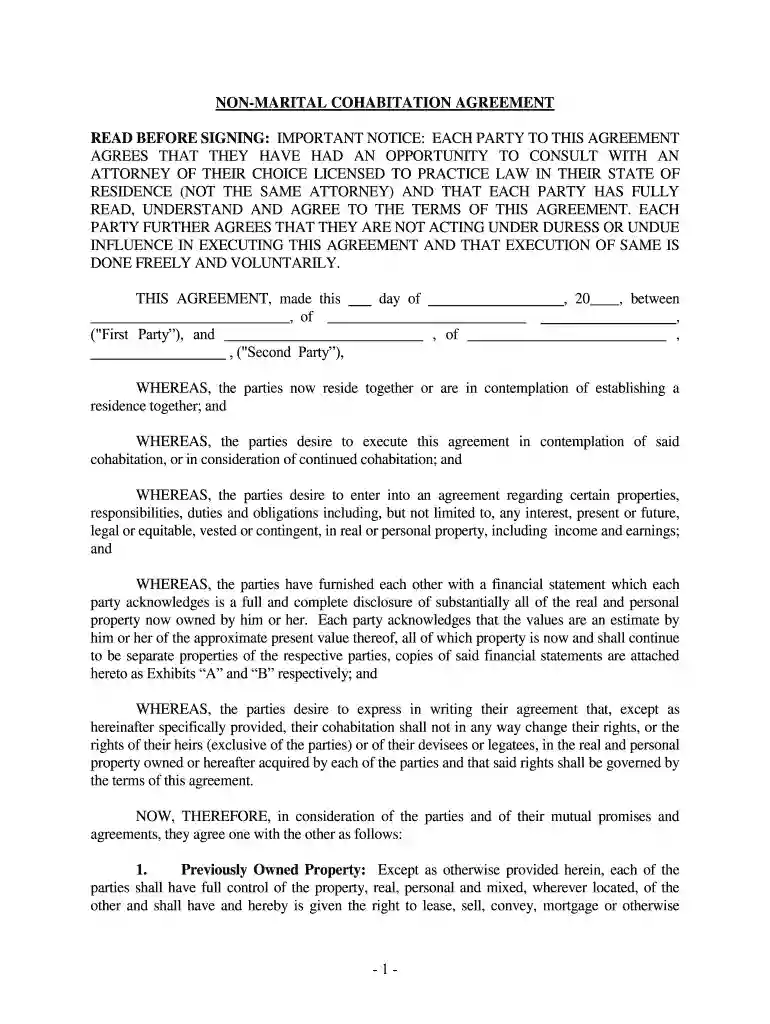
A Michigan Cohabitation Agreement is a legal document used by couples who live together but are not married to outline their living arrangements, financial responsibilities, and how assets and debts will be managed. It helps define each partner’s rights and responsibilities, ensuring clarity and avoiding future disputes. These agreements typically include provisions for property ownership, shared expenses, and any support obligations, ensuring each party retains ownership of their respective assets and liabilities while delineating expectations for shared resources.
A Michigan Cohabitation Agreement typically includes several critical elements to ensure comprehensiveness and clarity:
Property Rights: Clearly defines ownership of assets owned individually or jointly, ensuring both parties understand how property will be handled both during and after cohabitation.
Debt Responsibilities: Outlines each party's responsibility for debts incurred individually or jointly, clarifying the financial obligations each partner will maintain.
Financial Disclosures: Requires full disclosure of each party's finances at the time of the agreement, including income, assets, and debts, to promote transparency.
Health Care Decisions: States guidelines for health care decisions, including permissions and restrictions, should one partner become incapacitated.
Post-Cohabitation Support: May include provisions for financial support if the relationship ends, though such measures strongly depend on negotiations between parties.
Completing a Michigan Cohabitation Agreement involves a structured process to ensure it meets legal standards:
Initial Discussions: Couples should openly discuss their expectations regarding finance, property, and responsibilities.
Drafting the Agreement: Work with a legal professional to draft the agreement, ensuring that all critical elements are included and expressed clearly.
Review and Revise: Each party should carefully review the draft and negotiate terms as necessary to ensure fairness.
Legal Review: Have a lawyer examine the agreement to confirm its compliance with Michigan laws.
Finalize and Sign: Once satisfied, both parties should sign the document in the presence of a notary to ensure its enforceability.
Having a Michigan Cohabitation Agreement is crucial for several reasons:
Legal Protection: Provides each party with protections similar to those marriage offers but tailored to their specific arrangement without oversight from the courts.
Financial Clarity: Assists in organizing finances, reducing the potential for disputes regarding shared expenses and financial contributions.
Security in Relationships: Offers peace of mind by clarifying expectations, potentially contributing to a stronger, more trusting relationship.
Michigan Cohabitation Agreements are generally used by:
Unmarried Couples: Primarily aimed at unmarried partners cohabiting who wish to organize their financial and personal obligations.
Same-Sex Couples: Useful for same-sex couples who prefer not to marry but want to ensure legal protection for their partnership.
Second Marriages: A popular choice for individuals in long-term relationships who have been previously married and wish to keep assets separate.
In Michigan, Cohabitation Agreements are legally enforceable provided they meet state requirements. This involves:
Complete Disclosure: Both parties must fully disclose their assets and liabilities.
Mutual Consent: Agreement must be entered into voluntarily without coercion.
Legal Capacity: Both parties must be of legal age and mentally competent.
These agreements are interpreted according to contract law, meaning they need to be well-drafted to withstand legal scrutiny.
Certain considerations are unique to Michigan:
No Common-Law Marriage: Michigan does not recognize common-law marriages, making cohabitation agreements a critical tool for legal protection.
Alimony Considerations: Cohabitation agreements in Michigan can influence decisions about alimony, although they cannot completely waive the right to seek it in court.
Michigan Cohabitation Agreements can apply to diverse scenarios:
Purchasing Real Estate: Defines how property will be handled if a jointly purchased home is sold or refinanced.
Joint Investments: Outlines how investments made during the relationship are managed and divided.
Shared Parenting: Specifies arrangements for co-parenting and financial support of children from prior relationships, although it should not be a substitute for legal custody agreements.
These examples illustrate the versatility and practicality of these agreements, which aim to streamline financial and personal arrangements for cohabiting partners.
At DocHub, your data security is our priority. We follow HIPAA, SOC2, GDPR, and other standards, so you can work on your documents with confidence.


