




01. Edit your forklift checklist online
Type text, add images, blackout confidential details, add comments, highlights and more.

Type text, add images, blackout confidential details, add comments, highlights and more.

Draw your signature, type it, upload its image, or use your mobile device as a signature pad.

Send forklift inspection checklist pdf via email, link, or fax. You can also download it, export it or print it out.
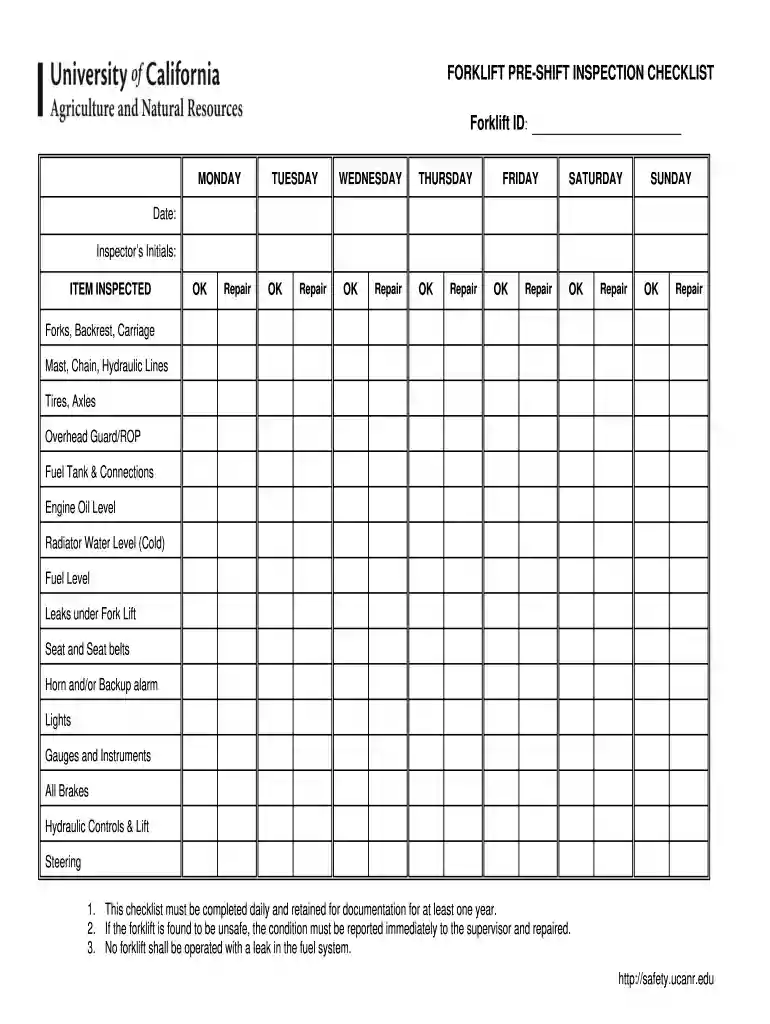
The printable OSHA daily forklift inspection checklist PDF is an essential document designed to ensure that forklifts are operating safely and efficiently. This checklist aids in compliance with OSHA regulations and helps prevent workplace accidents.
The primary purpose of the forklift inspection checklist is to guide operators through a systematic inspection of the vehicle before use. This proactive approach identifies potential hazards, ensuring that all safety features and mechanisms are functioning properly. Regular use of this checklist promotes a safer working environment by:
A thorough inspection checklist should cover various components of the forklift. Inspectors typically assess the following parts, often by marking them as 'OK' or 'Repair':
Visual Inspection:
Mechanical Components:
Operational Safety:
Maintenance Check:
The checklist emphasizes the importance of reporting any unsafe conditions immediately. Operators and inspectors should be trained to recognize potential hazards, such as worn-out components or unusual noises. Immediate reporting helps to address issues before they escalate, safeguarding both the equipment and personnel. Retaining completed checklists serves as vital documentation in case of an incident, illustrating that safety measures were adhered to at that time.
All completed inspection checklists should be retained for a specified period, typically at least one year, to comply with OSHA regulations. This documentation is crucial for several reasons:
While there are standardized OSHA forklift inspection forms available, companies may opt to create customized versions tailored to their specific operational needs. Factors to consider when developing a tailored checklist include:
Free access to a printable OSHA daily forklift inspection checklist PDF can typically be obtained through various platforms specializing in workplace safety. These resources often allow users to download, customize, and print the checklist, making it easier to implement in daily operations. Having an easily accessible checklist is vital for ensuring that all forklift operators can complete their inspections efficiently.
To ensure successful usage of the OSHA daily forklift inspection checklist, companies should consider the following best practices:
These practices not only enhance compliance but also foster a culture of safety and responsibility among all forklift operators.
At DocHub, your data security is our priority. We follow HIPAA, SOC2, GDPR, and other standards, so you can work on your documents with confidence.


Below are sample checklists for internal combustion and electric trucks. These lists can be modified to suit your workplace needs.Read more
Page 2. This printable (PDF) version of the complete Intel 2006 Corporate Responsibility Report was published in May 2007. Contents. OverviewRead more
Forklift Operators Daily Checklist. Inspection Performed by: Week beginning. 20. Note: This check must be made by the truck operator daily at the start of theRead more


