
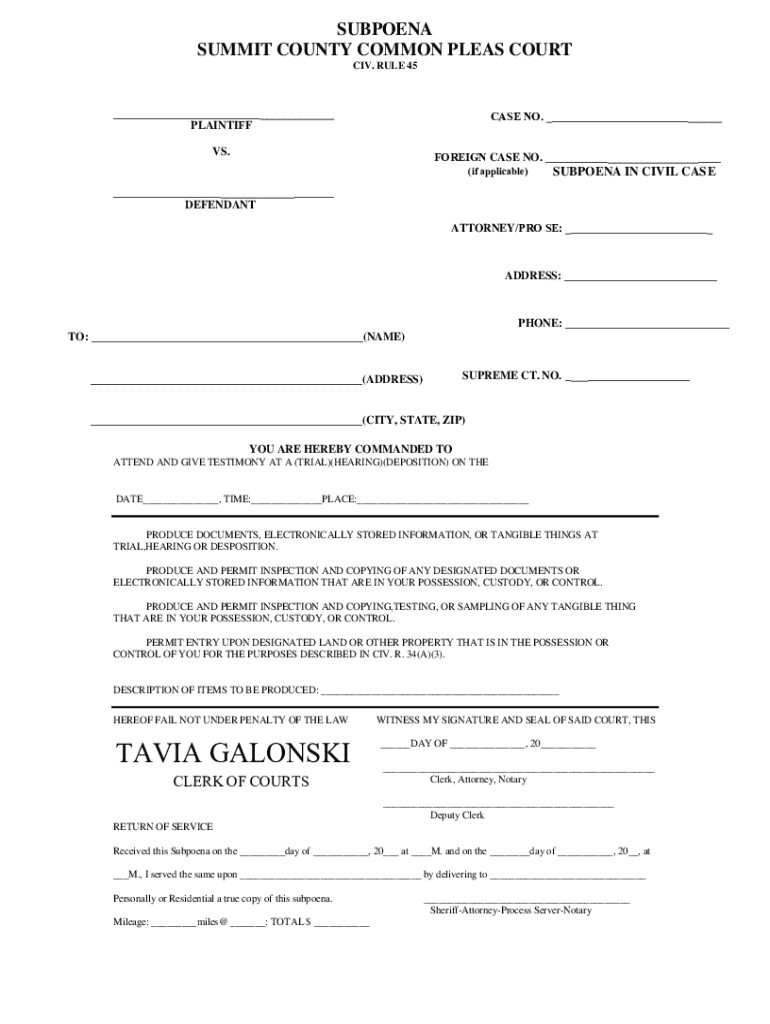







Understanding the Civil bSubpoenab - Summit County Clerk of Courts
A Civil bSubpoenab from the Summit County Clerk of Courts is a legal document utilized in civil proceedings, specifically within Summit County. It mandates an individual to appear and provide testimony, documents, or other evidence in a trial, hearing, or deposition. Recognizing its nuances and ensuring compliance is essential to meet legal obligations effectively.
Steps to Complete the Civil bSubpoenab
-
Review the Subpoena Thoroughly:
- Confirm the correctness of your personal details and the case information.
- Note the specific date, time, and location of the required appearance.
-
Gather Required Evidence:
- Assemble any documents or items specified for production in the subpoena.
- Organize the materials in a systematic manner for efficient presentation.
-
Legal Counsel Consultation:
- Engage with legal counsel to understand your rights and obligations.
- Seek advice on handling potential objections to the subpoena requests.
-
Prepare for Testimony:
- Review relevant case facts and records to ensure preparedness.
- Practice delivering clear and concise answers during the testimony.
-
Mail or Deliver Necessary Documents:
- Comply with any prior delivery instructions for documents required pre-appearance.
- Use secure, verifiable methods for sending sensitive information.
How to Obtain the Civil bSubpoenab
The Civil bSubpoenab is usually issued by the court where the related civil case is being heard. Typically, an attorney representing a party in the case requests the subpoena to be issued. It's critical to ensure that the subpoena is served correctly, adhering to legal guidelines, which often require personal delivery to ensure receipt is documented.
Legal Use and Compliance
Validity and Enforcement
- Regulatory Framework: Subpoenas must fit within regulatory frameworks governing civil procedures, including those at both state and county levels.
- Enforcement: Non-compliance may lead to penalties or contempt of court charges.
Protective Measures
- Rights of Individuals: Those subpoenaed have rights against undue burden and unnecessary production requests.
- Objecting Requests: There are procedures in place to challenge specific aspects of the subpoena legally.
Key Elements of the Civil bSubpoenab
- Header Information: Details the court issuing the subpoena and case identifier.
- Recipient Identification: The individual or entity to whom the subpoena is directed.
- Appearance Details: Specifies when and where to appear, along with any documents or items required.
- Legal Obligations: Outlines consequences of failing to comply with the subpoena.
Important Terms and Legal Definitions
- Subpoena Duces Tecum: A subtype, requiring the production of documents.
- Deponent: The individual whose testimony is being compelled through the subpoena.
- Compliance Date: The deadline for appearing or delivering requested documents.
Penalties for Non-Compliance
Failure to adhere to the requirements of a Civil bSubpoenab can lead to:
- Contempt of Court: Possibly resulting in legal penalties, including fines or imprisonment.
- Additional Litigation Costs: Expenses arising from affairs to enforce the subpoena through the court may be recuperated by the requesting party.
Variants of the Subpoena
Various types of subpoenas may exist; for civil matters, knowing differences like a "subpoena ad testificandum" focused solely on witness testimony can clarify obligations.
State-Specific Rules and Procedures
In Summit County and under Ohio state law, specific rules apply to the service and execution of subpoenas. It's crucial for recipients within this jurisdiction to understand these nuances and ensure compliance with applicable state laws.




