






Definition and Meaning
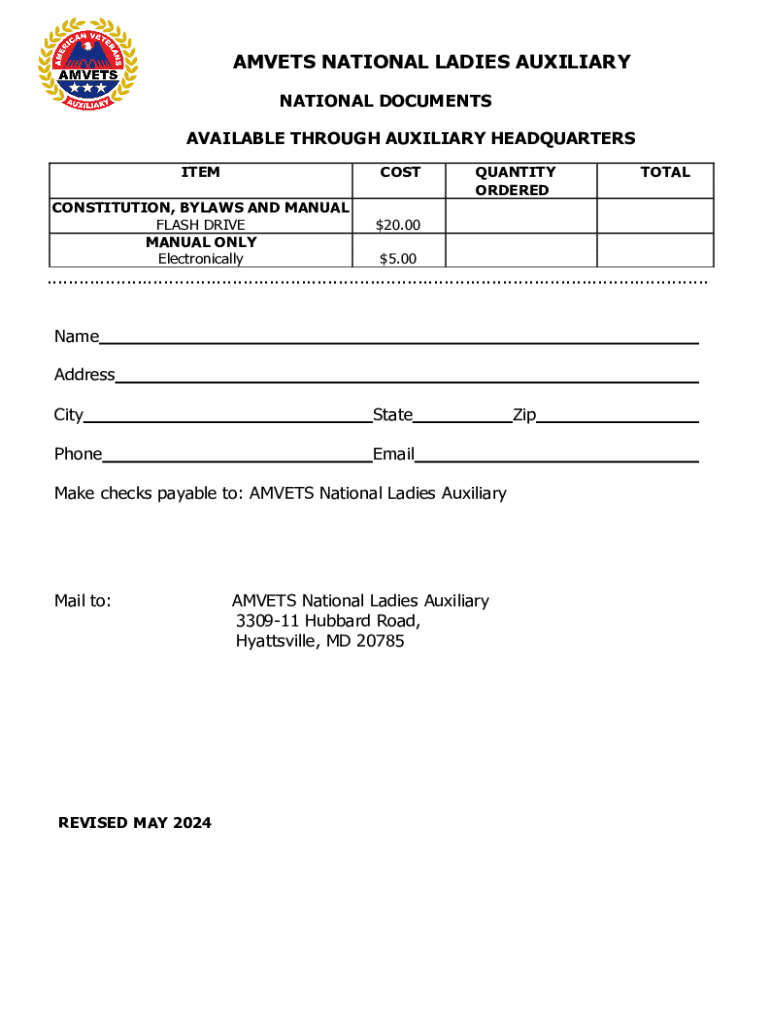
National documents available through auxiliary headquarters refer to a specific set of documents provided by organizations such as the AMVETS National Ladies Auxiliary. These documents include essential materials like constitutions, bylaws, and manuals that are crucial for maintaining standardized procedures and understanding organizational governance. They serve as a guideline for both the leadership and members of such organizations, ensuring consistency and compliance with established rules.
National documents in this context perform the vital function of providing members with the necessary legal and operational framework to conduct activities effectively. These documents establish protocols and outline the responsibilities and rights of members, which are crucial for maintaining order and clarity within the organization.
How to Obtain National Documents through Auxiliary Headquarters
Acquiring national documents through auxiliary headquarters typically involves a straightforward process that ensures members have easy access to essential materials. Here's how you can generally obtain these documents:
-
Contact the Headquarters: Most organizations have a designated office or department responsible for distributing these documents. Start by reaching out to the auxiliary's main office either by phone, email, or their official website.
-
Order Forms: Organizations often provide order forms that can be filled out by members. These forms usually require personal information and specify the type of documents you need.
-
Payment Options: Check if there are any fees associated with obtaining these documents. Payments can typically be made via credit card, check, or other methods as specified by the organization.
-
Delivery Method: Choose between electronic or physical copies. Some organizations offer PDFs or digital downloads, while others can mail printed copies to your address.
In the U.S., these processes may vary slightly depending on the specific auxiliary or region, but generally follow the steps outlined above.
Steps to Complete National Documents through Auxiliary Headquarters
Once you have obtained the documents, completing them properly is crucial to ensuring they serve their intended purpose. The steps to complete these documents often involve:
-
Reading Instructions Carefully: Begin by thoroughly understanding the instructions provided with each document. This will help ensure that all sections are completed accurately.
-
Filling Personal Information: Enter any required personal details, such as your name, member ID, or contact information. Ensure accuracy to avoid any potential issues.
-
Detailed Sections: Pay attention to sections requiring detailed information. This might include descriptions of roles, activities, or compliance with specific bylaws.
-
Signatures and Approvals: Some documents may require signatures from multiple parties within the auxiliary. Ensure that all necessary signatures are obtained.
-
Review and Proofreading: Before final submission, review the completed documents to check for errors or omissions.
Completing these documents correctly ensures that they are legally binding and comply with organizational standards.
Key Elements of the National Documents Available through Auxiliary Headquarters
Understanding the key elements of national documents available through auxiliary headquarters is critical for proper utilization. These typically include:
-
Constitution: The fundamental principles or established precedents according to which an organization is governed.
-
Bylaws: Detailed rules providing guidance on how the organization is to be run, including procedures for meetings and officer responsibilities.
-
Manuals: Operative handbooks that offer instructions on everyday organizational activities and tasks.
These elements are designed to work together, creating a comprehensive framework that supports the auxiliary's mission and governance.
Who Typically Uses National Documents through Auxiliary Headquarters
The use of these documents is often widespread within the organization and can include:
-
Leadership: Essential for officers and committee heads to understand governance structures and operational mandates.
-
Members: Provides insights into membership rights and responsibilities, enhancing comprehension and engagement.
-
New Recruits: Serves as an introductory guide for new members to become familiar with organizational procedures and culture.
-
Regulatory Bodies: Occasionally, external entities may need access to these documents to verify compliance with state or federal regulations.
By facilitating a shared understanding among all parties, these documents support collaborative and effective organizational functioning.
Legal Use of the National Documents through Auxiliary Headquarters
National documents, especially those that outline constitutions and bylaws, often have legal implications, serving as the binding framework within which an organization operates. The legal use includes:
-
Dispute Resolution: Acting as a reference point for resolving internal disputes according to pre-established rules.
-
Legal Compliance: Ensuring the organization and its members adhere to relevant laws and regulations.
-
Membership Agreements: Outlining the terms and conditions that bind members to the organization’s policies.
It is crucial that documents are accurately maintained and regularly updated to reflect current legal standards and organizational needs.
Digital vs. Paper Version
Organizations often offer their national documents in both digital and paper formats, each with its own benefits:
-
Digital Version:
- Accessibility: Easily stored and retrieved on any electronic device, making them highly accessible.
- Environmentally Friendly: Reduces paper use, contributing to sustainability efforts.
- Editable: Many digital documents are editable, allowing for convenient updates or annotations.
-
Paper Version:
- Readability: Some users prefer the physical format for ease of reading and marking.
- Formal Record: Suitable for archiving and situations requiring signed, hard copies.
Deciding between digital and paper versions will depend on individual preferences, organizational requirements, and ease of access concerns.
Software Compatibility
For those choosing the digital route, compatibility with various software solutions can enhance the utility of these documents:
-
Document Editors (e.g., Microsoft Word, Google Docs): Enable modifications, annotations, and collaborative editing.
-
PDF Viewers (e.g., Adobe Acrobat Reader): Provide options for viewing and adding secure electronic signatures.
-
Cloud Storage (e.g., Google Drive, Dropbox): Facilitate easy sharing and backup of important documents.
Ensuring compatibility with these tools enhances accessibility and ease of use, allowing members to interact with documents effectively.