






Definition and Meaning of Limited Liability Companies
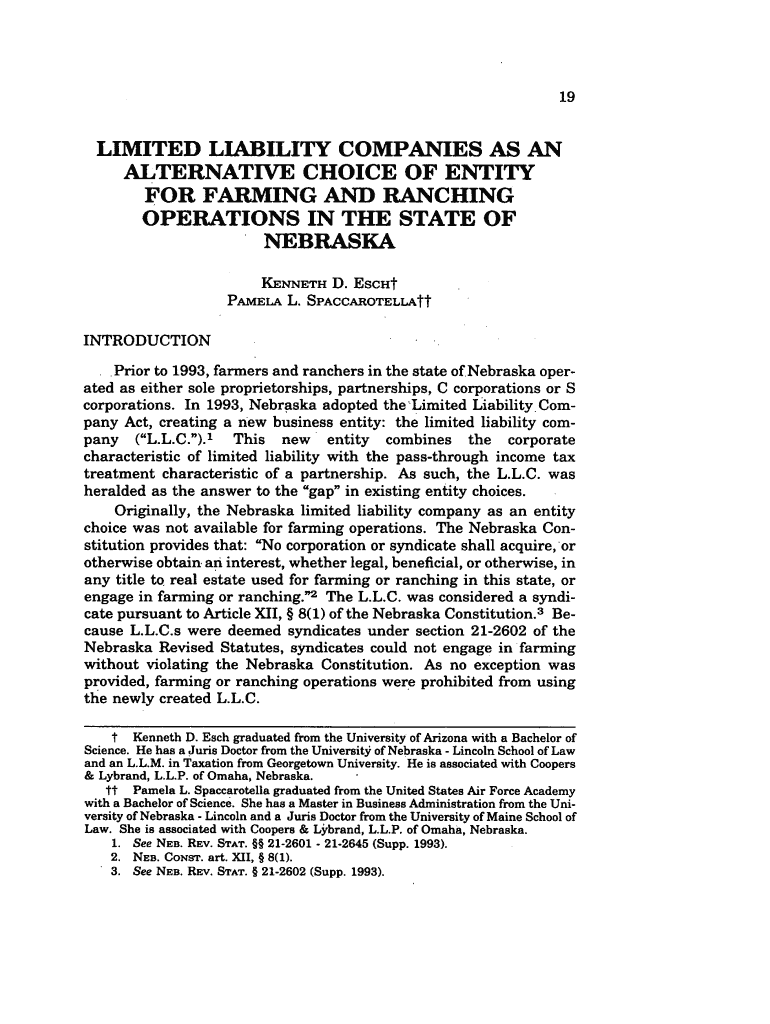
Limited Liability Companies (LLCs) offer a hybrid business structure that combines elements of corporations and partnerships. They are designed to provide liability protection similar to a corporation while allowing for the benefits of pass-through taxation typical of a partnership. An LLC's owners, known as members, are not personally liable for business debts and liabilities. This separation protects personal assets from risks associated with the business.
How to Form a Limited Liability Company
-
Choose a Name: The first step in forming an LLC is selecting a unique name that complies with your state’s regulations. This often includes the requirement that the name includes "Limited Liability Company" or its abbreviations (LLC or L.L.C.).
-
Appoint a Registered Agent: A registered agent is responsible for receiving legal documents on behalf of the LLC. This can be an individual or a business entity that provides registered agent services.
-
File Articles of Organization: You must file the articles of organization with the designated state office, often the Secretary of State. This document includes essential information about your LLC, such as its name, address, and the names of its members.
-
Create an Operating Agreement: Although not always required, an operating agreement outlines the governance of your LLC and the responsibilities of its members. It helps prevent disputes by setting clear guidelines for operations.
-
Obtain Necessary Licenses and Permits: Depending on your industry and location, you may need specific licenses or permits to legally operate your business.
Key Elements of Limited Liability Companies
-
Limited Liability: Members' personal assets are typically protected from business liabilities, meaning they are not usually personally responsible for business debts or lawsuits.
-
Pass-Through Taxation: Income generated by the LLC is usually passed through to the members, who report it on their personal tax returns, avoiding corporate tax levels.
-
Management Flexibility: LLCs offer flexible management structures and can be managed by members or by appointed managers. This flexibility allows LLCs to choose a structure that best suits their business needs.
Business Entity Types Related to LLCs
-
Sole Proprietorship: An unincorporated business owned by one person where there is no distinction between the owner and the business entity.
-
Partnership: Involves two or more people conducting business together with shared ownership and responsibilities.
-
Corporation: A legal entity separate from its owners, offering the strongest liability protection at the cost of more complex operational requirements and potential double taxation.
-
S Corporation: A special type of corporation that allows pass-through taxation to avoid double taxation but with certain eligibility requirements.
State-Specific Rules for LLCs
LLC regulations differ by state, impacting formation and operation. For example, annual reports or fees may be required in some states. It’s essential to research specific state regulations to ensure compliance, taking note of unique requirements like publication obligations in New York.
Examples of Using LLCs
-
Real Estate Investments: Many real estate investors use LLCs to protect personal assets from property-related liabilities.
-
Family Businesses: LLCs are often used for family businesses to allow easy transfer of ownership interests among family members without disrupting operations.
Legal Use of LLCs
LLCs are used for a wide range of legal activities, such as holding assets, operating businesses, and providing professional services. They offer a flexible vehicle for groups who wish to collaborate on projects while limiting personal risk exposure.
State-by-State Differences
Each state has different regulations regarding the formation and operation of LLCs. Some states are more favorable for LLCs due to lower fees or more favorable operating conditions. Nevada and Delaware, for instance, are known for their business-friendly environments, which may influence where to establish the LLC.
Important Terms Related to LLCs
-
Articles of Organization: The formal documents filed with the state to legally create an LLC.
-
Operating Agreement: An internal document outlining the management structure and operational guidelines of the LLC.
-
Registered Agent: A person or entity designated to receive legal correspondence on behalf of the LLC.
-
Member: An owner of an LLC, who may have responsibilities similar to a shareholder in a corporation.
Selecting the correct business structure, such as an LLC, is a critical decision that can influence everything from legal liability to tax responsibilities. As regulations can vary significantly by location, entrepreneurs and business owners need to consult with a legal or financial advisor to ensure they are making the best choice for their specific circumstances.