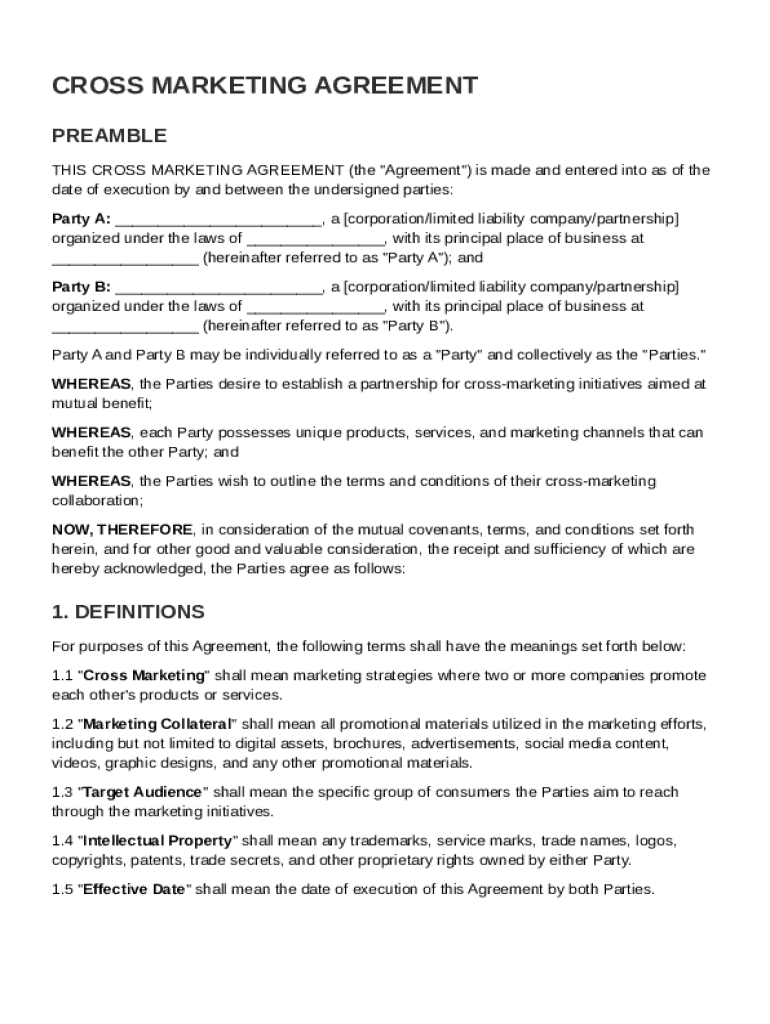







Definition & Purpose of the Cross Marketing Agreement Template
The Cross Marketing Agreement Template is a crucial document that establishes a formal partnership between two entities, typically businesses, to collaboratively market each other’s products or services. By utilizing this template, both parties can set clear guidelines and expectations for the cooperation, ensuring a mutually beneficial relationship. The agreement defines the terms of collaboration, responsibilities of each party, financial arrangements including cost-sharing models, intellectual property rights pertaining to branding and marketing materials, and dispute resolution mechanisms. It serves as a foundation for developing joint marketing strategies aimed at enhancing brand visibility and generating leads. This template prioritizes confidentiality and compliance with each party’s established branding guidelines, fostering a trustworthy partnership.
How to Use the Cross Marketing Agreement Template
To effectively utilize the Cross Marketing Agreement Template, follow these steps:
-
Understand the Objectives:
- Clearly outline the goals for entering into a cross marketing agreement. This includes enhancing brand awareness, increasing sales, or reaching new customer segments.
-
Customize the Template:
- Modify sections of the template to cater to the specific needs of both parties. Ensure the roles and responsibilities are clearly defined for each party involved.
-
Define Key Terms and Responsibilities:
- Specify the terms of the agreement, including the duration, termination conditions, and any exclusivity clauses. Outline the marketing initiatives each party will undertake and the expected outcomes.
-
Establish Financial Arrangements:
- Detail how the marketing expenses will be shared. Clearly define revenue-sharing structures if applicable, such as commissions on sales generated through marketing efforts.
-
Incorporate Intellectual Property Rights:
- Ensure that the branding elements of both parties, such as logos and trademarks, are protected. Specify how these will be used in the joint marketing efforts and who retains ownership.
-
Agree on Dispute Resolution:
- Establish a process for handling disagreements or breaches of the agreement. This often includes mediation or arbitration processes.
-
Review and Finalize:
- Ensure all sections are comprehensively completed. Have legal professionals review the document if necessary before both parties sign.
Steps to Complete the Cross Marketing Agreement Template
Completing a Cross Marketing Agreement Template follows a structured process to ensure all key elements are addressed:
-
Gather Required Information:
- Collect all business details, including names, addresses, and contact information for both parties.
-
Outline Marketing Goals:
- Define specific marketing objectives, target audience, and desired results from the collaboration.
-
Detail Responsibilities:
- Assign specific tasks and initiatives to each party, such as social media promotion, email marketing, or event hosting.
-
Describe Financial Terms:
- Specify financial commitments, including budget caps, cost-sharing ratios, and revenue distribution models.
-
Specify Duration and Timelines:
- Set clear start and end dates for the agreement. Include timelines for specific campaigns or initiatives.
-
Address Branding and IP Concerns:
- Detail how logos and trademarks will be used and protected during the partnership.
-
Review and Sign:
- Once completed, both parties should review all sections, negotiate any changes, and sign to validate the agreement.
Key Elements of the Cross Marketing Agreement Template
Key elements that should be included within any Cross Marketing Agreement Template are:
-
Introduction and Definitions:
- Clearly define all terms and parties involved within the agreement to avoid any ambiguity.
-
Marketing Strategies:
- Outline specific strategies and techniques that will be employed, such as cross-promotions, joint events, or digital campaigns.
-
Cost and Revenue Sharing:
- Detail how all costs and revenues generated from the joint efforts will be distributed among the parties involved.
-
Branding and Intellectual Property Rights:
- Define usage rights for each party's branding elements and address ownership issues related to any content produced.
-
Confidentiality Clauses:
- Include clauses to protect sensitive business information shared during the collaboration.
-
Monitoring and Reporting:
- Establish metrics for evaluating performance and define how results will be reported between the parties.
-
Termination Conditions:
- Specify conditions under which the agreement may be terminated and any associated penalties.
Examples of Using the Cross Marketing Agreement Template
Real-world applications of the Cross Marketing Agreement Template:
-
Tech Companies Collaborating:
- A software company partners with a hardware manufacturer to jointly market their products, bundling software with devices to enhance customer appeal.
-
Retail and Service Partnerships:
- A retail store enters a partnership with a local gym, offering discounts on gym memberships to store customers, and vice-versa, to cross-promote to each other’s clientele.
-
Event-Based Collaborations:
- Two businesses partner to host a co-branded event, sharing associated marketing costs and reaching broader audiences through combined efforts.
Who Typically Uses the Cross Marketing Agreement Template
The template is often utilized by:
-
Small to Medium Enterprises (SMEs):
- Looking to expand their reach without significant upfront marketing expenses by partnering with other businesses.
-
Start-Ups:
- Collaborating with established companies to leverage their market presence and gain credibility.
-
Large Corporations:
- Engaging in strategic partnerships with complementary brands to tap into new demographics or launch innovative campaign initiatives.


Legal Use of the Cross Marketing Agreement Template
When employing this template, it relates to various legal aspects:
-
Compliance with Branding Policies:
- Ensure both parties maintain compliance with agreed-upon branding guidelines, respecting each other’s brand equities.
-
Enforceability:
- The template must comply with contract laws applicable within the jurisdiction it is executed to be enforceable.
-
Intellectual Property Rights:
- Correctly addressing IP matters ensures legal protection for the use of branding and marketing assets shared between parties.
Software Compatibility
The Cross Marketing Agreement Template is compatible with various software platforms:
-
DocHub:
- Seamlessly edit and collaborate on agreement documents directly through DocHub, utilizing real-time editing features.
-
Microsoft Word and Google Docs:
- Edit the template in traditional word processors for ease of use and familiarity.
-
PDF Readers and Editors:
- Finalize and secure the document in PDF format, allowing for easy sharing and consistent formatting.
Integration with these tools ensures flexibility in drafting, reviewing, and managing marketing agreements efficiently.