







Definition & Meaning
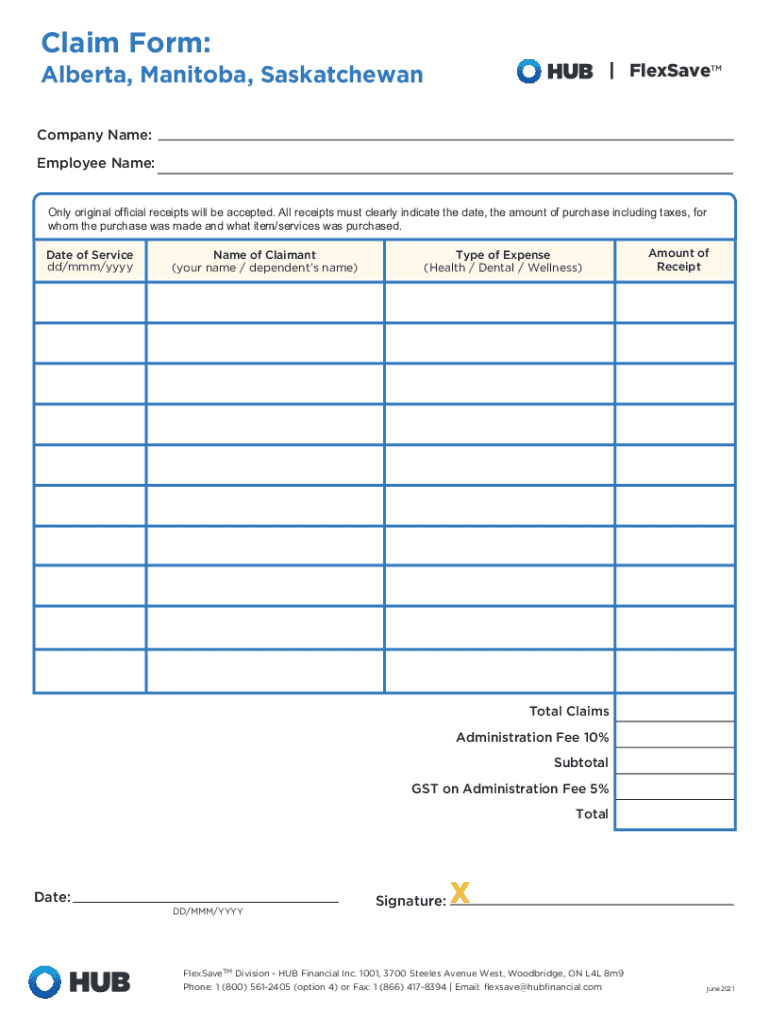
The Flexsave Claim Form-final ab mb sk is a specific form used primarily by employees based in Alberta, Manitoba, and Saskatchewan. This document is essential for filing claims through FlexSave™, serving as a structured way to report expenses that employees wish to claim. The form acts as a formal request for reimbursement of expenses, ensuring that claims conform to the necessary guidelines.
Purpose and Usage
- Expense Reimbursement: Allows employees to submit claims for expenses that are eligible for reimbursement under their FlexSave™ plan.
- Organizational Tool: Helps in documenting expenses in a structured manner, which facilitates the claim approval process.
- Compliance: Ensures that all necessary information is provided to meet legal requirements for reimbursement claims.
How to Obtain the Flexsave Claim Form-final ab mb sk
To acquire the Flexsave Claim Form-final ab mb sk, employees usually need to contact their organization's human resources department or visit the official website of HUB Financial Inc., the body responsible for administering the FlexSave™ plan.
Methods to Obtain the Form
- Direct Request: Contacting HR departments or financial officers within the company.
- Online Download: Visiting the official HUB Financial Inc. website, where forms might be available for download.
- Email: Requesting the form via email from the plan administrator.
Steps to Complete the Flexsave Claim Form-final ab mb sk
Completing the Flexsave Claim Form-final ab mb sk necessitates careful attention to detail to ensure accuracy and compliance with guidelines.
Step-by-Step Instructions
- Personal Information: Enter personal details such as name, contact information, and employee ID.
- Expense Details: Specify each expense, including date, amount, and description.
- Attach Receipts: Include original receipts that provide proof of purchase and align with the details listed.
- Calculation of Total Claims: Sum up the expenses and calculate any applicable fees.
- Signature: Sign the form to attest to the accuracy and truthfulness of the submitted information.
Common Mistakes to Avoid
- Incorrect Information: Double-check all entries to avoid mistakes such as wrong dates or amounts.
- Incomplete Fields: Ensure all sections are filled out completely to prevent processing delays.
- Missing Receipts: Attach all required documentation to substantiate claims.
Required Documents
Submitting the Flexsave Claim Form-final ab mb sk involves providing several key documents that authenticate the claim and ensure it meets the necessary criteria.
Key Documents to Include
- Original Receipts: Must outline the date, amount, and nature of the expense. These are verified against claims in the form.
- Proof of Purchase: Any additional documentation that confirms the transaction, such as invoices or billing statements.
- Employer Authorization: In some cases, a letter or form from the employer confirming the expenses may be necessary.
Key Elements of the Flexsave Claim Form-final ab mb sk
The structure of the claim form is critical for the accurate and efficient processing of claims. Understanding its key components is essential for proper completion.
Breakdown of Form Components
- Personal Information Section: Captures essential details about the claimant.
- Expense Description Fields: Allocate specific areas to describe each expense individually.
- Total Calculation Area: Dedicated space to sum up expenses and apply any additional fees.
Legal Use of the Flexsave Claim Form-final ab mb sk
The Flexsave Claim Form-final ab mb sk must be used in compliance with both company policies and provincial regulations. This section outlines the legal framework within which the form operates.
Legal Compliance
- Provincial Regulations: The form adheres to financial claim standards in Alberta, Manitoba, and Saskatchewan.
- Company Policies: Must be consistent with internal company guidelines related to employee reimbursements.
Legal Ramifications of False Claims
- Penalties: Filing false claims can lead to disciplinary action, including termination of employment or legal prosecution.
State-Specific Rules for the Flexsave Claim Form-final ab mb sk
Different provincial rules may affect how the Flexsave Claim Form-final ab mb sk is completed and processed.
Provincial Differences in Processing
- Alberta: May have specific rules regarding eligible expenses.
- Manitoba: Might require additional documentation for certain claim types.
- Saskatchewan: Could offer unique tax relief or deductions specific to the province.
Examples of Using the Flexsave Claim Form-final ab mb sk
Real-world scenarios help illustrate how the Flexsave Claim Form-final ab mb sk is typically used by employees seeking reimbursement.
Practical Examples
- Travel Expenses: Claiming costs associated with business trips, including hotel stays and transportation.
- Training Courses: Reimbursement for fees associated with professional development courses or certifications.
- Office Supplies: Claims related to necessary supplies purchased for work-related purposes.
Software Compatibility
The use of digital tools can simplify the process of filling out the Flexsave Claim Form-final ab mb sk, making it easier to manage claims.
Compatible Software Platforms
- DocHub: A tool that allows for editing and signing via a user-friendly interface.
- QuickBooks: For managing and tracking expense-related entries.
- TurboTax: May assist in ensuring expenses are compliant from a tax perspective when bundled with other claims.
Eligibility Criteria
Not all employees will automatically qualify to submit a Flexsave Claim Form-final ab mb sk. Understanding who is eligible can prevent unnecessary submissions.


Core Eligibility Requirements
- Employment Status: Must be a current employee of the company offering the FlexSave™ plan.
- Plan Enrollment: Needs to be actively enrolled in the FlexSave™ program.
- Expense Type: Only specific types of expenses qualify, such as professional development or job-related travel.
Special Considerations
- Contractors: Generally not eligible unless specified in the contract.
- Part-time Employees: Eligibility may vary based on hours worked and company policy.
Application Process & Approval Time
Submitting and processing Flexsave Claim Form-final ab mb sk might involve specific timelines and procedures.
Application Timeline
- Submission: Typically submitted within 30 days of expense incurred.
- Review Period: Standard review time is approximately 15 business days.
- Approval Notification: Applicants receive approval or denial notifications shortly after review completion.
Approval Influences
- Completeness of Information: Full and accurate completion accelerates processing.
- Workload of Department: High volumes may increase processing time.
These sections aim to provide a thorough understanding of the Flexsave Claim Form-final ab mb sk, present valuable information for successful completion, and emphasize the importance of meeting all requirements.




