






Definition & Meaning
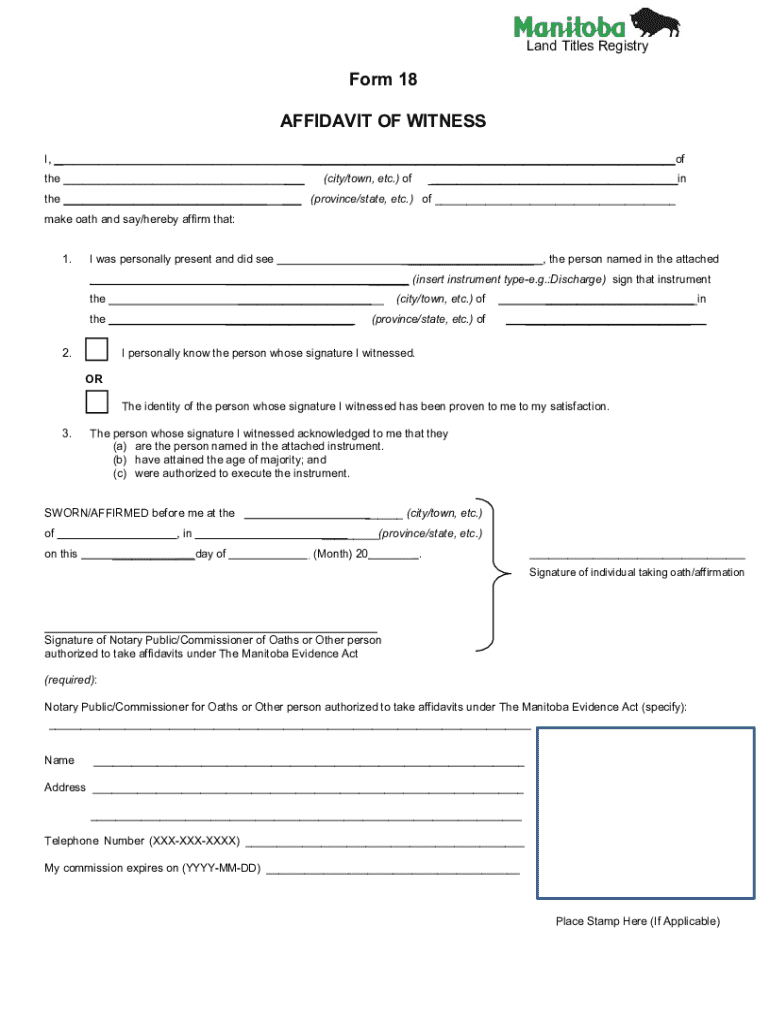
The Form 18 Affidavit of Witness serves an essential role in legal proceedings involving land titles. It is primarily used in the Land Titles Registry to document that a witness was present during the signing of a legal instrument by another party. The affidavit includes sections that capture personal details of the witness, confirm their identity, and acknowledge their age and authority to verify the signature. This legal document must also be signed by a Notary Public or Commissioner of Oaths to ensure its validity and authenticity.
How to Use the Form 18 Affidavit of Witness: United States Context
In the United States, an affidavit is a sworn statement used as evidence in legal matters. The Form 18 Affidavit of Witness is employed during transactions involving property, where an individual attests that they observed the signing of a critical document. To use this form effectively, the witness must ensure they are present at the entire signing process, accurately complete all required sections of the form, and submit their contact information for future reference. Proper usage includes understanding that the affidavit is a legal assertion, under penalty of perjury, affirming the witnessing event.
How to Obtain the Form 18 Affidavit of Witness
Accessing the Form 18 Affidavit of Witness requires visiting your local Land Titles Registry office or checking their official website for downloadable documents. In most states, legal forms can also be obtained through legal service providers or by consulting with a legal professional. Some online platforms, like DocHub, may provide templates similar to Form 18, allowing individuals to prepare and fill out the affidavit electronically before printing and hand-signing it.
Steps to Complete the Form 18 Affidavit of Witness
- Gather Required Information: Collect all necessary details including the signer's identification, the date of signing, and the specific document being signed.
- Fill Out Personal Details: Enter the witness's full legal name, current address, and contact information.
- Confirmation of Identity: Provide a statement confirming the witness’s presence and observational role during the document signing.
- Age and Authority Declaration: Verify that the witness is of legal age and has the required authority to witness the signing.
- Signature and Notarization: The witness must sign the affidavit in the presence of a Notary Public or Commissioner of Oaths to validate the document legally.
- Review: Re-examine the completed affidavit for accuracy before submission.
Why You Should Use Form 18 Affidavit of Witness
Utilizing this form provides a legal record that a third party has verified the signing of an important document, essential in property dealings to avoid future disputes. The affidavit hones in on the authenticity and integrity of the signatures, thereby preventing forgery and ensuring that the signing parties are consenting adults who are legally capable of entering into contracts.
Legal Use of the Form 18 Affidavit of Witness
The legal use of Form 18 encompasses its function in certifying the witnessing of signatures on property-related documents. This document is crucial in states requiring additional verification for real estate transactions. When executed and verified correctly, an affidavit supports the enforcement of the agreement or document discussed within legal frameworks, providing tangible evidence in case of legal disputes.
Key Elements of the Form 18 Affidavit of Witness
- Witness Personal Information: Includes the witness's details such as name, contact information, and address.
- Statement of Observance: A declaration confirming that the witness observed the document's signing.
- Identity Confirmation: Verification of the signer's identity and acknowledgment of their understanding of the document.
- Notary Signature: The notary seal and signature to authenticate the affidavit.
State-Specific Rules for the Form 18 Affidavit of Witness
While the basic structure of the Form 18 remains constant across states, some regions might impose additional requirements, such as specific language, additional witness signatures, or distinct notarial procedures. For example, states like California and New York may have unique formats or notarial practices that must align with local law. It is crucial to verify state-specific rules with the relevant local authorities or legal advisors to ensure compliance.
Examples of Using the Form 18 Affidavit of Witness
- Real Estate Transactions: An individual who observes the signing of a deed may be asked to complete this affidavit to confirm the integrity of the process.
- Power of Attorney Assignments: When a power of attorney document is signed, a witness might be needed to use Form 18 to affirm their presence during the signing.
- Mortgage and Loan Agreements: Financial institutions may require a witness affidavit to ensure that all parties involved understand and agree to the terms stipulated in the agreements.
Important Terms Related to Form 18 Affidavit of Witness
- Affiant: The person who swears an affidavit, in this case, the witness attesting to the signing event.
- Notarization: The official process of certifying a document by a notary, which aids in preventing fraud and ensuring the document is legally binding.
- Commissioner of Oaths: An authoritative figure, similar to a Notary Public, authorized to verify affidavits and statutory declarations.
These sections deliver comprehensive coverage, supported by multiple examples and specific state-contextual information, offering valuable insights into the Form 18 Affidavit of Witness and its importance in legal documentation.